Fancy-leaf Caladium Care (Caladium 'Postman Joyner')

Also known as: Angel Wings, Heart of Jesus

About Fancy-leaf Caladium

Fancy-leaf caladium (Caladium 'Postman Joyner') is a tropical tuberous perennial grown mainly for its bold, colorful foliage. It is usually treated as a summer annual or indoor accent plant in cooler climates.

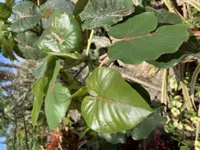
Leaves are large, heart-shaped, and paper-thin, often showing strong red centers, green margins, and contrasting veins. Plants grow in a compact clump from underground tubers and have little ornamental flowering.

This caladium traces its origins to the warm, shaded understories of South American forests, which explains its preference for bright, indirect light, warmth, and consistent moisture. Understanding how to care for Fancy-leaf Caladium starts with recognizing that it dislikes cold, dry air, and prolonged direct sun, which can scorch or stunt its delicate foliage.

Main Plant Requirements

Care Difficulty

Moderate Care

Light Preference

Partial Shade

Water Requirements

Keep Soil Moist

Temperature Preference

Tropical / Frost Sensitive

Hardiness Zone

9–11

Soil Texture

Loamy, Peaty, Organic-rich

Soil pH

Acidic (5.5–6.5)

Soil Drainage

Moist but well-drained

Fertilization

Moderate (every 2–4 weeks)

Get Personalized Care Plan

Scan your plant to receive care tips personalized for your specific plant

Available on iOS and Android

How to Care for the Fancy-leaf Caladium

Caladium 'Postman Joyner' grows best in bright, indirect light that avoids harsh midday sun.

  • Provide 3–5 hours of gentle morning sun or bright dappled shade; use filtered light under trees, shade cloth, or on an east-facing exposure.
  • Allow partial shade, especially in the afternoon; strong midday or late-afternoon sun can scorch leaves and fade Fancy-leaf Caladium colors.
  • Outdoors, increase shade in mid-summer when light is intense; if stems stretch or leaves pale, move the plant to slightly brighter filtered light.

Caladium 'Postman Joyner' needs consistently moist but not waterlogged soil during active growth.

  • Water when the top 2–3 cm of soil feels dry, aiming for evenly damp soil that never stays soggy or bone-dry.
  • Use loose, well-draining soil so excess water escapes; yellowing, mushy stems suggest overwatering, while crispy, drooping leaves signal underwatering.
  • In spring and summer, check moisture often; in late fall and winter, reduce watering sharply as foliage dies back and tubers rest.

This caladium prefers warm, stable temperatures and is very sensitive to cold and frost.

  • Aim for 70–85°F (21–29°C) during the growing season for strong foliage and steady growth.
  • Keep above 60°F (16°C) whenever possible; growth slows below this, and exposure near 50°F (10°C) or frost can kill leaves and damage tubers.
  • In hot spells above 90°F (32°C), provide shade and consistent soil moisture; in cool fall weather, allow foliage to die back and store tubers in a frost-free place.

This caladium prefers consistently high humidity to keep foliage full and crisp.

  • Aim for 60–75% humidity, as dry indoor air below 40% often leads to browning leaf edges and tips.
  • Expect curling, papery leaves and stalled growth as signs of humidity stress, even when watering is correct for Fancy-leaf Caladium.
  • Increase humidity with grouped plants, a pebble tray under the pot, or a room humidifier placed nearby but not blowing directly on leaves.

Caladium 'Postman Joyner' grows best in a loose, airy, organic-rich medium that drains quickly yet holds even moisture.

  • Use a peat- or coco-based mix with added compost, perlite, and fine bark to create a light, humus-rich structure.
  • Target slightly acidic to neutral pH, around 5.8–7.0, which supports nutrient uptake and healthy tuber development.
  • Improve drainage and aeration by ensuring at least 30–40% of the mix is coarse components such as perlite and bark, not fine sand.
  • Avoid heavy clay, compacted, or waterlogged mixes that keep roots and tubers constantly wet, which encourages rot.

This variety is well suited to container growing, both outdoors in warm months and in protected spaces.

  • Choose a wide, shallow pot so tubers sit no deeper than 5–7 cm, which prevents rot and encourages even sprouting across the surface.
  • Select a pot material that matches your climate: porous terracotta for very humid or rainy areas, or plastic/fiberglass where mixes dry rapidly.
  • Use a stable, heavier container or weighted base if foliage becomes large and top-heavy, reducing the risk of tipping in wind or on balconies.

Caladium 'Postman Joyner' responds well to light, consistent feeding during its active growing season.

  • Use a balanced liquid fertilizer (around 10-10-10 or 20-20-20) diluted to 1/4–1/2 strength for Fancy-leaf Caladium.
  • Apply every 2–3 weeks from late spring through summer when foliage is actively growing.
  • Avoid heavy, salt-rich feeding; flush the pot with plain water monthly to prevent buildup.
  • Stop feeding when leaves yellow and die back, and do not fertilize dormant tubers in winter.

Caladium 'Postman Joyner' needs only light pruning focused on leaf cleanup rather than shaping.

  • Best time for pruning is during the growing season when leaves are fully expanded.
  • Remove yellowing, torn, or diseased leaves at the base with clean, sharp scissors or pruners.
  • Cut back collapsed or weak stems to improve air flow and appearance.
  • Discard spent foliage at dormancy to reduce disease risk and encourage strong new growth next season.

Repotting and lifting tubers help maintain vigor in container-grown Caladium 'Postman Joyner'.

  • Repot every 1–2 years in early spring when new buds swell, or when roots circle the pot and growth weakens.
  • Choose a shallow, slightly wider container with fresh, airy potting mix high in organic matter.
  • Gently separate tubers, keep attached roots moist, and avoid breaking growing points to reduce stress.
  • Water lightly after repotting, keep temperatures around 70–80°F, and provide bright, indirect light while the plant re-establishes.

Multiplying Caladium 'Postman Joyner' is commonly done by dividing its tubers rather than from seed.

  • Divide tubers in late winter to early spring before strong new sprouts appear.
  • Use a clean, sharp knife to cut tubers so each piece has at least 1–2 visible growth buds.
  • Dust cut surfaces with fungicidal powder or cinnamon and allow to dry for several hours before planting.
  • Plant sections in warm, moist, well-drained mix at 70–85°F, keeping them just barely covered for reliable sprouting.

This tropical caladium is frost-tender and needs specific winter care in cool climates.

  • In zones colder than 9, dig tubers after frost kills foliage, then dry and store at 55–60°F in a breathable bag with dry peat or vermiculite.
  • For in-ground plants in mild climates, add a 5–8 cm mulch layer to insulate the root zone.
  • Move container plants indoors before temperatures drop below 55°F and keep soil just barely dry during dormancy.

Care Tips

Tuber rest storage

At the end of the season, lift the tubers once foliage fully yellows, gently brush off soil, dust with a sulfur-based fungicide if available, and store them in dry peat or vermiculite at 60–65°F until replanting.

Staggered sprouting

To extend the display, start some tubers in small pots indoors 4–6 weeks before last frost and plant others directly outside later, so foliage emerges in waves instead of all at once.

Container rotation

When grown in pots, rotate containers by 90° every 7–10 days to keep leaf petioles upright and prevent uneven stretching toward the brightest side.

Rain protection setup

In climates with heavy summer storms, use a simple overhang, canopy, or moveable pots to shield leaves from pounding rain, which can tear thin leaf blades and shorten their lifespan.

Pre-plant warming

For outdoor beds, cover the planting area with black plastic or fabric for 1–2 weeks before planting to warm the soil, which helps tubers establish faster when growing Fancy-leaf Caladium.

Common Pests and Diseases

Aphids

This pest feeds on tender Caladium leaves and stems, causing curling, distortion, and sticky honeydew that can lead to sooty mold. Infestations are more common on young growth in warm, humid conditions.

Solution

Rinse colonies off with a firm stream of water, then treat remaining insects with insecticidal soap or a ready-to-use neem oil spray, covering leaf undersides. Isolate the plant during treatment and repeat applications every 5–7 days until no new aphids appear.

Spider mites

These insects are tiny sap feeders that thrive in warm, dry air, causing fine stippling, a dusty appearance, and eventual yellowing or browning of Caladium leaves. Symptoms include fine webbing, especially along leaf undersides and petioles.

Solution

Increase humidity around the plant, then thoroughly wash leaves, especially undersides, with lukewarm water. Follow with insecticidal soap or a miticidal neem product at 5–7 day intervals, and keep the plant away from hot, dry drafts for better Fancy-leaf Caladium indoor care.

Mealybugs

This pest appears as white, cottony clusters in leaf axils, along petioles, and near the tuber crown, sucking sap and weakening the plant. Heavy infestations can stunt growth and lead to leaf yellowing and drop.

Solution

Physically remove visible mealybugs with cotton swabs dipped in isopropyl alcohol, then spray the plant with insecticidal soap or neem oil, paying attention to hidden crevices. Inspect weekly and repeat treatments until no new white clusters appear, and avoid moving infested plants near healthy ones.

Pythium leaf spot

This disease causes water-soaked, translucent lesions that quickly enlarge and turn tan to brown, often with a dark margin on Caladium foliage. Leaves may collapse or rot at the base if moisture stays on them for long periods.

Solution

Remove and discard affected leaves, then reduce overhead watering and avoid wetting the foliage. Improve air circulation, water only at soil level in the morning, and if spread continues, apply a labeled fungicide for Pythium leaf and stem diseases according to package directions.

Bacterial leaf spot

This disease produces irregular, dark, water-soaked spots that may have a yellow halo and can merge to kill large leaf areas. Symptoms include a foul odor if tissue becomes soft and rotten, especially in tightly crowded plants or very humid conditions.

Solution

Promptly remove and discard infected leaves and any plant debris from the soil surface, and avoid splashing water between plants. Provide better spacing and airflow, water at soil level, and if the problem recurs, consider discarding severely affected plants and starting with clean stock for future grow Caladium 'Postman Joyner' efforts.

Interesting Facts

Early American introduction

This cultivar was introduced in the early 1900s in the United States and quickly became a benchmark red-veined caladium used by breeders to compare color intensity and pattern clarity.

Stable leaf patterning

Its characteristic deep red leaf centers with contrasting green margins and lighter speckling are relatively stable from leaf to leaf, so growers often use it as a reliable reference when evaluating the coloration of new caladium seedlings.

Classic exhibition variety

Because of its predictable foliage display and strong visual contrast, it has been used for many decades in formal bedding schemes and public garden displays as a standard example of showy, fancy-leaved caladium types.

FAQs about Fancy-leaf Caladium

Brown leaf edges usually come from low humidity, excess fertilizer salts, or prolonged direct sun scorch. Flush the soil thoroughly, trim damaged areas, increase humidity, and protect it from harsh midday sun to prevent further browning.

Grow Healthy Plants with Botan Care

Keep your plants happy and healthy with plant identification, disease detection, and easy care guidance.

Botan plant care app — identify plants on mobile

Explore More Plants