Support Climbing Vines
Provide a slim moss pole, orchid stake, or hanging trellis and loosely tie vines with soft plant ties so the plant can climb, which encourages larger, better-formed pitchers.

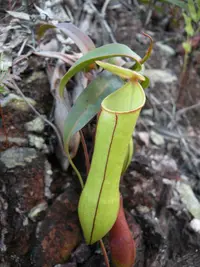
The slender pitcher plant, Nepenthes × neglecta, is a tropical carnivorous vine formed as a natural or horticultural hybrid within the Nepenthes group. It produces elongated, tubular pitchers with flared rims and a lid, which trap and digest insects to supplement nutrients.
This species typically climbs or trails, making it suitable for hanging baskets or supports where the pitchers can dangle freely. It comes from humid, warm habitats in Southeast Asia, so it prefers stable warmth, high humidity, and consistently moist, airy growing media.
Understanding how to care for slender pitcher plant starts with providing bright, filtered light and soft, low-mineral water, which help maintain healthy foliage and well-formed pitchers.

Care Difficulty
Moderate Care

Light Preference
Bright Indirect Light

Water Requirements
Keep Soil Moist

Temperature Preference
Tropical / Frost Sensitive

Hardiness Zone
11–12

Soil Texture
Peaty, Organic-rich

Soil pH
Strongly acidic (4.5–5.5)

Soil Drainage
Moist but well-drained

Fertilization
Minimal (feed rarely)
Scan your plant to receive care tips personalized for your specific plant
Available on iOS and Android
Nepenthes × neglecta prefers bright, indirect light that mimics dappled tropical sun.
This hybrid prefers evenly moist, low-mineral conditions rather than strict wet-dry cycles.
This hybrid thrives in mild, intermediate temperatures without sharp extremes.
This hybrid prefers consistently high humidity to maintain healthy pitchers and steady growth.
This carnivorous hybrid needs a very airy, low-nutrient, fast-draining substrate rather than standard potting soil.
This species grows reliably in containers when the pot supports its climbing, often top-heavy habit.
Nepenthes × neglecta is light feeding and reacts poorly to heavy fertilization.
Pruning Nepenthes × neglecta helps manage size and encourage new pitcher-forming growth.
Repotting Nepenthes × neglecta is infrequent but important to maintain an airy, low-nutrient medium.
Propagation of Nepenthes × neglecta is usually done from stem cuttings rather than seed.
Nepenthes × neglecta is not frost tolerant and needs warm, protected winter conditions.

Plant Health Check
Not sure what's wrong with your plant? Check your plant's health inside the app.
This plant is a stable natural hybrid between Nepenthes gracilis and Nepenthes sanguinea, combining the more slender, upright growth of N. gracilis with the larger, more colorful pitchers of N. sanguinea.
Plants can show a wide range of pitcher colors, from green with light speckling to deeper red tones, reflecting genetic influence from both parents and making individual clones visually distinct.
The species typically shows best development in conditions between classic lowland and highland ranges, mirroring its parentage and making it more tolerant of moderate temperature fluctuations than many strictly lowland Nepenthes.

Horticulturists value this hybrid as a relatively forgiving entry point for Nepenthes cultivation, so many guides use Nepenthes × neglecta plant care as a model for explaining how to transition from typical houseplants to carnivorous species.
Browning usually comes from low humidity, mineral-heavy tap water, or letting the roots dry out. Old pitchers naturally brown and die. Trim dead parts, use low-mineral water, and keep humidity stable to slow further damage.
Keep your plants happy and healthy with plant identification, disease detection, and easy care guidance.


_4-1-200x112.webp)