Kenyan Giant Cycad Care (Encephalartos tegulaneus)

Kenyan Giant Cycad

About Kenyan Giant Cycad

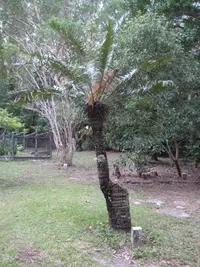
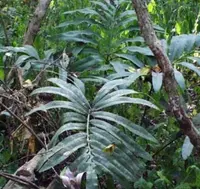
The Kenyan giant cycad, Encephalartos tegulaneus, is a rare, slow-growing cycad that forms a stout trunk topped with a crown of stiff, arching fronds. Its foliage is blue-green to gray-green, giving the plant a strong architectural look that suits collectors and specialized gardens.

This species is native to dry, rocky slopes in parts of Kenya, where it experiences strong sun and well-drained, often poor soils. It is long-lived but demands patience and careful attention, so learning how to care for Kenyan Giant Cycad is important before purchase. In cultivation it generally prefers bright light, good air movement, and soil that drains quickly after watering.

Main Plant Requirements

Care Difficulty

Hard Care

Light Preference

Full Sun

Water Requirements

Low Water

Temperature Preference

Warm Climate

Hardiness Zone

9–11

Soil Texture

Sandy, Loamy, Rocky

Soil pH

Slightly acidic (6.5–7.0), Neutral (7.0)

Soil Drainage

Well-drained

Fertilization

Minimal (feed rarely)

Get Personalized Care Plan

Scan your plant to receive care tips personalized for your specific plant

Available on iOS and Android

How to Care for the Kenyan Giant Cycad

This cycad thrives in bright, open conditions that mimic its native, high‑light habitat.

  • Provide 6–8 hours of direct sun daily, ideally with strong morning sun and light afternoon shade, especially in hot inland sites.
  • Tolerates light or dappled shade for part of the day, but dense shade slows growth and produces elongated, weak fronds on Kenyan Giant Cycad.
  • In hot summers, protect from intense mid‑afternoon sun with light shade cloth or nearby shrubs to reduce leaf scorch, especially on young plants.

This drought‑tolerant cycad needs careful, infrequent watering to avoid root damage.

  • Allow the top 3–5 cm of soil to dry before watering; in hot growing seasons this may mean deep watering every 7–14 days in fast‑draining ground.
  • Use sharply draining, gritty soil on a slope or mound so water moves away from the crown; standing water around Encephalartos tegulaneus roots encourages rot.
  • Reduce watering sharply in cool seasons, only irrigating when fronds slightly lose rigidity or the soil is dry well below the surface.

This species prefers warm, frost‑free conditions with stable seasonal temperatures.

  • Aim for 70–90°F (21–32°C) during active growth; steady warmth encourages new flushes of fronds and strong root development.
  • Protect from temperatures below 35°F (2°C); brief, light frost may burn fronds, while harder or prolonged freezes can kill the growing point.
  • In hot regions, it tolerates 100°F (38°C) or slightly higher if soil moisture is adequate and the crown is mulched to moderate root temperatures.

This cycad handles a wide humidity range but prefers slightly dry, well-ventilated air.

  • Target 30–50% humidity; avoid consistently above 60% to reduce fungal risk around the crown.
  • Tolerates dry indoor air if roots are well hydrated and soil is not compacted.
  • Humidity stress shows as yellowing older leaflets and increased susceptibility to scale; improve airflow, use a fan, and keep foliage dry rather than misting.

Encephalartos tegulaneus needs very fast-draining, mineral-rich soil to prevent root and caudex rot.

  • Use a gritty mix such as 40% coarse sand, 40% pumice or perlite, and 20% inorganic loam or low-peat cactus mix.
  • Aim for slightly acidic to neutral pH around 6.0–7.0, avoiding strongly acidic or alkaline substrates that restrict nutrient uptake.
  • Ensure a loose, open structure with visible air gaps so water drains within seconds rather than pooling around the roots.
  • Avoid heavy clay, water-retentive compost, or fine peat-only mixes, which compress, reduce aeration, and promote fungal problems.

This species adapts well to container growing when provided with a deep, stable pot and sharp drainage.

  • Choose a tall, heavy container that resists tipping as the stiff fronds lengthen and act like a lever in wind.
  • Select thick-walled clay or concrete to moderate temperature swings and slightly increase evaporation from the mix.
  • Elevate the pot on feet or blocks so drainage holes remain clear and water cannot stagnate under the container.

This slow-growing cycad benefits from light, steady feeding but is sensitive to excess salts and rich soils.

  • Apply a balanced slow-release fertilizer (around 10-10-10 or similar NPK) at low label rates once in spring and again mid-summer.
  • Use a dilute liquid feed at 1/4–1/2 strength on actively growing container plants every 4–6 weeks.
  • Stop feeding the Kenyan Giant Cycad in fall and winter when growth is minimal, to avoid root damage and soft, weak tissue.
  • Water thoroughly after fertilizing to flush nutrients through the root zone and reduce the risk of burn.

Pruning Encephalartos tegulaneus is minimal and focuses on removing old or unhealthy foliage.

  • Carry out pruning in late winter or early spring before strong new growth starts.
  • Remove only dead, yellowing, or damaged fronds at the base using clean, sharp pruners or a pruning saw.
  • Limit cutting to problem fronds to maintain the plant’s natural rosette form and stable trunk development.
  • Disinfect tools before and after use to reduce the risk of transmitting fungal or bacterial diseases.

This cycad dislikes frequent disturbance, so repotting or transplanting should be infrequent and deliberate.

  • Consider moving the plant when roots circle the pot, emerge from drainage holes, or growth slows despite good care.
  • Plan transplanting or repotting in late spring to early summer, when warm soil supports recovery.
  • Repot only every 4–6 years, stepping up just 1 pot size and using a very well-drained, gritty mix.
  • Handle the root ball gently, keep roots covered, water lightly at first, and provide shade for 1–2 weeks to limit stress.

Propagation of Encephalartos tegulaneus is specialized and usually reserved for experienced growers or conservation programs.

  • Use seed propagation where legal, recognizing that seedlings develop slowly and require long-term care.
  • Collect ripe cones, clean seeds, and sow in a free-draining, sandy medium kept around 75–80°F with moderate humidity.
  • Provide bright, indirect light and very gentle bottom warmth to support germination, which may take several months.
  • Occasional offsets may be removed; allow cut surfaces to callus, then plant in a gritty mix and water sparingly until rooted.

This species prefers mild, frost-free conditions and needs clear protection in regions with cold winters.

  • Avoid exposure below about 28–30°F; extended or hard freezes can damage fronds and the growing point.
  • Apply a dry mulch layer around the root zone to insulate soil while keeping the crown itself uncovered.
  • Wrap the crown and emerging fronds with breathable frost cloth during cold snaps to limit tissue damage.
  • Move container-grown plants indoors or into a bright, cool greenhouse before nighttime temperatures approach freezing.

Care Tips

Secure Heavy Containers

Use a wide, heavy pot or stabilize the container with bricks or stones once the plant gains size, since the tall, heavy crown can become top-heavy and fall in strong winds or if bumped.


Protect Emerging Flush

When new leaves start to flush, avoid rotating or moving the plant and shield the crown from intense midday sun and strong wind so the soft fronds harden evenly without kinking or burning.

Crown Debris Control

Check the crown regularly and gently remove fallen leaves, stones, or compacted mulch by hand or with soft tongs to prevent moisture pockets that attract rot and pests.

Root Zone Temperature Management

In hot climates, shade the pot or mulch the root zone lightly to keep roots cooler, while in cooler regions use a dark container placed on a heat-retentive surface like pavers to slightly warm the root area during the growing season.

Long-Term Space Planning

Allow generous horizontal space around the plant and avoid permanent hardscape too close to the trunk, since offsets and the expanding leaf spread can complicate access and caring for Kenyan Giant Cycad over time.

Common Pests and Diseases

Scale insects

This pest attaches to the stiff leaflets and leaf bases, sucking sap and causing yellowing, stippling, and overall decline. Symptoms include sticky honeydew and sooty mold on fronds.

Solution

Manually remove visible scale with a soft brush or cloth and prune heavily infested fronds. Follow with repeated applications of a light horticultural oil or insecticidal soap directed into leaflet bases and crown tissue, and improve light and air movement to reduce reinfestation when caring for Kenyan Giant Cycad.

Cycad aulacaspis scale

This pest is a highly destructive, white, crust-forming scale that can cover both surfaces of the fronds, petioles, and even roots, leading to rapid yellowing and plant death if unchecked. This species is especially aggressive in warm, humid regions where cycads are grown outdoors or in greenhouses.

Solution

Discard and destroy severely infested plants if coverage is extensive. For manageable infestations, cut and dispose of heavily affected fronds, thoroughly wash remaining tissue with water and a soft brush, then apply systemic insecticides labeled for armored scales in repeated intervals, making sure spray or drench reaches the crown and any exposed roots.

Mealybugs

These insects hide in leaflet bases, crown crevices, and roots, feeding on sap and weakening the plant. Symptoms include cottony white clusters, distorted new growth, and honeydew that encourages sooty mold.

Solution

Rinse visible mealybugs with a strong but controlled water spray and swab remaining clusters with cotton dipped in isopropyl alcohol. Combine this with repeated applications of insecticidal soap to foliage and crown, and use a systemic drench if root mealybugs are suspected, while also reducing excess nitrogen fertilization that can favor outbreaks.

Crown and stem rot

This disease affects the central crown and basal stem, often after mechanical damage or prolonged saturation, causing soft, foul-smelling tissue and collapse of new flushes. Symptoms include browning at the crown, loose or easily detached leaf bases, and eventual top dieback.

Solution

Immediately remove all soft, discolored tissue with sterile tools and allow the crown to dry thoroughly in bright, indirect light. Dust cut surfaces with a sulfur- or copper-based fungicide if locally permitted, reduce watering so the substrate dries well between waterings, and ensure the plant grows in a sharply drained, coarse mix to prevent future infection.

Leaf spot fungi

This disease produces dark, sometimes concentric spots on leaflets, which may coalesce into larger necrotic patches under persistently humid conditions. Symptoms include cosmetic damage and premature leaflet death, especially on older fronds in dense plantings or poorly ventilated spaces.

Solution

Remove and dispose of affected fronds to reduce spore load, and increase spacing and airflow around the plant to keep leaf surfaces dry. If spotting progresses, apply a labeled broad-spectrum fungicide according to directions and avoid overhead watering, targeting irrigation to the soil instead of the foliage.

Interesting Facts

Tegula-like leaf bases

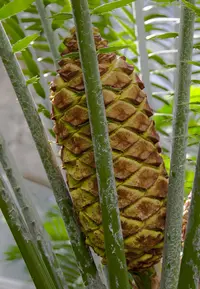
This species gets its name from its thick, overlapping leaf bases that remain on the trunk and resemble roof tiles, creating a very distinctive, armored stem surface compared with other cycads.

Extremely localized range

It is naturally restricted to a small area of rocky slopes in eastern Kenya near the Taita Hills, making it a narrowly endemic species with very limited habitat.

Severe conservation concern

Wild populations have declined due to habitat disturbance and illegal collecting, and the species is considered highly threatened, so responsible cultivation relies on legally propagated, nursery-grown plants.

Botan icon

Did you know?

This cycad produces unusually large, heavy cones for its trunk size, and these take well over a year to mature from pollination to seed ripening, reflecting the very slow reproductive rhythm typical of ancient cycad lineages.

FAQs about Kenyan Giant Cycad

This is a very slow-growing cycad. In cultivation, growth is often 2–5 cm of trunk per year, sometimes less. Leaf flushes are intermittent, so size increases in visible steps rather than steady monthly growth.

Grow Healthy Plants with Botan Care

Keep your plants happy and healthy with plant identification, disease detection, and easy care guidance.


Botan plant care app — identify plants on mobile

Explore More Plants