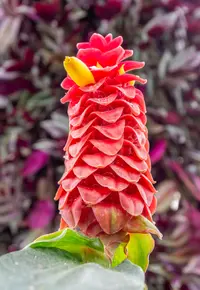
Napoleon's plume Care (Bauhinia monandra)

Also known as: pink bauhinia, Pink Butterfly Tree
Napoleon's plume

About Napoleon's plume

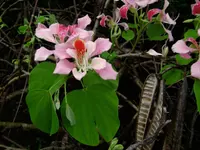
Napoleon's plume, Bauhinia monandra, is a small ornamental tree or large shrub valued for its showy, pale pink flowers with deep crimson markings. Its leaves are bilobed, resembling butterfly wings, giving the plant a light, airy look in the landscape.

This species is native to tropical regions, especially in parts of South America and the Caribbean, and it thrives in warm, frost-free climates. It grows quickly in suitable conditions and can become invasive in some areas.

The plant prefers full sun, well-drained soil, and moderate moisture, which makes it relatively easy to establish in subtropical gardens. Gardeners who learn how to care for Napoleon's plume usually find it a robust, low-maintenance flowering tree once settled in the right climate.

Main Plant Requirements

Care Difficulty

Moderate Care

Light Preference

Full Sun

Water Requirements

Moderate Water

Temperature Preference

Tropical / Frost Sensitive

Hardiness Zone

10–11

Soil Texture

Sandy, Loamy, Organic-rich

Soil pH

Acidic (5.5–6.5), Slightly acidic (6.5–7.0)

Soil Drainage

Well-drained

Fertilization

Minimal (feed rarely)

Get Personalized Care Plan

Scan your plant to receive care tips personalized for your specific plant

Available on iOS and Android

How to Care for the Napoleon's plume

This sun-loving shrub flowers best in warm, bright conditions with some protection from harsh extremes.

  • Provide 6–8 hours of direct sun daily; morning sun with light afternoon shade suits Napoleon's plume in hot climates.
  • In very hot regions, protect from intense western sun to reduce leaf scorch and flower drop, using taller plants or structures for dappled shade.
  • Young or newly planted specimens benefit from slightly filtered light for the first growing season, then can be transitioned to fuller sun exposure.

This species prefers consistent moisture in free-draining soil rather than constant wetness.

  • Water when the top 3–5 cm of soil feels dry, soaking the root zone deeply, then allow excess to drain away fully.
  • In hot, dry periods, increase frequency, watching for slight leaf droop or dry, crumbly soil as cues; reduce watering in cool or rainy seasons.
  • Avoid standing water or heavy clay; yellowing, soft leaves suggest overwatering, while crisp, browning leaf edges indicate the plant is staying too dry.

This tropical tree performs best in warm, frost-free climates with only brief exposure to cooler temperatures.

  • Ideal growth occurs around 70–90°F (21–32°C), where foliage and flowering stay vigorous through the main growing season.
  • The plant is damaged near 32°F (0°C) and can be killed by hard freezes; protect young trees if temperatures are forecast below 35°F (2°C).
  • Tolerates short heat spikes up to about 100°F (38°C) if soil moisture is maintained, but prolonged extremes can slow growth and stress foliage.

This subtropical species benefits from moderately humid air but adapts to a wide range of household conditions.

  • Aim for 40–60% humidity, which suits Napoleon's plume without encouraging fungal problems.
  • It tolerates short periods of drier air, but chronically below 30% may cause leaf edge browning and tip dieback.
  • Increase humidity by grouping plants, placing a water tray nearby, or using a room humidifier rather than misting leaves.

This species prefers loose, well-drained, slightly acidic to neutral soil that does not stay waterlogged.

  • Use a loamy mix with 40–50% organic matter, such as composted bark or leaf mold, blended with coarse sand for structure.
  • Ensure rapid drainage by adding 20–30% perlite or pumice so water passes through within a few seconds of watering.
  • Keep pH roughly 6.0–7.2; on very alkaline sites, mix in compost and some acid-balance material like pine fines.
  • Avoid heavy, compacted clay or peat-heavy mixes that stay saturated, as Bauhinia monandra is prone to root and collar rot in soggy soil.

This tree can be grown in containers for several years if the pot is large, stable, and drains freely.

  • Choose a wide, heavy container to counterbalance the top-heavy canopy and reduce tipping in wind-exposed spots.
  • Select a pot depth that allows a broad root plate, giving at least 35–45 cm of root space for young trees.
  • Use pots with multiple drainage holes so excess water exits quickly and does not pool at the base around woody roots.

This tropical tree benefits from moderate feeding to support foliage and flowering of Napoleon's plume.

  • Use a balanced, slow-release fertilizer (around 10-10-10 or similar) or a thin layer of well-rotted compost in spring.
  • Feed every 6–8 weeks during the active growing season, stopping by late summer.
  • Apply at half the label strength for container plants to avoid root burn.
  • Do not fertilize or only use very light compost in winter dormancy.

Thoughtful pruning keeps Bauhinia monandra healthy, manageable, and flowering well.

  • Prune in late winter or very early spring before strong new growth starts.
  • Remove dead, diseased, rubbing, or crossing branches first using clean, sharp bypass pruners.
  • Thin congested inner growth to improve air circulation and light penetration.
  • Tip back or shorten long shoots to maintain a balanced canopy and encourage more flowering wood.

This species is usually grown in the ground, so focus on careful transplanting rather than frequent repotting.

  • Transplant young trees in late winter or early spring when temperatures are mild and growth is just starting.
  • Look for roots circling the pot, slow growth, or quick drying soil as signs a container plant needs a larger pot.
  • Move up only 1–2 pot sizes and use a free-draining mix; keep the root ball as intact as possible.
  • Water thoroughly after planting, then keep soil evenly moist for several weeks to limit transplant shock.

Bauhinia monandra is most commonly propagated from seed, with cuttings used less often.

  • Collect mature pods, then sow fresh seeds in late spring in a warm, bright spot.
  • Scarify hard seed coats lightly with sandpaper and soak for 12–24 hours to improve germination.
  • Use a sterile, well-drained mix and keep it slightly moist at 70–80°F until seedlings emerge.
  • For semi-hardwood cuttings, provide bottom heat, high humidity, and rooting hormone to improve success.

This tropical tree is frost sensitive and needs protection in regions with cold winters.

  • In ground, add a 5–8 cm mulch layer over the root zone in late fall, keeping it away from the trunk.
  • Wrap young trunks with horticultural fleece or burlap during forecast freezes.
  • Grow container plants in large pots and move them indoors or into a frost-free greenhouse before temperatures drop near 40°F.
  • Provide bright light, reduced watering, and no fertilizer indoors until consistent warmth returns.

Care Tips

Early framework pruning

In the first 2–3 years, select 3–5 well-spaced main branches and remove competing crotches with narrow angles to build a strong, open framework that will better support the heavy, hanging flowers later on.

Root zone protection

Mulch a wide area under the canopy with 5–8 cm of coarse organic material kept a few cm away from the trunk to buffer soil temperature, conserve moisture, and reduce weed competition around the shallow feeder roots.

Wind and branch management

In windy sites, lightly thin out dense branch clusters and shorten overly long, whippy shoots before storm season to reduce wind sail and help prevent limb breakage.

Salt and drought monitoring

In coastal or arid areas, periodically leach the root zone by giving a deep, slow irrigation that produces some drainage, which helps flush built-up salts that can scorch leaves and stress the tree.

Low-branch canopy training

If space allows, allow some lower branches to remain and gently spread them using soft ties or spacers while they are young to create a broader, more balanced canopy that shades its own roots, which is especially helpful when growing Napoleon's plume in hot, exposed spots.

Common Pests and Diseases

Leaf caterpillars

This pest feeds on young foliage, creating irregular holes and sometimes skeletonizing the leaves of Napoleon's plume trees.

Solution

Hand-pick visible caterpillars where practical and prune heavily chewed shoots, then use a biological control such as Bacillus thuringiensis (Bt) on young larvae and encourage birds and beneficial insects by maintaining plant diversity nearby.

Scale insects

These insects attach along stems and leaf veins, sucking sap and causing yellowing, sticky honeydew, and sooty mold on foliage.

Solution

Prune and discard heavily infested twigs, gently scrub scales off bark with a soft brush and soapy water, then follow with targeted applications of horticultural oil to thoroughly coat remaining insects while improving tree vigor through proper watering and light.

Leaf spot

This disease causes small brown to dark-purple spots that may coalesce on leaves, leading to premature leaf drop in warm, humid weather.

Solution

Remove and dispose of fallen and heavily spotted leaves, avoid overhead watering, improve air circulation around the canopy, and if needed apply a copper-based fungicide at the first signs of spotting during wet periods as part of broader Bauhinia monandra care.

Powdery mildew

This disease produces white, powdery fungal growth on the upper leaf surface, which can distort new growth and reduce flowering.

Solution

Increase sun exposure and airflow where possible, avoid overcrowding, remove the most affected leaves, and apply a sulfur or potassium bicarbonate fungicide labeled for ornamentals at the first appearance of the white coating.

Bark canker

This disease forms sunken, cracked, or darkened lesions on branches, which can girdle twigs and cause dieback when trees are stressed or wounded.

Solution

Prune out affected branches several inches below visible cankers during dry weather, sterilizing tools between cuts, reduce stress by avoiding wounding and overpruning, and maintain good cultural conditions so the tree can compartmentalize minor infections.

Interesting Facts

Distinctive one-stamen flower

Unlike most Bauhinia species with several fertile stamens, this species typically has only 1 functional stamen, a clear morphological trait that helps botanists identify it.

Frequent street tree

In many tropical and subtropical cities, especially in the Caribbean and parts of West Africa, it is widely planted as a street and park tree because of its long flowering season and tolerance of urban conditions.

Invasive in some regions

Although ornamental in origin, it is listed as invasive or potentially invasive in several Pacific islands and parts of northern Australia, where naturalized populations can spread into disturbed and coastal habitats.

Botan icon

Did you know?

The species name monandra comes from Greek roots meaning one stamen, referring to its single fertile stamen, and is a rare case where the species epithet directly and precisely describes such a specific floral feature.

FAQs about Napoleon's plume

Lack of flowers usually comes from insufficient light, heavy pruning at the wrong time, or nutrient imbalance, especially excess nitrogen. Ensure strong sun, avoid cutting new shoots before flowering, and use a balanced, phosphorus-supporting fertilizer.

Grow Healthy Plants with Botan Care

Keep your plants happy and healthy with plant identification, disease detection, and easy care guidance.

Botan plant care app — identify plants on mobile

Explore More Plants