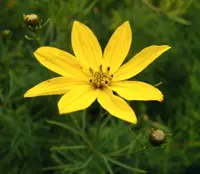
summer pheasant's eye Care (Adonis aestivalis)

summer pheasant's eye

About summer pheasant's eye

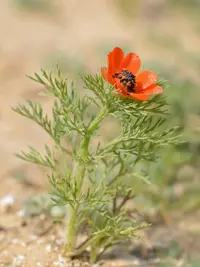
Summer pheasant's eye (Adonis aestivalis) is a small, upright annual from the buttercup family, grown mainly for its vivid red, poppy-like flowers. The finely divided, feathery foliage gives the plant a soft, airy look that contrasts with its dark-centered blooms.

It is native to parts of Europe and western Asia and is often found in open fields and light, sandy soils. The plant prefers full sun, relatively dry conditions, and well-drained soil, which makes it more suitable for lean, low-fertility sites than rich, wet gardens.

With the right site, it is not difficult to care for summer pheasant's eye, but it dislikes heavy, waterlogged ground and does not respond well to transplanting once established.

Main Plant Requirements

Care Difficulty

Moderate Care

Light Preference

Full Sun

Water Requirements

Moderate Water

Temperature Preference

Cool Climate

Hardiness Zone

4–8

Soil Texture

Sandy, Loamy, Rocky

Soil pH

Slightly acidic (6.5–7.0), Neutral (7.0)

Soil Drainage

Well-drained

Fertilization

Minimal (feed rarely)

Get Personalized Care Plan

Scan your plant to receive care tips personalized for your specific plant

Available on iOS and Android

How to Care for the summer pheasant's eye

This annual prefers bright, open conditions that mimic sunny meadows.

  • Provide 6–8 hours of direct sun daily; light morning sun and mild afternoon sun are ideal in most temperate regions.
  • Tolerates light partial shade (3–4 hours sun), but flowering of summer pheasant's eye decreases and stems may stretch in too much shade.
  • In hot, dry climates, protect from intense late-afternoon sun with light shade or neighboring plants to reduce leaf scorch and soil moisture loss.

This species prefers slightly moist, fast-draining soil without prolonged saturation.

  • Water when the top 2–4 cm of soil feels dry, using a slow soak that moistens the root zone but does not leave standing water.
  • During cool spring growth, soil may stay moist longer; in hot, windy weather, expect faster drying and check soil more often rather than following a fixed schedule.
  • Reduce watering once flowering declines and foliage starts to yellow; persistent wilting with dry soil indicates underwatering, while soft, yellowing stems with wet soil suggest overwatering in Adonis aestivalis.

This cool-season annual grows best in mild spring conditions and dislikes extreme heat or hard frost.

  • Optimal growth occurs around 55–70°F (13–21°C), with strong flowering during cool, bright weather.
  • Plants tolerate brief dips to about 25°F (-4°C), but repeated hard frosts can damage young shoots and reduce overall vigor.
  • Once temperatures regularly exceed 80–85°F (27–29°C), flowering declines and plants may fade early, so in hot climates it is best treated as an early spring to early summer bloomer.

Humidity is rarely a limiting factor for summer pheasant's eye when grown outdoors in typical temperate climates.

Adonis aestivalis grows best in light, well-aerated mineral soils that do not stay wet.

  • Use a sandy or sandy-loam soil with moderate organic matter to keep the structure loose and oxygenated.
  • Ensure very sharp drainage; mix coarse sand or fine grit into heavier soils to prevent waterlogging.
  • Aim for slightly alkaline to neutral pH, roughly 7.0–7.8, avoiding strongly acidic conditions that reduce vigor.
  • Avoid compacted clay or dense peat-based mixes that hold water for long periods and exclude air from roots.

This species can be grown in containers if fast-draining conditions are provided.

  • Choose a pot at least 20–25 cm deep to allow the taproot to develop without curling tightly at the base.
  • Use a mineral-heavy mix in a terracotta pot to reduce moisture retention and mimic its naturally dry habitat.
  • Raise the container slightly on pot feet or bricks so drainage holes remain clear and runoff water leaves quickly.

Adonis aestivalis is a low-input annual that needs only light feeding on poor soils.

  • Use a balanced, diluted liquid fertilizer (around 10-10-10 at 1/4 strength) only if growth appears weak.
  • Feed at most every 4–6 weeks during active spring growth, skipping rich garden beds.
  • Avoid high-nitrogen products, which promote foliage at the expense of flowers on summer pheasant's eye.
  • Stop feeding once flowering declines and plants begin to yellow, as they are entering dormancy.

Adonis aestivalis needs minimal pruning, mainly to keep plants tidy and encourage flowering.

  • In late spring to early summer, use clean scissors or hand pruners to remove spent flower stalks.
  • Cut back dead, diseased, or storm-damaged stems promptly to reduce disease spread.
  • Thin out overcrowded plants at the base to improve air flow and light penetration.
  • Leave some seed heads if natural self-sowing is desired, then trim back dry stems at season’s end.

This species is usually grown as a direct-sown annual, but young plants transplant reasonably well with care.

  • Transplant in early to mid-spring when seedlings have 2–3 true leaves and soil is workable.
  • Choose a sunny site with well-drained soil; avoid moving mature plants with extensive taproots.
  • Handle the root ball gently, keeping soil intact to limit root disturbance and transplant shock.
  • Water thoroughly after planting, then keep soil slightly moist for 1–2 weeks while roots re-establish.

Adonis aestivalis is most commonly propagated from seed rather than by division or cuttings.

  • Sow fresh seeds in fall outdoors for natural cold stratification, or in late winter under cover.
  • Provide full sun and well-drained, light soil; avoid waterlogging to reduce damping-off risk.
  • Cover seeds very lightly or press into the surface, as they germinate better with some light.
  • Keep the seedbed evenly moist until germination, then thin seedlings to avoid overcrowding.

As a cool-season annual, Adonis aestivalis usually requires no special winter care in mild to moderately cold climates.

  • In colder regions, fall-sown seeds overwinter in the soil and germinate in spring without protection.
  • Where repeated freeze–thaw is severe, a light mulch over the seedbed can stabilize soil temperatures.
  • Container-grown plants in very cold zones can be moved to a cold frame or unheated garage to avoid root freeze.

Care Tips

Early site preparation

Clear the bed of perennial weeds in late summer or fall and lightly cultivate the top 5–8 cm so seedlings face less competition and establish faster in spring.

Controlled self-seeding

Leave some seed heads on the plants to dry fully, then gently shake them over the same bed or a new patch to encourage a naturalistic colony while still removing excess plants the following spring with selective thinning.

Cool-season sowing

Sow seeds outdoors in late fall or very early spring to take advantage of natural cold stratification, which breaks seed dormancy and improves germination rates when growing summer pheasant's eye.

Low-input staking

In windy or very open sites, insert a few low twiggy branches or small wire hoops when plants are 5–10 cm tall to discreetly support stems and reduce lodging without needing tall, visible stakes.

Cut-flower timing

For vase use, cut stems early in the morning when the first flowers just start to open, place them immediately into clean, cool water, and recut stems under water at home to reduce wilting and extend display life.

Common Pests and Diseases

Leaf spot

This disease causes small brown to dark purple spots on leaves, often with a lighter center, which can merge and lead to premature leaf drop in dense stands. Symptoms include stronger development in humid, crowded plantings of summer pheasant's eye.

Solution

Remove and destroy heavily spotted leaves to reduce inoculum, and avoid overhead watering so foliage dries quickly. Thin crowded patches, improve airflow, and, in severe recurring cases, use a copper- or chlorothalonil-based fungicide labeled for ornamental annuals, following local regulations and label directions.

Powdery mildew

This disease shows as a white, powdery coating on upper leaf surfaces and young stems, which can cause yellowing and reduced vigor, especially late in the season. Symptoms include worse development in dry air combined with moderate humidity around the leaves and partial shade.

Solution

Space plants so air can move freely, keep foliage dry, and remove the most affected leaves to slow spread. If needed, apply a sulfur or potassium bicarbonate product labeled for powdery mildew on ornamentals, starting at first signs and repeating as directed on the label.

Aphids

These insects are small, soft-bodied sap feeders that cluster on young stems and buds, causing curling, yellowing, and sticky honeydew that can attract sooty mold. This pest can also transmit viruses between neighboring plants.

Solution

Dislodge colonies by spraying plants with a firm stream of water, and pinch off heavily infested shoot tips. For persistent populations, introduce or conserve natural enemies like lady beetles, or use insecticidal soap or neem oil, coating the undersides of leaves and repeating as needed according to the product label.

Leaf-mining flies

These insects create narrow, winding, pale tunnels inside leaves as the larvae feed between the upper and lower leaf surfaces, which can reduce photosynthesis on heavily damaged foliage. Symptoms include serpentine mines that turn brown as tissue dies.

Solution

Hand-remove and destroy mined leaves as soon as tunnels appear to interrupt the life cycle. Floating row covers can prevent egg-laying in young plantings, and in bigger infestations a systemic insecticide labeled for ornamental annuals and leaf miners may be used according to label directions.

Downy mildew

This disease produces yellow to pale patches on upper leaf surfaces with a grayish to white, sometimes purplish, downy growth underneath, particularly in cool, wet conditions. Symptoms include distorted growth and eventual leaf drop in badly affected plants.

Solution

Water early in the day at soil level so foliage dries quickly, and increase spacing to improve airflow. Remove and destroy infected plants, and in severe outbreaks use a phosphonate or metalaxyl-M–based product labeled for downy mildew on ornamentals, rotating modes of action to limit resistance where repeated treatments are necessary.

Interesting Facts

Ephemeral field annual

This species is a short-lived annual that completes its entire life cycle in a single growing season, often appearing briefly in disturbed crop fields and then disappearing for years until soil conditions and seed bank cues align again.

Toxic cardiac glycosides

The plant contains cardioactive compounds chemically related to those in foxglove, which makes it unpalatable to grazing animals and potentially poisonous if ingested by livestock or humans.

Historically linked to cereal crops

In parts of Europe and western Asia, this species traditionally occurred as a weed in barley and wheat fields, becoming much less common where modern seed cleaning and herbicide use reduced its opportunity to persist with cereal crops.

Botan icon

Did you know?

The seeds of this species can remain dormant but viable in the soil seed bank for many years, allowing populations to reappear suddenly when tillage, light, and temperature conditions become favorable after long periods of apparent absence.

FAQs about summer pheasant's eye

All parts of this species are poisonous due to potent cardiac glycosides that affect the heart. Ingestion can cause nausea, vomiting, irregular heartbeat, and potentially serious poisoning in pets, livestock, and humans. Avoid growing near grazing animals or children.

Grow Healthy Plants with Botan Care

Keep your plants happy and healthy with plant identification, disease detection, and easy care guidance.

Botan plant care app — identify plants on mobile

Explore More Plants