Rocky planting pockets
Tuck plants into narrow crevices or between rocks with very sharp drainage, which mimics their natural limestone cliff habitat and helps crowns stay dry and long-lived.

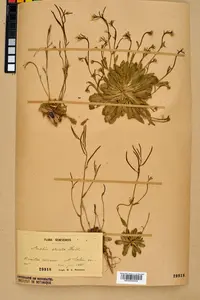
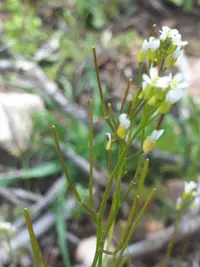
Bristol rock-cress, Arabis scabra, is a small, clump-forming perennial from rocky limestone slopes and cliffs, especially in parts of the UK and western Europe. It belongs to the mustard family and forms low mats of gray-green, slightly rough foliage.
In spring to early summer it produces loose sprays of small white flowers held above the leaves, giving a light, airy look. The plant prefers sun, sharp drainage, and relatively poor, alkaline soil, which suits rock gardens and crevice plantings.
Its tolerance of drought and lean soil makes it fairly low-maintenance, but it dislikes heavy, waterlogged ground. Gardeners who understand how to care for Bristol Rock-cress usually find it reliable in the right site.

Care Difficulty
Moderate Care

Light Preference
Full Sun

Water Requirements
Low Water

Temperature Preference
Cold Hardy

Hardiness Zone
5–7

Soil Texture
Sandy, Loamy, Rocky

Soil pH
Slightly acidic (6.5–7.0), Neutral (7.0)

Soil Drainage
Well-drained

Fertilization
Minimal (feed rarely)
Scan your plant to receive care tips personalized for your specific plant
Available on iOS and Android
Arabis scabra thrives in cool, bright conditions with plenty of direct light.
Arabis scabra prefers slightly dry, sharply drained conditions rather than frequent, heavy watering.
This species is a cold-tolerant alpine that prefers cool to moderate temperatures and resents extreme heat combined with high humidity.
Humidity is rarely a limiting factor for Arabis scabra, which thrives in dry, exposed sites.
Arabis scabra prefers very free-draining, mineral soils that mimic rocky slopes or scree.
This rock-garden species can be grown in containers if drainage is managed carefully.
Arabis scabra grows in lean, rocky soils and usually needs minimal feeding, especially in the ground.
Arabis scabra benefits from light, well-timed pruning to maintain a compact, floriferous mat.
This species is most often grown in rock gardens or walls, so focus on careful outdoor transplanting rather than frequent repotting.
Arabis scabra is commonly propagated by seed or division to maintain rock-garden plantings.
This plant is cold hardy in much of the temperate US and generally needs minimal winter care in the ground.

Plant Health Check
Not sure what's wrong with your plant? Check your plant's health inside the app.
This species is strongly associated with thin soils over limestone or calcareous scree, especially on old quarry faces and rocky slopes, making it much more habitat-restricted than many other rock-cresses.
Arabis scabra is native to parts of western and central Europe but has its main strongholds in the UK, where it occurs in scattered, often small populations linked to specific limestone geology.
The plant behaves as a short-lived perennial or biennial herb that acts as a pioneer, colonizing open, disturbed rocky ground before being shaded out as other vegetation becomes established.
This species forms low, slowly widening mats rather than running aggressively. It spreads modestly by short stems and self-seeding in suitable crevices, so it usually stays quite contained in rock gardens and walls.
Keep your plants happy and healthy with plant identification, disease detection, and easy care guidance.