


Edge containment
Install a shallow plastic or metal edging strip 5–8 cm deep around beds or paths to keep stems from rooting into unwanted areas and to make periodic reshaping of the mat faster and cleaner.

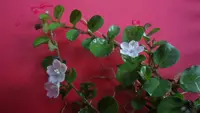
Agracejo rastrero (Evolvulus nummularius) is a low, mat-forming perennial often used as a groundcover in warm climates. It belongs to the morning glory family but stays compact and close to the soil.
The plant has small, rounded leaves and can produce delicate, funnel-shaped flowers, usually in soft blue or white tones, creating a subtle carpet effect. It naturally occurs in tropical and subtropical regions, often in open, sunny areas with well-drained soils.
This species tends to be fairly resilient where winters are mild, but it dislikes cold, waterlogged conditions and heavy shade. Understanding how to care for agracejo rastrero mainly involves providing sun, good drainage, and avoiding prolonged wet roots.

Care Difficulty
Easy Care

Light Preference
Full Sun

Water Requirements
Moderate Water

Temperature Preference
Tropical / Frost Sensitive

Hardiness Zone
10–13

Soil Texture
Sandy, Loamy, Rocky

Soil pH
Acidic (5.5–6.5), Slightly acidic (6.5–7.0)

Soil Drainage
Well-drained

Fertilization
Minimal (feed rarely)
Scan your plant to receive care tips personalized for your specific plant
Available on iOS and Android
Evolvulus nummularius thrives in bright outdoor conditions with several hours of direct sun each day.
Evolvulus nummularius prefers slightly dry, well-drained conditions rather than constantly wet soil.
This species performs best in warm, frost-free conditions and slows down noticeably in cool weather.
This species handles a wide humidity range but grows best in moderately dry air.
This groundcover prefers lean, well-aerated, sharply drained soil to prevent root problems.
This species is suitable for containers, especially shallow, wide pots or hanging baskets.
This groundcover benefits from light feeding to support compact growth and steady flowering when grown as agracejo rastrero in containers or beds.
Pruning helps Evolvulus nummularius stay dense, low, and floriferous as a mat-forming groundcover.
This species is more often transplanted in the landscape than repotted, but container plants still benefit from occasional size adjustments.
New plants of this low creeper are commonly produced from stem cuttings or by division of rooted sections.
In mild climates this warm-season groundcover needs minimal winter care but is sensitive to hard frost.

Plant Health Check
Not sure what's wrong with your plant? Check your plant's health inside the app.
This species forms very low, mat-like growth that rarely exceeds a few cm in height, helping it resist wind and desiccation in exposed, open habitats.
Its small pale blue to bluish-white flowers open mainly in the morning and often close by midday, a behavior that matches peak activity of some of its insect pollinators in warm climates.
The plant frequently colonizes disturbed or compacted sites such as paths, waste ground, and field edges, tolerating nutrient-poor, dry soils where less adapted species struggle.
This species spreads low and wide but is usually not aggressive. It forms a dense mat over time, yet is slow enough to control with edging and occasional trimming in typical garden conditions.
Keep your plants happy and healthy with plant identification, disease detection, and easy care guidance.

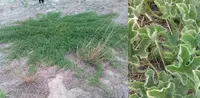
gooseberry gourd
Cucumis myriocarpus
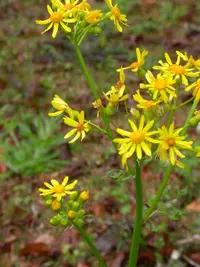
butterweed
Packera glabella
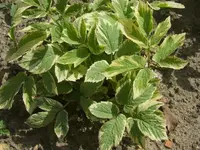
Bishop's Weed
Aegopodium podagraria 'Variegatum'

alligatorweed
Alternanthera philoxeroides
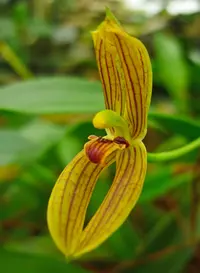
Maxillaria lineolata
Maxillaria lineolata
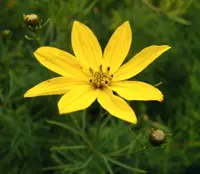
Threadleaf coreopsis
Coreopsis verticillata

grannyvine
Ipomoea tricolor
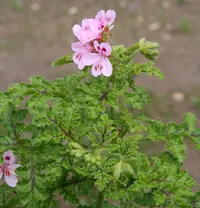
balm-scented pelargonium
Pelargonium glutinosum