Maxillaria lineolata Care

Maxillaria lineolata

About Maxillaria lineolata

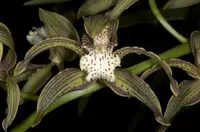
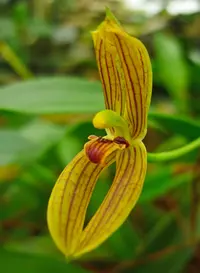
Maxillaria lineolata is a compact epiphytic orchid that typically grows on trees, forming small clumps of slender pseudobulbs and narrow leaves. Its flowers are usually striped or lined, which gives the species its name and adds visual interest at close range.

This orchid occurs naturally in parts of Central and South America, where it experiences warm, humid forests with good air movement. It is considered moderately demanding, since it prefers stable conditions and reacts poorly to extremes or neglect.

Those who care for Maxillaria lineolata should aim to provide bright filtered light, regular moisture with good drainage, and a well-aerated orchid substrate rather than standard potting soil.

Main Plant Requirements

Care Difficulty

Moderate Care

Light Preference

Bright Indirect Light

Water Requirements

Keep Soil Moist

Temperature Preference

Tropical / Frost Sensitive

Hardiness Zone

11–13

Soil Texture

Peaty, Organic-rich, Loamy

Soil pH

Acidic (5.5–6.5)

Soil Drainage

Moist but well-drained

Fertilization

Light (every 4–6 weeks)

Get Personalized Care Plan

Scan your plant to receive care tips personalized for your specific plant

Available on iOS and Android

How to Care for the Maxillaria lineolata

This orchid prefers bright, gentle light that mimics a lightly shaded forest canopy.

  • Provide 6–8 hours of bright, filtered light daily, such as dappled shade under taller plants or sheer-curtained east or west windows.
  • Allow soft morning sun but protect from strong midday and afternoon sun to prevent leaf yellowing, burn spots, and excessive dehydration.
  • In winter, move Maxillaria lineolata to a brighter position, while in summer increase shading if leaves feel hot to the touch.

Watering should keep roots evenly moist but never saturated for long periods.

  • Water when the top 2–3 cm of the potting mix feels dry, using thorough watering that fully wets the medium and then drains away completely.
  • Use a very free-draining orchid mix; roots should turn from silvery to green after watering and dry slightly between waterings to prevent rot.
  • Reduce watering in cooler months when growth slows, and watch for shriveling pseudobulbs as a sign of underwatering or black, mushy roots as a sign of overwatering.

This species prefers intermediate temperatures, similar to mild, frost-free forest conditions.

  • Aim for 65–80°F (18–27°C) during active growth, with slightly cooler nights to support healthy metabolism and flowering.
  • Avoid temperatures below 50°F (10°C); brief dips may be tolerated, but frost can permanently damage leaves, pseudobulbs, and roots.
  • In hot weather above 85°F (29°C), increase shade, airflow, and humidity to limit heat stress, leaf scorch, and stalled growth in Maxillaria lineolata.

This orchid prefers consistently moist air and benefits from elevated humidity indoors.

  • Aim for 60–80% humidity, as Maxillaria lineolata often struggles if kept below 50% for long periods.
  • Crisping leaf tips, shriveling pseudobulbs, and buds that dry and drop indicate humidity stress.
  • Use a room humidifier, grouped plants, or an evaporative tray with water and pebbles rather than misting alone to raise humidity.

This species is typically grown in a coarse, airy orchid medium rather than standard potting soil.

  • Use a mix of medium orchid bark, fine bark, and a small amount of perlite or pumice to create a loose, fast-draining structure.
  • Ensure abundant air spaces around the roots; the mix should drain in seconds yet feel slightly moist, not soggy, after watering.
  • Keep pH slightly acidic to neutral (about 5.5–7.0), which suits most orchid bark-based substrates.
  • Avoid dense peat-heavy or garden soils that compact, retain water too long, and limit oxygen around the roots.

This orchid is well suited to container culture in baskets or pots with very free drainage.

  • Choose a squat, wide pot or basket that allows the rhizome to creep sideways without crowding future new growths.
  • Select slatted baskets or pots with many side openings so air can move through the root zone, not only from the top surface.
  • Use a heavier pot material or add weight if the plant becomes top-heavy, to prevent tipping when the medium is very coarse and light.

This epiphytic orchid benefits from light, consistent feeding during active growth in spring and summer.

  • Use a balanced orchid fertilizer (around 20-20-20) diluted to 1/4–1/2 strength in low-mineral water.
  • Feed Maxillaria lineolata every 2–3 weeks in the growing season, skipping every fourth watering to flush salts.
  • In autumn and winter, reduce feeding to once every 4–6 weeks or pause if growth is very slow.
  • Avoid compost or heavy slow-release granules that can burn roots; use liquid or very mild slow-release orchid formulas.

Pruning needs are minimal and focus on hygiene rather than shaping this orchid.

  • Best time for any pruning is after flowering, when spent spikes are clearly dry and brown.
  • Remove dead, yellowed leaves and completely dry pseudobulbs with clean, sharp scissors or pruning snips.
  • Cut flower spikes back to the base once they are entirely finished to tidy the plant and channel energy to new growth.
  • Avoid removing firm green pseudobulbs, as they store water and nutrients needed for future flowering.

Maxillaria lineolata prefers to stay slightly cramped and only needs repotting when the medium breaks down or roots overflow the pot.

  • Plan to repot every 2–3 years in late winter or early spring, just before new root growth starts.
  • Check for crowded roots climbing out of drainage holes, slow growth, or sour-smelling, decomposed bark as signals to repot.
  • Gently tease roots free, trim soft or blackened sections, and shift into a slightly larger pot with fresh, coarse orchid bark and good aeration.
  • Water lightly after repotting, keep in bright but indirect light, and maintain high humidity to reduce root stress while new roots establish.

Division is the standard method for multiplying this species and works best on mature, well-established clumps.

  • Carry out division in late winter or early spring when repotting, just before strong new growth begins.
  • Lift the plant from its pot and gently separate the rhizome into sections, each with at least 3–4 healthy pseudobulbs and active roots.
  • Plant divisions into fresh, airy orchid bark, position pseudobulbs at the surface, and secure loosely so they do not wobble.
  • Provide bright, indirect light, 60–80% humidity, and slightly reduced watering until new roots and shoots confirm successful establishment.

This orchid is not frost tolerant and needs mild, protected conditions through winter.

  • Keep plants indoors or in a heated greenhouse when outdoor temperatures drop below 50°F, and always above freezing.
  • Maintain indoor temperatures around 60–75°F with good air movement but no cold drafts on foliage.
  • Water less frequently in winter, allowing the medium to approach dryness while avoiding complete desiccation of pseudobulbs.
  • If grown outdoors in mild climates, use a sheltered spot and insulating pot covers to buffer short cool spells.

Care Tips

Mounting strategy

Mount plants on cork or hardwood with a thin pad of long-fiber sphagnum only around the roots, leaving pseudobulbs exposed so they dry quickly and resist rot.

Cool-night drop

Provide a 10–15°F temperature drop at night in late summer and fall by cracking a window or moving the plant to a cooler room to encourage more reliable flowering.

Targeted air movement

Aim a small fan to create gentle, indirect airflow across the foliage and root zone to keep fine roots oxygenated and reduce fungal spotting on the leaves.

Water-quality control

Use low-mineral water (rain, distilled, or reverse-osmosis) and flush the mount or pot thoroughly once a month to prevent salt buildup that can burn root tips when growing Maxillaria lineolata.

Division timing

Divide only when there are at least 6–8 healthy pseudobulbs and new roots just beginning to grow, so each division establishes quickly and recovers with minimal setback.

Common Pests and Diseases

Scale insects

This pest commonly hides along pseudobulbs and leaf bases where it feeds on sap, causing yellowing, stunting, and sticky honeydew that can lead to sooty mold. Infestations often build up on older Maxillaria pseudobulbs grown in warm, sheltered orchid collections.

Solution

Remove heavily infested leaves or pseudobulbs, then wipe remaining scale with cotton pads dipped in isopropyl alcohol, taking care around new growths. Improve air movement, avoid excess nitrogen fertilization, and repeat targeted treatments weekly for several cycles; in larger collections, a systemic insecticide labeled for orchids can be used according to the product directions as part of broader Maxillaria lineolata care instructions.

Spider mites

These insects thrive on thin, leathery leaves in warm, dry air, causing fine stippling, dull foliage, and in severe cases webbing between leaves. Symptoms include reduced vigor in plants grown indoors or in greenhouses with low humidity and stagnant air.

Solution

Increase humidity to 50–70%, improve air circulation, and rinse foliage under a gentle stream of lukewarm water, especially the undersides of leaves. For persistent infestations, use a miticide or insecticidal soap labeled for orchids, applied thoroughly and repeated at 5–7 day intervals to disrupt the life cycle.

Orchid mealybugs

This pest appears as white, cottony clusters in leaf axils, on roots, and under sheaths, where it sucks sap and excretes honeydew. Symptoms include slow growth, leaf yellowing, and sticky residue that may attract sooty mold.

Solution

Isolate affected plants, then remove visible mealybugs with cotton swabs dipped in isopropyl alcohol, checking carefully around pseudobulbs and under sheaths. Follow with applications of insecticidal soap or a systemic insecticide labeled for orchids, and inspect neighboring plants weekly until no new insects appear.

Bacterial brown spot

This disease causes water-soaked, translucent patches on leaves that quickly turn brown and sunken, often starting where water sits on the blade. Symptoms include a sour smell and rapid spread in warm, humid, poorly ventilated growing areas.

Solution

Immediately remove and discard infected leaves with a sterile blade, cutting into healthy tissue and disinfecting tools between cuts. Keep foliage dry, increase air movement, avoid overhead watering in the evening, and, where allowed, apply a copper-based bactericide sparingly and according to label directions, as some orchids can be sensitive.

Leaf tip burn

Symptoms include brown, dry tips on otherwise green leaves, often progressing along the margins, caused by excess fertilizer salts or hard, mineral-rich water. This physiological disorder is frequent in orchids grown in small pots or baskets with limited leaching.

Solution

Flush the potting medium thoroughly with clean, low-mineral water to wash out accumulated salts, and reduce fertilizer strength to about 1⁄4–1⁄2 of the labeled dose applied every 2–3 waterings. If tap water is very hard, switch to rainwater, distilled, or reverse-osmosis water, and trim only the dead tissue from affected tips with sterilized scissors, leaving a narrow margin of brown to prevent further splitting.

Interesting Facts

Striped lip pattern

The flowers have a pale yellow lip marked with fine, dark longitudinal lines, a pattern thought to help guide pollinators toward the nectar-producing structures.

Cool to mild cloud-forest origin

This species is native to mid-elevation cloud forests in Central and northern South America, where it grows as an epiphyte on trees in cool to mild, constantly moist air.

Compact epiphytic growth

It forms small, clustered pseudobulbs with narrow leaves, adapting it to life on tree branches where water drains quickly but humidity remains high.

FAQs about Maxillaria lineolata

Lack of blooms usually comes from insufficient light, big temperature swings, depleted nutrients, or an overgrown root system. Check that the plant is not pot-bound, receives stable bright conditions, and gets balanced orchid fertilizer during active growth.

Grow Healthy Plants with Botan Care

Keep your plants happy and healthy with plant identification, disease detection, and easy care guidance.

Botan plant care app — identify plants on mobile

Explore More Plants