Threadleaf coreopsis Care (Coreopsis verticillata)

Also known as: Whorled Coreopsis, Threadleaf Coreopsis
Threadleaf coreopsis

About Threadleaf coreopsis

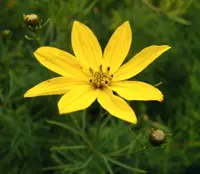
Threadleaf coreopsis (Coreopsis verticillata) is a perennial flowering plant valued for its fine, threadlike foliage and long-lasting yellow blooms. It forms tidy, airy clumps that move easily in the wind and add light texture to borders and pollinator gardens.

This species is native to eastern North America, where it grows in open, sunny sites with well-drained soils. It is widely grown in landscapes because it is relatively low maintenance, drought tolerant once established, and resistant to many common pests.

Gardeners who want to learn how to care for Threadleaf coreopsis usually find it forgiving, as it performs well in full sun, moderate moisture, and average, not overly rich soil.

Main Plant Requirements

Care Difficulty

Easy Care

Light Preference

Full Sun

Water Requirements

Low Water

Temperature Preference

Cold Hardy

Hardiness Zone

3–9

Soil Texture

Sandy, Loamy, Rocky

Soil pH

Acidic (5.5–6.5), Slightly acidic (6.5–7.0)

Soil Drainage

Well-drained

Fertilization

Minimal (feed rarely)

Get Personalized Care Plan

Scan your plant to receive care tips personalized for your specific plant

Available on iOS and Android

How to Care for the Threadleaf coreopsis

Coreopsis verticillata performs best in bright, open positions with plenty of direct sun.

  • Provide 6–8 hours of direct sun daily; full sun promotes dense growth and abundant flowers.
  • The plant tolerates light afternoon shade, especially in hot climates, but flowering may decrease in sites with less than 4–5 hours of sun.
  • In very intense summer sun, especially in dry, exposed spots, Threadleaf coreopsis benefits from slight afternoon shade to reduce leaf scorch and premature flowering decline.

Coreopsis verticillata prefers evenly drained, slightly dry-leaning soil once established.

  • Before watering, let the top 3–5 cm of soil dry; in average garden conditions, this often means longer gaps between waterings rather than frequent soaking.
  • During the first growing season, water deeply when foliage just begins to wilt or soil is dry below the surface; reduce frequency in subsequent years as roots deepen.
  • Avoid waterlogged soil, which promotes root rot; yellowing, limp stems suggest overwatering, while crisp, browning leaf edges indicate prolonged drought stress.

This hardy perennial tolerates a wide temperature range once established outdoors.

  • Active growth is strongest around 65–80°F (18–27°C), with flowering supported by warm days and slightly cooler nights.
  • Mature plants usually survive winter lows near -20°F (-29°C) in the ground when soil drains well and mulch protects the crown.
  • In summer heat above 90°F (32°C), flowering can slow; provide consistent soil moisture and, in very hot regions, light afternoon shade to limit stress.

This species tolerates a wide humidity range and rarely needs special humidity management outdoors.

Coreopsis verticillata prefers lean, well-drained mineral soil rather than rich, moisture-retentive substrates.

  • Use sandy or sandy-loam soil with low to moderate organic matter so roots stay aerated and dry quickly after rain or watering.
  • Aim for slightly acidic to neutral pH, around 6.0–7.0, which supports nutrient availability without encouraging excessive foliage growth.
  • For containers or raised beds, mix roughly 60–70% commercial potting mix with 30–40% coarse sand or fine grit to improve drainage.
  • Avoid heavy clay, compacted sites, or peat-heavy mixes that hold water, as prolonged saturation increases root rot risk.

This species is suitable for container growing when the pot and substrate are chosen to prevent waterlogging and top drying extremes.

  • Select a wide, relatively shallow pot to match the fibrous, spreading root system and keep the plant stable as stems form a loose mound.
  • Use a gritty, fast-draining mix so the root zone dries within a few days, even after heavy summer storms.
  • Choose a heavier material such as ceramic or clay if the container is exposed to wind, as the spreading foliage can act like a sail.

Coreopsis verticillata generally needs modest feeding, especially when grown in lean, well-drained soil.

  • Use a light application of balanced granular fertilizer (such as 10-10-10) or a thin layer of compost in early spring.
  • Feed garden plants once at the start of the growing season; container plants can receive a diluted liquid feed every 4–6 weeks.
  • Apply fertilizers at half the label-recommended strength to avoid forcing weak, floppy growth.
  • Stop feeding Threadleaf coreopsis in late summer and do not fertilize during winter dormancy.

Coreopsis verticillata responds well to thoughtful pruning that maintains a compact, floriferous clump.

  • In early summer, shear back spent blooms by one-third to encourage new flower stems and denser growth.
  • Remove dead, damaged, or crossing stems at the base with clean, sharp hand pruners.
  • Deadhead browning flower heads during the season if a tidier look and extended bloom are desired.
  • Cut back the entire clump to 5–8 cm above ground in late fall or very early spring to refresh growth.

This species is most often grown in garden beds, where occasional division and transplanting maintain vigor.

  • Plan to lift and divide clumps every 3–4 years in early spring or early fall when temperatures are mild.
  • Transplant when flowering declines, centers of clumps thin out, or growth becomes sparse despite good light.
  • Dig widely around the clump, keep as much root mass as possible, and replant at the same soil depth in well-drained ground.
  • Water thoroughly after transplanting, then keep soil slightly moist for 1–2 weeks to limit root stress.

Coreopsis verticillata is commonly propagated by division and by seed for maintaining or expanding plantings.

  • Divide mature clumps in early spring as new shoots emerge, replanting vigorous outer sections in fresh soil.
  • Sow seeds in late winter to early spring, indoors under lights or outdoors after frost, in a free-draining mix.
  • Maintain 65–75°F and consistent moisture for seed germination, avoiding waterlogging.
  • Softwood stem cuttings in late spring can root in a loose, sandy mix under high humidity and bright, indirect light.

This hardy perennial tolerates typical winters in much of the US with minimal intervention.

  • In zones with reliable snow cover, plants usually overwinter well without special protection.
  • After hard frost, stems can be cut back to a few centimeters above soil level or left for winter interest and cut in early spring.
  • Apply a light 5–7 cm mulch layer in colder regions to buffer freeze–thaw cycles, keeping mulch off the crown.

Care Tips

Shear After Flush

Shear the plants back by about one-third right after the main flowering flush to encourage dense regrowth and a lighter repeat bloom later in the season.

Staggered Division

Divide only a portion of an established clump every 3–4 years, leaving some undisturbed, to maintain continuous display while rejuvenating older, woody centers.

Lean Support Strategy

In windy or exposed sites, install low, unobtrusive ring supports or short peony hoops in spring so the fine stems grow through them and resist lodging without looking staked.

Deadhead In Batches

Instead of removing individual spent flowers, cut back whole sections of faded stems every 1–2 weeks during peak bloom to save time and keep the plant tidy.

Winter Cleanup Timing

In colder regions, leave dried stems standing over winter to protect crowns and beneficial insects, then cut them back to 5–8 cm only in late winter before new growth emerges when caring for Threadleaf coreopsis.

Common Pests and Diseases

Aphids

These insects cluster on young stems and flower buds, sucking sap and causing distorted growth, sticky honeydew, and sooty mold on foliage.

Solution

Knock aphids off with a strong stream of water, then monitor new growth closely; if populations persist, use insecticidal soap or a horticultural oil labeled for ornamentals, applied in the early morning or evening to avoid leaf burn.

Leafhoppers

These insects feed on foliage, causing pale stippling, yellowing, and sometimes a whitish speckled look, and can transmit aster yellows disease.

Solution

Reduce grassy weeds nearby that harbor leafhoppers, then protect plants with floating row covers early in the season or treat heavy infestations with a low-toxicity insecticidal soap or pyrethrin product, following label directions carefully.

Coreopsis leaf spot

This disease causes small purple to brown spots that may merge into larger blotches, leading to premature leaf yellowing and drop, especially in humid or crowded plantings.

Solution

Remove and discard heavily spotted leaves, thin or divide clumps to improve airflow, avoid overhead watering, and use a labeled fungicide for ornamental leaf spots if the problem recurs each year.

Powdery mildew

This disease appears as white, powdery patches on leaves and stems, which can cause leaf curling, yellowing, and reduced flowering in dense, shaded stands.

Solution

Increase sun exposure and spacing, water at soil level, remove badly affected foliage, and apply a sulfur or potassium bicarbonate fungicide at the first sign of symptoms if cultural changes are not sufficient.

Aster yellows

This disease, caused by a phytoplasma and spread mainly by leafhoppers, leads to yellowed, stunted plants, deformed or green flowers, and sometimes witches’-broom growth.

Solution

Promptly remove and destroy symptomatic plants to prevent spread, control leafhopper populations with cultural measures and, if needed, targeted insecticides, and replant only with healthy nursery stock as part of broader Coreopsis verticillata care instructions.

Interesting Facts

Threadlike foliage structure

This species has extremely narrow, filamentous leaves that create a fine, airy texture, which helps reduce water loss by limiting leaf surface area directly exposed to sun and wind.

Clump-forming rhizomes

It spreads slowly by short underground rhizomes, forming long-lived clumps that can persist for many years in the same site without becoming aggressively invasive in garden conditions.

High pollinator value

Its long summer flowering period with numerous small, nectar- and pollen-rich daisies supports bees, hoverflies, and small butterflies over an extended season in many temperate gardens.

Botan icon

Did you know?

This species is native to dry, open habitats in eastern North America, and its natural tolerance for poor, sandy, or rocky soils is one reason gardeners often choose it when they want to grow Coreopsis verticillata in low-fertility, low-maintenance planting schemes.

FAQs about Threadleaf coreopsis

This species spreads moderately by short rhizomes and self-seeding, forming loose clumps rather than dense carpets. It usually stays manageable in garden beds if spent blooms are deadheaded and any unwanted seedlings are removed each season.

Grow Healthy Plants with Botan Care

Keep your plants happy and healthy with plant identification, disease detection, and easy care guidance.

Botan plant care app — identify plants on mobile

Explore More Plants