Extend flowering
As spent flower stems fade, shear the plant back by 3–5 cm to encourage a second flush of buds and keep the mound compact rather than letting seed set prematurely.

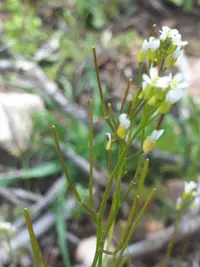
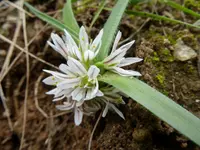
Arabis nova is a small, herbaceous perennial in the mustard family, typically forming low clumps or loose mats. It usually carries simple, narrow leaves and delicate white to pale pink flowers on short stems.
The species is associated with cooler, often rocky or alpine habitats, where it grows in well-drained, mineral-rich soils. Its compact habit and modest size make it suitable for rock gardens or naturalistic planting schemes.
This plant is generally undemanding if given good drainage and protection from prolonged heat and humidity. Understanding how to care for Arabis nova mainly involves providing bright light, moderate moisture, and a free-draining, gritty substrate.

Care Difficulty
Moderate Care

Light Preference
Partial Sun

Water Requirements
Moderate Water

Temperature Preference
Cool Climate

Hardiness Zone
Unknown

Soil Texture
Loamy

Soil pH
Slightly acidic (6.5–7.0)

Soil Drainage
Well-drained

Fertilization
Minimal (feed rarely)
Scan your plant to receive care tips personalized for your specific plant
Available on iOS and Android
This alpine perennial thrives with plenty of direct sun but tolerates some shade in hotter regions.
This plant prefers slightly dry, free-draining conditions rather than consistently moist soil.
This hardy species tolerates a wide temperature range but grows best in cool to mild conditions.
This species handles a wide humidity range and rarely needs special humidity management indoors or outdoors.
This alpine perennial prefers lean, sharply drained soil that prevents waterlogging around the roots.
This species can be grown in containers, especially for rock gardens, troughs, or balcony plantings.
This alpine perennial grows best in lean, well-drained soil and usually needs only modest feeding.
Pruning helps this compact groundcover stay dense, tidy, and floriferous.
This species is usually grown in rock gardens or borders, so transplanting matters more than container repotting.
This plant is commonly propagated to extend groundcover patches or refresh older clumps.
This alpine perennial is generally cold hardy and often needs only minimal winter attention in suitable climates.

Plant Health Check
Not sure what's wrong with your plant? Check your plant's health inside the app.
Arabis nova is mentioned in some regional floras as a provisional or doubtful name, and may represent a misapplied or unresolved taxon within the genus Arabis. Because of this, authoritative global plant databases either omit it or flag it as needing further study rather than accepting it as a clearly defined species.
The uncertain status of Arabis nova makes it a cautionary example in botanical research, since ecological or genetic studies that use the name without a clear voucher specimen risk mixing data from multiple, similar Arabis species. This illustrates why modern taxonomy relies on both morphology and DNA evidence to confirm whether a plant name refers to a valid, distinct species.
This species is typically evergreen or semi-evergreen, keeping low rosettes of foliage through winter in mild to moderate climates. In colder areas some leaves may die back, but the plant usually regrows readily from its crown.
Keep your plants happy and healthy with plant identification, disease detection, and easy care guidance.