Peninsula Sundew Care (Drosera cuneifolia)

Peninsula Sundew

About Peninsula Sundew

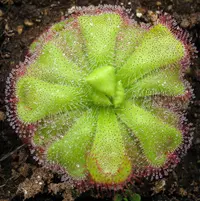
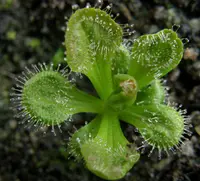
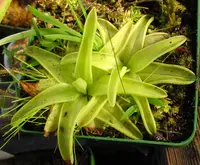
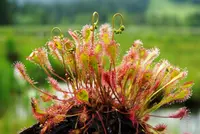
Drosera cuneifolia, commonly called the Peninsula sundew, is a small, rosette-forming carnivorous plant. It uses sticky, glistening leaf tentacles to trap and digest insects. Native to the Cape Peninsula region of South Africa, it grows in open, sunny, nutrient-poor, often seasonally wet habitats. This natural environment shapes its need for constant moisture and very lean, acidic substrates. The plant stays compact, with flat to slightly upright leaves that color best in strong light. It can be moderately challenging, as it is sensitive to mineral buildup and dry conditions. With a basic understanding of how to care for Peninsula Sundew, it becomes a rewarding and fascinating species to grow.


Main Plant Requirements

Care Difficulty

Hard Care

Light Preference

Full Sun

Water Requirements

Aquatic

Temperature Preference

Cool Climate

Hardiness Zone

9–10

Soil Texture

Sandy, Peaty, Organic-rich

Soil pH

Strongly acidic (4.5–5.5)

Soil Drainage

Waterlogged tolerant

Fertilization

Minimal (feed rarely)

Get Personalized Care Plan

Scan your plant to receive care tips personalized for your specific plant

Available on iOS and Android

How to Care for the Peninsula Sundew

This South African sundew prefers bright, cool sun similar to open bog or stream margins.

  • Provide 4–6 hours of direct morning sun plus bright filtered light for the rest of the day to color the traps well and maintain compact growth.
  • Allow light afternoon shade in hot summers; harsh sun from 1–4 p.m. can scorch leaves and dry the soil surface too fast, especially in shallow pots.
  • In winter, aim for the brightest spot available; Peninsula Sundew becomes weaker and greener if light drops below about 3–4 sun hours daily.

This species needs constantly moist, mineral-free conditions that mimic seepage bogs.

  • Keep the soil saturated, never letting the surface dry; the pot base can sit in 1–2 cm of rainwater or distilled water during active growth.
  • Reduce tray water depth in cooler seasons so the mix stays very damp but not flooded for long periods, which can encourage root rot.
  • Watch for leaves curling inward or dew drying as a sign of underwatering, and for blackening roots or a sour smell as warning signs of overwatering in poorly aerated media.

This cool-temperate carnivorous plant prefers mild conditions without strong frost or extreme heat.

  • Aim for 55–75°F (13–24°C) for steady growth; short peaks to 80°F (27°C) are tolerated if humidity stays moderate and roots remain cool.
  • Protect the plant from hard frost; light brief dips to about 32°F (0°C) may be survived, but repeated freezes damage crowns and roots.
  • In hot summers above 82–86°F (28–30°C), provide afternoon shade, good air movement, and cooler water at the root zone to prevent stress and dormancy-like slowdown.

This species needs consistently high humidity to keep traps functional and sticky.

  • Aim for 60–80% humidity; brief dips lower are tolerated, but extended dry air weakens dew production.
  • Low humidity stress shows as dry leaf edges, reduced mucilage, and traps that stop catching prey effectively.
  • Increase humidity with a tray of water near the pot, grouped plants, or a ventilated terrarium when caring for Peninsula Sundew.

This carnivorous species requires nutrient-poor, acidic, free-draining but constantly moist soil.

  • Use a 1:1 mix of sphagnum peat moss and silica sand or perlite to create a loose, airy texture.
  • Maintain very low nutrients and an acidic pH around 4.5–5.5 to match Drosera cuneifolia bog conditions.
  • Avoid any compost, fertilizer, or standard potting mix, which can burn roots and kill the plant.
  • Rinse sand or perlite thoroughly before use to remove mineral residues that could accumulate as salts.

This species is well suited to container growing when moisture and drainage are carefully balanced.

  • Select a relatively deep pot so the root zone stays cooler and evenly moist during warm spells.
  • Choose plastic over unglazed clay to reduce evaporative loss and keep the bog-style substrate damp for longer.
  • Stand the pot in a shallow water tray that stays partly filled, allowing the mix to wick moisture without submerging the crown.

This carnivorous species gains most nutrients from captured insects, so Peninsula Sundew indoor care uses little to no conventional fertilizer.

  • Avoid standard houseplant feeds; concentrated salts damage roots and traps.
  • If growth is weak, use a very dilute orchid or carnivorous-plant fertilizer at 1⁄4–1⁄8 strength, applied to soil only.
  • Feed at most every 4–6 weeks in the active growing season, never in winter dormancy.

Drosera cuneifolia needs only light, maintenance pruning to stay healthy and tidy.

  • Best timing is late winter or early spring before strong new growth starts.
  • Use small, sharp scissors or tweezers to remove dead, blackened leaves and spent flower stalks at the base.
  • Clearing old foliage improves light to young rosettes and reduces mold on the peat surface.
  • Avoid cutting healthy sticky leaves, as this reduces the plant’s ability to feed.

This sundew grows best in low-mineral media and benefits from periodic, gentle repotting.

  • Repot every 1–2 years in late winter or early spring when growth is slow.
  • Look for roots circling the pot, waterlogging, or slow growth despite good light as signs it needs fresh mix.
  • Use a plastic pot with fresh 1:1 sphagnum peat and perlite or sand, pre-rinsed with pure water.
  • Keep the root ball intact, water thoroughly with rainwater or distilled water, and shade lightly for a week to reduce stress.

This carnivorous plant is most often propagated by leaf cuttings and division under stable, moist conditions.

  • In late spring or summer, take healthy leaves and lay them on damp sphagnum or peat-sand, then cover lightly.
  • Maintain high humidity and bright, indirect light at 65–75°F until plantlets form along the leaf edges.
  • Divide mature clumps in early spring, separating rosettes with as much root as possible.
  • Seeds require moist, acidic medium, consistent light, and pure water; germination can take several weeks.

This species dislikes hard frost and benefits from controlled, cool conditions in winter.

  • Keep temperatures cool but above freezing, around 40–50°F, to allow a mild rest period.
  • For container plants outdoors, move pots into an unheated but frost-free space such as a cold greenhouse or bright garage.
  • Maintain damp, not waterlogged, peat during winter to avoid root rot while the plant is less active.

Care Tips

Dormancy management

Provide a cool, bright dormancy at 40–55°F for 8–10 weeks in winter by moving plants to an unheated but frost-free space, and slightly reduce water so the tray stays just damp rather than flooded to prevent root rot while the plant rests.

Bug feeding strategy

Offer very small, soft-bodied insects such as wingless fruit flies or freshly killed gnats no more than 1–2 times per month during active growth, placing them on different leaves each time so the plant is not stressed by overfeeding.

Water quality backup

Keep a small supply of distilled or reverse-osmosis water in clean, food-grade jugs as a reserve, and use a handheld TDS meter to make sure any new water source stays under about 50 ppm dissolved solids to avoid long-term mineral buildup in the pots.

Container and tray setup

Use tall, white or light-colored plastic pots set in a shallow tray and refill the tray with pure water from the side rather than overhead, which keeps the root zone cool, reduces algae growth on the medium surface, and limits disturbance of sticky leaves.

Media renewal schedule

Repot every 1–2 years into fresh low-nutrient carnivorous mix, discarding the old medium entirely, since this species is sensitive to accumulated minerals and organic breakdown products, which gradually weaken plants and make caring for Peninsula Sundew more difficult over time.

Common Pests and Diseases

Fungus gnats

These insects are attracted to constantly wet, peaty media and their larvae can damage fine feeder roots and stress the plant. Symptoms include slowed growth, weak dewy leaves, and small black flies hovering around the pot surface.

Solution

Allow only the top few millimeters of the medium to dry slightly between waterings while keeping the tray method shallow, and improve airflow around the pots. Use yellow sticky traps for adults and apply a biological control such as Bacillus thuringiensis israelensis (BTI) in the water to target larvae without harming the carnivorous leaves.

Aphids

These insects often attack tender new growth, sucking sap and distorting the young traps. Symptoms include curled or misshapen leaves, sticky honeydew, and clusters of soft-bodied insects on growth points or flower stalks.

Solution

Submerge the plant’s foliage briefly in rainwater or distilled water to dislodge aphids, or rinse gently from above, keeping minerals out of the pot. For persistent infestations, use a dilute insecticidal soap or a carnivorous-plant-safe systemic applied carefully to avoid mineral buildup, and remove heavily infested flower stalks if necessary.

Botrytis (grey mold)

This disease develops in cool, still, very humid air on old leaves or dead insect remains. Symptoms include fuzzy grey mold on spent leaves, flower stems, or trapped insects, followed by rapid collapse of nearby tissue.

Solution

Remove and discard all affected leaves and debris with sterile tools, and increase air movement while keeping light levels high and temperatures stable. Avoid water sitting on leaves for long periods, and in severe cases apply a light, targeted fungicide labeled safe for delicate ornamentals, taking care not to contaminate the growing medium with unnecessary chemicals.

Powdery mildew

This disease can appear when Peninsula sundews are grown in low light with poor air circulation. Symptoms include a white, powdery coating on leaves that reduces dew production and weakens the traps.

Solution

Increase light intensity gradually, space plants to improve airflow, and remove the most affected leaves. If needed, use a mild fungicidal spray such as a dilute potassium bicarbonate or sulfur product safe for soft foliage, applied carefully to avoid wetting the medium excessively.

Spider mites

These pests become a problem in dry indoor air or heated greenhouses, feeding on leaf surfaces and reducing dew production. Symptoms include fine speckling, dry-looking leaves, and very fine webbing between petioles or at leaf bases.

Solution

Raise humidity, increase gentle air movement, and rinse leaves with soft, mineral-free water to remove mites. For ongoing infestations, use repeated applications of a miticide or insecticidal soap suitable for delicate foliage, ensuring thorough coverage of the undersides and bases of leaves while monitoring new growth closely as part of ongoing Drosera cuneifolia care instructions.

Interesting Facts

Cape Peninsula specialist

This species is naturally restricted to the Cape Peninsula region of South Africa, where it grows in small, scattered populations on nutrient-poor, sandy or peaty seeps and wet rock ledges within fynbos vegetation.

Cool-growing sundew

Unlike many tropical sundews, this plant is adapted to mild, Mediterranean-type conditions with cool, wet winters and drier, relatively cool summers, often experiencing regular coastal fog and wind exposure in habitat.

Seasonal leaf dimorphism

In habitat it tends to produce larger, more actively carnivorous leaves in the cooler, wetter season and smaller, more compact leaves when conditions become warmer and drier, a growth pattern that helps conserve resources while still capturing prey.

Botan icon

Did you know?

This species is considered one of the few truly localized South African sundews, and some field observations suggest that certain populations may be self-incompatible, meaning individual plants require genetically different neighbors for successful seed production, which increases genetic diversity but makes fragmented populations more vulnerable.

FAQs about Peninsula Sundew

Browning leaves usually result from mineral buildup from tap water, low humidity, or too much direct heat. Use rain or distilled water, keep the soil evenly moist, and provide bright light without scorching midday sun to prevent damage.

Grow Healthy Plants with Botan Care

Keep your plants happy and healthy with plant identification, disease detection, and easy care guidance.

Botan plant care app — identify plants on mobile

Explore More Plants