Staggered Rejuvenation
Every 3–4 years, lift and divide the clump in early spring, replanting only the youngest, most vigorous sections to maintain flower quality and reduce fungal buildup in the crown area.

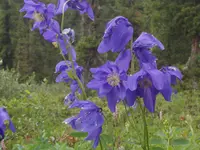
Altai columbine (Aquilegia glandulosa) is a compact, herbaceous perennial known for its nodding blue and white flowers and delicate, fern-like foliage. It usually forms low clumps that send up slender flowering stems in late spring to early summer.
This species is native to mountain regions of Siberia and Central Asia, where it grows in meadows, open woodland, and rocky slopes. Its alpine origin makes it fairly cold-hardy but less tolerant of hot, humid summers.
Altai columbine prefers cool conditions, light shade, and moist, well-drained soil with good organic content. Once its needs are understood, gardeners find it reasonably straightforward to care for Altai Columbine in suitable climates.

Care Difficulty
Moderate Care

Light Preference
Partial Shade

Water Requirements
Moderate Water

Temperature Preference
Cold Hardy

Hardiness Zone
3–7

Soil Texture
Loamy, Sandy, Organic-rich

Soil pH
Acidic (5.5–6.5), Slightly acidic (6.5–7.0)

Soil Drainage
Moist but well-drained

Fertilization
Minimal (feed rarely)
Scan your plant to receive care tips personalized for your specific plant
Available on iOS and Android
This alpine perennial prefers cool conditions with bright but not harsh sun exposure.
This plant prefers evenly moist, well-drained soil rather than strict wet or dry cycles.
This species is naturally adapted to cool, mountainous climates and handles cold better than heat.
Aquilegia glandulosa handles a wide humidity range and rarely needs special humidity management.
Aquilegia glandulosa prefers cool, moist, well-structured soil that drains freely without staying waterlogged.
This species can be grown in containers if the pot is prepared to keep roots cool and evenly moist without saturation.
This alpine perennial needs only light feeding in reasonably fertile garden soil.
Aquilegia glandulosa benefits from modest pruning to maintain tidy growth and encourage flowering.
This species is usually grown in the ground and prefers minimal disturbance once established.
Aquilegia glandulosa is most commonly propagated from seed and sometimes by gentle division.
This columbine is quite cold hardy and typically needs only simple winter care in most temperate climates.

Plant Health Check
Not sure what's wrong with your plant? Check your plant's health inside the app.
This species is native to the Altai and western Siberian mountain regions, where it grows in alpine meadows, rocky slopes, and forest edges at relatively high elevations, showing strong adaptation to cold, short growing seasons.
The plant produces bright blue to violet nodding flowers with backward-pointing spurs that store nectar, which are particularly attractive to long-tongued pollinators such as certain bees and butterflies.
Compared with many garden columbines, this species stays naturally low and compact, forming small clumps that suit rock gardens and alpine plantings, a trait shaped by its high-altitude environment.

Genetic and morphological studies have used this species as part of broader Aquilegia research on how floral spur length and shape evolve in response to specific pollinators, helping scientists understand plant–pollinator coevolution in mountain ecosystems.
Lack of flowering usually comes from too much shade, excess nitrogen fertilizer, young plants not yet mature, or stressed roots after division. Ensure stable moisture, moderate nutrients, and avoid disturbing the root system in spring.
Keep your plants happy and healthy with plant identification, disease detection, and easy care guidance.