Pale Rainbow Care (Drosera pallida)

Pale Rainbow

About Pale Rainbow

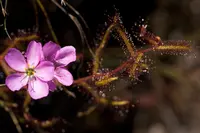
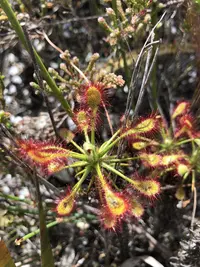
Pale Rainbow (Drosera pallida) is an upright, climbing sundew, a type of carnivorous plant that traps insects on sticky, glistening leaf tentacles. Its long, wiry stems can scramble through surrounding vegetation, with narrow leaves arranged in whorls that shimmer in bright light.

This species is native to southwestern Australia, where it grows in nutrient-poor, seasonally moist habitats. It is considered moderately challenging, as it needs consistent moisture, low-nutrient substrate, and good light while avoiding high mineral content in water. Understanding how to care for Pale Rainbow mainly involves balancing bright light with cool, damp but not stagnant conditions.

Main Plant Requirements

Care Difficulty

Hard Care

Light Preference

Full Sun

Water Requirements

Aquatic

Temperature Preference

Warm Climate

Hardiness Zone

10–11

Soil Texture

Sandy, Peaty, Organic-rich

Soil pH

Strongly acidic (4.5–5.5)

Soil Drainage

Waterlogged tolerant

Fertilization

Minimal (feed rarely)

Get Personalized Care Plan

Scan your plant to receive care tips personalized for your specific plant

Available on iOS and Android

How to Care for the Pale Rainbow

This sundew needs strong light to build color and sticky traps.

  • Provide 6–8 hours of direct sun, ideally morning to early afternoon; in hotter inland summers, give light afternoon shade to prevent leaf scorching.
  • In mild coastal or temperate climates, Drosera pallida tolerates full sun all day if soil stays consistently moist.
  • If stems elongate, leaves lose red tones, or traps become weak, light is too low; move to a more open site, adjusting gradually over 5–7 days for caring for Pale Rainbow.

This carnivorous plant prefers consistently moist, low-mineral conditions.

  • Use rainwater, distilled, or reverse-osmosis water; avoid tap water if it is hard or chlorinated, as mineral buildup damages roots over time.
  • Keep the soil evenly damp and never fully dry; if the surface pales or moss crisps, increase watering or standing water depth slightly.
  • In cooler seasons reduce standing water so the soil is moist but not waterlogged; yellowing, limp leaves may suggest rot, while drooping, crisp tips signal underwatering in Drosera pallida.

This species favors mild, frost-free conditions with a defined dry, warm period.

  • Aim for 65–80°F (18–27°C) during active growth; warm days with cooler nights support strong traps and steady stem elongation.
  • Avoid frost; brief drops to 35–40°F (2–4°C) may be survived but can damage foliage, so protect plants if frost is forecast.
  • In hot spells above 90°F (32°C), increase humidity and air movement and ensure roots stay cool; prolonged extreme heat without moisture relief can weaken or kill the plant.

This sundew prefers moderately humid air but adapts if other conditions are correct.

  • Aim for 40–60% humidity to keep leaves dewy and trapping efficiently.
  • Tolerates brief drier spells, but prolonged air under 30% reduces mucilage and leaf gloss.
  • Watch for dry, curling leaf tips and reduced sticky droplets as signs of low humidity stress.
  • Increase humidity with nearby water trays or grouped plants rather than misting directly on the foliage.

Drosera pallida needs very low-nutrient, wet yet airy soil to protect its sensitive roots.

  • Use a mix of 1:1 sphagnum peat and silica sand or perlite for moisture retention with open structure.
  • Keep drainage free but constant by standing the pot in a shallow tray of distilled or rainwater.
  • Target pH around 4.5–5.5; avoid lime, fertilizers, compost, or standard potting mixes that burn roots.
  • Rinse sand or perlite before use to remove minerals, which can accumulate and damage this carnivorous species.

This species is suitable for container growing when pot depth and stability are considered.

  • Choose a tall, narrow pot to support its climbing habit and keep roots cool and evenly moist.
  • Use plastic or glazed ceramic containers to slow evaporation and maintain the constant wet soil it requires.
  • Place the pot in a stable outer cachepot or tray so the long stems do not tip the container as they elongate.

Drosera pallida grows on very poor soils and usually needs no fertilizer when catching enough insects.

Drosera pallida needs only light, corrective pruning to keep plants clean and functional.

  • Trim dead or blackened leaves at the base at the end of the growing season to reduce rot risk.
  • Remove damaged or dried flower stalks after seed release to direct energy back to leaf growth.
  • Use fine scissors or small snips, cutting carefully without crushing nearby active traps.
  • Avoid heavy cutting of healthy foliage, as this reduces photosynthesis and insect capture.

Container-grown plants benefit from periodic transplanting to refresh the low-nutrient medium and prevent crowding.

  • Check for roots circling the pot, drying out very fast, or stalled growth as signs transplanting is needed.
  • Plan to move Drosera pallida every 2–3 years in late winter or early spring before strong new growth.
  • Use a nutrient-poor mix such as 1:1 sphagnum peat and sand or perlite, pre-moistened with rain or distilled water.
  • Gently loosen the root ball, avoid teasing fine roots, and keep them moist throughout the move to limit stress.

Drosera pallida is commonly propagated by seed and sometimes by stem or leaf cuttings under humid conditions.

  • Sow fresh seed in late winter to early spring on the surface of moist peat-sand mix without covering.
  • Maintain high humidity, bright indirect light, and cool to mild temperatures for steady germination.
  • For cuttings, place healthy non-flowering stems or leaves on damp sphagnum or peat-sand and enclose in clear cover.
  • Vent the container gradually as new plantlets form, then separate and pot them once roots are well developed.

In mild, frost-free climates Drosera pallida needs little special winter care beyond stable moisture and light.

  • In regions with light frost, grow Drosera pallida in containers and move under cover when temperatures near freezing.
  • Avoid hard freezes below 32°F, which can damage stems and crowns, especially in wet, windy conditions.
  • Keep the peat-based medium just damp, using rain or distilled water, and avoid waterlogged, cold soil during winter.

Care Tips

Tall support frame

Provide a slim wire or bamboo frame 40–80 cm tall for the long climbing stems to twine around, so the plant can form vertical growth instead of collapsing into a tangled mat.

Cool dormancy shift

In late autumn, gradually shorten the photoperiod and move plants to a cooler, bright position (around 50–60°F) to encourage a defined winter rest that supports stronger regrowth in spring.

Clean water trays

Refresh the water in the tray every 2–3 days and occasionally rinse the tray itself to prevent mineral buildup and algae that can stress roots over time.

Dew maintenance mist

If air is very dry, briefly mist around (not directly on) the foliage with distilled water in the morning to support dew formation, avoiding heavy wetting that can wash off mucilage.

Targeted feeding strategy

In low-insect indoor setups, place a small insect-attracting LED or sticky card near, but not touching, the plant so that natural prey still finds the traps, which is key for Drosera pallida plant care in the long term.

Common Pests and Diseases

Fungus gnats

These insects are attracted to constantly wet carnivorous media and lay eggs that hatch into larvae feeding in the top layer of the soil and around fine roots. Symptoms include tiny black flies hovering near pots and slight decline in vigor in seedlings or young plants.

Solution

Allow the surface of the medium to approach just-damp between waterings, improve tray drainage, and avoid stagnant water under pots. Use yellow sticky traps for adults and, if larvae are visible, flush the medium gently with clean rain or distilled water and apply a biological control such as Bacillus thuringiensis israelensis according to label directions.

Aphids

These insects suck sap from tender leaves, tentacles, and flower stalks, causing distortion, sticky honeydew, and reduced trapping ability. Symptoms include curled new growth and small green, black, or pale insects clustered on stems or underside of leaves.

Solution

Rinse the plant thoroughly with a gentle stream of rain or distilled water, repeating every few days until no aphids remain. For persistent infestations, use a low-toxicity insecticidal soap or horticultural oil labeled safe for soft-leaved ornamentals, ensuring good coverage while avoiding application during strong sun or high heat.

Grey mold (Botrytis)

This disease develops in cool, humid, stagnant air and attacks older leaves, dead insects on the traps, and damaged tissue. Symptoms include soft brown patches that develop into fuzzy grey mold, especially on crowded or poorly ventilated pots.

Solution

Remove and discard all affected leaves and debris, including old insect remains, and increase airflow and light around the plant. Reduce overhead wetting of foliage, space plants so leaves can dry quickly, and in severe cases apply a fungicide suitable for ornamental plants, following directions carefully and avoiding unnecessary repeat treatments.

Spider mites

These pests thrive in hot, dry conditions and may colonize tentacles and leaf surfaces when ambient humidity is low. Symptoms include fine speckling, dull or bronzed foliage, and very fine webbing on stems or between leaves.

Solution

Raise humidity slightly, increase air movement, and rinse foliage thoroughly under a gentle stream of water, focusing on leaf undersides and plant crowns. If mites persist, use an insecticidal soap or a miticide labeled for ornamental use, applying 2–3 times at 5–7 day intervals to catch newly hatched mites while monitoring plant response carefully.

Interesting Facts

Tall scrambling sundew

This species is one of the taller Australian sundews, producing wiry, climbing stems that can exceed 1 m in length as it scrambles through surrounding vegetation for support.

Winter tuber survival

Drosera pallida survives the hot, dry Western Australian summer as an underground tuber and only produces its carnivorous stems and leaves during the cooler, wetter growing season.

Highly restricted range

It is endemic to a limited area of southwestern Western Australia, where it grows on sandy or lateritic soils in heathland and open woodland habitats influenced by a Mediterranean-type climate.

Botan icon

Did you know?

The species was formally described relatively late, in 1903 by Ludwig Diels, during a period of intensive botanical exploration that revealed many of southwestern Australia’s specialized carnivorous plants.

FAQs about Pale Rainbow

Lack of flowers usually comes from light levels that are too low, temperatures outside its preferred range, or nutrient buildup in the medium. Provide stronger light, appropriate seasonal temperatures, and use low‑mineral water to restore normal flowering.

Grow Healthy Plants with Botan Care

Keep your plants happy and healthy with plant identification, disease detection, and easy care guidance.

Botan plant care app — identify plants on mobile

Explore More Plants