rosy sundew Care (Drosera hamiltonii)

Also known as: Stelogyne
rosy sundew

About rosy sundew

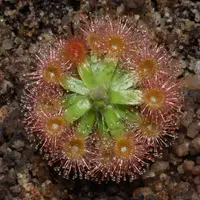
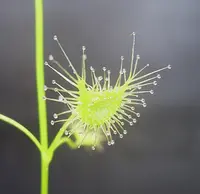
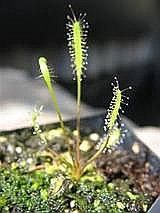
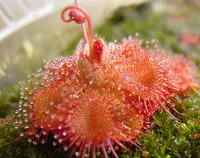
The rosy sundew, Drosera hamiltonii, is a small carnivorous plant that forms tight rosettes close to the soil surface. Its narrow leaves are covered with pink, sticky glands that trap small insects.

This species is native to nutrient-poor, sandy wetlands of southwestern Australia. It relies on insect prey to supplement nutrients, which is why it evolved its sticky leaves.

Drosera hamiltonii stays compact and is slower growing than many other sundews, which can make it slightly more challenging for beginners. Stable moisture, clean water, and bright light are important to care for rosy sundew successfully.

Main Plant Requirements

Care Difficulty

Moderate Care

Light Preference

Partial Sun

Water Requirements

Keep Soil Moist

Temperature Preference

Tropical / Frost Sensitive

Hardiness Zone

10–11

Soil Texture

Sandy, Peaty, Organic-rich

Soil pH

Strongly acidic (4.5–5.5)

Soil Drainage

Waterlogged tolerant

Fertilization

Minimal (feed rarely)

Get Personalized Care Plan

Scan your plant to receive care tips personalized for your specific plant

Available on iOS and Android

How to Care for the rosy sundew

This carnivorous species prefers bright, soft sun that supports strong dew production without scorching the leaves.

  • Provide 4–6 hours of direct morning sun plus bright, filtered light for the rest of the day; rosy sundew tolerates light dappled shade in hot regions.
  • Use shade cloth or light afternoon shade if summer highs are intense to prevent leaf bleaching and burnt tips.
  • Increase exposure gradually in spring and reduce harsh midday sun in midsummer; pale, lanky growth signals insufficient light.

This species is adapted to consistently wet, low-nutrient conditions and is sensitive to mineral buildup.

  • Use rainwater, distilled, or reverse-osmosis water; keep the substrate evenly wet, never letting it fully dry at any depth.
  • Aim for soil that feels saturated but not soupy; leaves curling inward and dry mucilage suggest underwatering, while brown, limp roots indicate waterlogging.
  • Reduce standing water slightly in cooler seasons while still maintaining constant moisture, especially for Drosera hamiltonii grown in dense peat mixes.

This species prefers mild, frost-free conditions that mimic a cool-temperate to warm-temperate climate.

  • Aim for 60–80°F (16–27°C) for active growth; short spikes to 85°F (29°C) are tolerated if humidity is moderate and roots stay cool.
  • Protect from frost; brief drops to 35–40°F (2–4°C) may be survived but can damage leaves and reduce vigor.
  • During hot spells above 85°F (29°C), increase air movement, provide light shade, and avoid heating the root zone or water trays.

This species benefits from moderately high humidity but adapts if other conditions are stable.

  • Aim for 50–70% humidity, as very dry air slows growth and reduces dew production on leaves.
  • Plants tolerate brief dips to 30–40% if roots stay evenly moist and light is not excessively strong.
  • Humidity stress shows as dull, dry leaf tips and reduced mucilage; increase humidity with a nearby water tray or grouped plants, not a sealed terrarium.

This carnivorous species needs a nutrient-poor, airy, and consistently moist substrate.

  • Use a mix of roughly 1:1 sphagnum peat moss and coarse silica sand or perlite, with no added fertilizer or compost.
  • The soil should be open, fibrous, and slightly springy, holding moisture while allowing air pockets around the roots.
  • Aim for acidic conditions around pH 4.5–5.5, which suits Drosera hamiltonii and limits nutrient availability that could burn roots.
  • Avoid bark-based mixes, standard potting soil, manures, or slow-release fertilizers, which cause mineral buildup and root damage.

This species is well suited to container culture when moisture and stability are controlled carefully.

  • Choose a pot at least 7–9 cm deep so roots can stay cool and evenly moist without waterlogging the crown.
  • Use plastic or glazed ceramic rather than porous clay to reduce evaporation and keep the substrate consistently damp.
  • Stand the container in a shallow saucer of rainwater or distilled water, letting the top 1–2 cm of soil stay just moist, not submerged.

Drosera hamiltonii is adapted to nutrient-poor, boggy soils and usually performs best with no traditional fertilizer.

Pruning Drosera hamiltonii focuses on hygiene and maintaining active, pest-catching foliage.

  • Trim dead or blackened leaves at the base with small, sharp scissors throughout the growing season to prevent mold.
  • Remove damaged or fungus-affected traps promptly to keep the crown open and healthy.
  • Cut spent flower stalks after seed set or earlier if you want to conserve the plant’s energy for foliage growth.

Repotting supports healthy roots and stable moisture for this compact sundew.

  • Repot every 2–3 years or when growth slows, roots circle the pot, or the peat-based mix compacts heavily.
  • Choose late winter to early spring before strong new growth for the least stress.
  • Use a tall pot with fresh 1:1 sphagnum peat:sand or perlite, with no added fertilizer.
  • Water thoroughly after repotting and keep humidity high for 1–2 weeks to help roots re-establish.

Drosera hamiltonii is commonly propagated vegetatively to keep desirable traits consistent.

  • Divide mature clumps in late winter–spring, ensuring each division has roots and a healthy crown.
  • Take leaf cuttings and lay leaves flat on damp peat:sand under high humidity and bright, indirect light.
  • Sow seeds on the surface of moist carnivorous mix, avoiding burial, and keep constantly damp.
  • Maintain 65–75°F, bright light, and fungus-free conditions to improve rooting and germination success.

This species prefers mild, frost-free conditions and benefits from some winter attention in colder climates.

  • Avoid exposure to hard frost; brief light chills are tolerated but freezing can damage crowns.
  • Move containers indoors or to a cool greenhouse when temperatures near 32°F are expected.
  • Maintain damp, not waterlogged, substrate in winter to limit rot in low light.
  • In unheated spaces, insulate pots with trays, clustering, or light wrapping to buffer temperature swings.

Care Tips

Use deep trays

Place pots in a deep, clean tray so water depth can be varied seasonally, keeping the tray fuller in active growth and slightly shallower in cooler months to mimic its natural wet–to–moist cycles.

Refresh moss collar

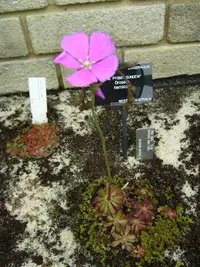
Top-dress the pot with a thin layer of live or well-rinsed dead sphagnum around the plant base to stabilize roots, maintain moisture, and gently suppress algae and liverworts without smothering the crown.

Rotate for even dew

Turn the pot 90° every 1–2 weeks under fixed lighting so rosettes receive even light exposure, which encourages symmetrical growth and consistent dew production across all leaves.

Seasonal resting shift

In mild winter conditions, slightly reduce water depth and feeding frequency instead of forcing full dormancy, which better matches its natural cool-season slowdown and supports long-term health when growing rosy sundew.

Controlled division timing

Divide crowded clumps only at the start of strong growth, keeping root disturbance minimal and replanting offsets quickly into pre-soaked media to reduce stress and prevent setbacks.

Common Pests and Diseases

Fungus gnats

These insects thrive in constantly wet carnivorous soil and their larvae feed on fine roots and the stem base, causing slow decline and poor growth.

Solution

Allow the upper 0.5–1 cm of the medium to approach just-damp rather than waterlogged, use top-dressing with a thin layer of rinsed sand, and place yellow sticky traps to reduce adults; for heavy infestations, use a biological control such as Bacillus thuringiensis israelensis (Bti) according to label directions in trays or watering water.

Aphids

These insects cluster on young leaves and flower stalks, sucking sap and causing distorted traps, sticky honeydew, and reduced vigor.

Solution

Rinse plants gently under a soft stream of water, pinch or wipe off colonies, then treat remaining insects with a carnivorous-safe insecticidal soap or horticultural oil spray, applied in the evening and repeated after 5–7 days if needed.

Botrytis (grey mold)

This disease appears in cool, still, humid air as fuzzy grey mold on dead insect remains, old leaves, or crowded crowns, and can spread into healthy tissue.

Solution

Improve air movement, remove spent leaves and dead insects from the rosette, and avoid water sitting directly on the crown; if mold persists, use a low-dose, sulfur-free fungicide that is known to be safe for carnivorous plants and apply only when necessary.

Powdery mildew

This disease shows as thin white or grayish patches on tentacle surfaces and leaf blades, reducing photosynthesis and dew production.

Solution

Increase light and air circulation, avoid overcrowding pots, and promptly remove heavily affected leaves; if needed, apply a mild, carnivorous-compatible fungicide such as potassium bicarbonate, testing on a small area first.

Interesting Facts

Single-population endemic

This species is naturally restricted to a very small area near Albany in southwestern Western Australia, where it grows in seasonally wet, sandy peat in low heathland and sedgeland.

Unusual spatulate leaves

Its leaves are short, flat, and broadly spatulate, forming a tight rosette with reddish tentacles that create a compact trap surface well adapted to low, open vegetation and high light levels.

Compact winter rosette

In its native climate, it forms a dense, low rosette during the cooler, wetter months, allowing the plant to withstand seasonal shifts in water level and temperature typical of its coastal heath habitat.

Botan icon

Did you know?

This species is considered rare in the wild due to its extremely restricted natural range, and its conservation status has attracted attention from botanists and carnivorous plant specialists monitoring the specialized wetland habitats around Albany, Western Australia.

FAQs about rosy sundew

Brown leaves usually result from low humidity, strong direct sun, mineral-rich tap water, or old age of outer leaves. Check water quality, maintain consistently damp substrate, provide bright but gentle light, and remove dead foliage to prevent mold.

Grow Healthy Plants with Botan Care

Keep your plants happy and healthy with plant identification, disease detection, and easy care guidance.

Botan plant care app — identify plants on mobile

Explore More Plants