Water-edge placement
Plant along the edge of ponds or swales where soil stays moist but not constantly submerged, which stabilizes banks and supports healthier root development.

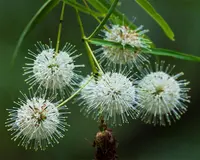
Mexican buttonbush, Cephalanthus salicifolius, is a deciduous shrub native to wetlands and stream edges in northeastern Mexico and southern Texas. It forms narrow, upright stems with slender, willow-like leaves.
The plant produces small, spherical flower clusters that are creamy white and highly attractive to pollinators such as butterflies and bees. Its natural preference for moist soils and full sun makes it a good choice for rain gardens, pond margins, or consistently damp borders.
For gardeners who want to care for Mexican buttonbush successfully, it helps to provide steady moisture and avoid very dry, exposed sites, especially in hot climates.

Care Difficulty
Moderate Care

Light Preference
Full Sun

Water Requirements
Aquatic

Temperature Preference
Warm Climate

Hardiness Zone
8–11

Soil Texture
Loamy, Silty, Organic-rich

Soil pH
Acidic (5.5–6.5), Slightly acidic (6.5–7.0)

Soil Drainage
Waterlogged tolerant

Fertilization
Minimal (feed rarely)
Scan your plant to receive care tips personalized for your specific plant
Available on iOS and Android
Cephalanthus salicifolius grows best with steady sun exposure suited to warm, wet habitats.
Cephalanthus salicifolius prefers consistently moist conditions, often thriving in wet soils near water.
This species is adapted to warm climates but tolerates a moderate range of outdoor temperatures.
This riparian shrub prefers consistently moist air but adapts to typical outdoor humidity in most regions.
This species thrives in wet, oxygenated soils that stay saturated or periodically flooded without becoming stagnant.
This plant can be grown in large containers outdoors, but only when the pot can hold consistently wet soil without tipping or overheating.
Cephalanthus salicifolius is a low‑maintenance native shrub that usually needs only light fertilization in poor soils.
Cephalanthus salicifolius responds well to thoughtful pruning that maintains structure and flowering wood.
This shrub is typically grown in the ground, so care focuses on transplanting rather than container repotting.
Cephalanthus salicifolius is commonly propagated by semi‑ripe cuttings and seeds under suitable conditions.
This species is moderately cold hardy in much of its range and usually needs only minimal winter attention in the ground.

Plant Health Check
Not sure what's wrong with your plant? Check your plant's health inside the app.
This species is naturally restricted to streams, river margins, and drainage ditches in south Texas and northeastern Mexico, where its narrow leaves and flexible stems tolerate periodic flooding and fluctuating water levels.
Although related to the common buttonbush Cephalanthus occidentalis, it differs in having much narrower, willow‑like leaves and a more slender, fountain‑shaped habit, which has led to the specific epithet salicifolius meaning willow‑leaved.
Its dense, arching stems and fine foliage create cover along waterways that shelters small birds and aquatic-edge invertebrates, adding structural diversity to riparian vegetation even though its flower heads are less showy than those of other buttonbush species.
This shrub is highly attractive to many native bees, butterflies, and other pollinating insects. The round flower clusters provide abundant nectar and pollen, making it a strong choice for wildlife gardens and habitat restoration plantings.
Keep your plants happy and healthy with plant identification, disease detection, and easy care guidance.