


Anchor-Free Placement
Let the plant float freely or loosely tangle in hardscape instead of forcing it into the substrate, as this prevents stem damage and allows natural, bushy growth.

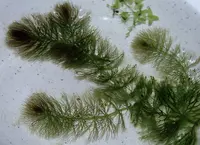
Soft hornwort, Ceratophyllum submersum, is a submerged, rootless aquatic plant commonly used in freshwater aquariums and ponds. It floats freely or anchors loosely in the substrate. Its fine, soft, forked leaves form delicate, feathery stems that create shelter for fish fry and invertebrates. Growth is usually fast under stable water conditions. In nature, soft hornwort occurs in slow-moving or still waters across Europe, parts of Asia, and North Africa. It adapts to a range of water parameters and does not need complex equipment, which makes it suitable for beginners who want to learn how to care for Soft Hornwort. The plant prefers moderate light, gentle water movement, and stable, clean water rather than specific soil types.

Care Difficulty
Easy Care

Light Preference
Partial Sun

Water Requirements
Aquatic

Temperature Preference
Warm Climate

Hardiness Zone
5–11

Soil Texture
Silty, Peaty, Organic-rich

Soil pH
Slightly acidic (6.5–7.0), Neutral (7.0)

Soil Drainage
Waterlogged tolerant

Fertilization
Minimal (feed rarely)
Scan your plant to receive care tips personalized for your specific plant
Available on iOS and Android
This submerged aquatic plant relies on consistent light rather than intense direct sun at the water surface.
As a fully aquatic species, this plant depends on stable water depth and quality rather than traditional soil moisture.
This aquatic plant prefers moderate, stable water temperatures and does poorly in frost or extreme heat.
This submerged aquatic species does not rely on air humidity, as its foliage must stay fully underwater.
Ceratophyllum submersum is a free-floating or loosely anchored aquatic plant that does not need traditional soil.
This species is well suited to container culture in aquariums, tubs, or ponds.
Ceratophyllum submersum absorbs most nutrients directly from the water and usually needs only light fertilization in aquariums.
Pruning Ceratophyllum submersum maintains density, prevents excessive shading, and keeps growth manageable in aquariums or ponds.
This rootless aquatic plant is not conventionally repotted but is instead thinned, moved, or reanchored as it spreads.
Ceratophyllum submersum is commonly propagated from stem cuttings rather than seeds in home aquariums and ponds.
In many temperate climates this species is fairly cold tolerant and often needs only minimal winter attention in ponds.

Plant Health Check
Not sure what's wrong with your plant? Check your plant's health inside the app.
This species is most often found in mildly brackish or soft, low-mineral freshwater, unlike its relative Ceratophyllum demersum, which tolerates harder water more readily.
Its underwater leaves are finely divided with characteristically softly forked tips, a trait used by botanists to distinguish it from other hornwort species with stiffer, more pointed leaves.
In slow, nutrient-rich canals, ponds, and ditches, this plant can form loose underwater stands that help shade the water column and provide shelter for small invertebrates and fish fry.
Growth is usually rapid under good light, moderate water movement, and stable nutrients, often adding several cm per week. In low light, with poor fertilization or fluctuating CO2, growth slows and stems may become thin and sparse.
Keep your plants happy and healthy with plant identification, disease detection, and easy care guidance.

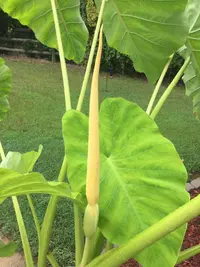
Taro
Colocasia esculenta 'Lime Aide'
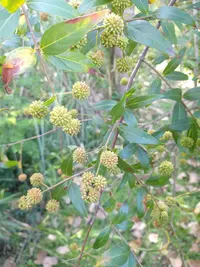
sarandí colorado
Cephalanthus glabratus
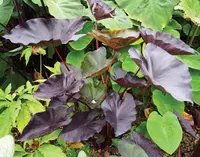
Imperial Taro
Colocasia esculenta 'Black Beauty'
Parnassus-leaved Water-plantain
Caldesia parnassifolia

northern water plantain
Alisma triviale

Sea Nymph
Amphibolis antarctica
creeping buttercup
Ranunculus repens
Allegheny monkeyflower
Mimulus ringens