Divide Mature Clumps
Lift and divide crowded rhizomes every 4–6 years in early spring or early fall, replanting firm, white sections with at least 2–3 buds to maintain vigor and prevent bare centers.

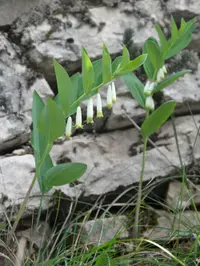
Angular Solomon's seal (Polygonatum odoratum) is a hardy, rhizomatous perennial grown mainly for its elegant, arching stems and paired, bell-shaped white flowers. It forms clumping colonies that slowly spread, creating a graceful woodland look in shaded borders. In nature it grows in cool, deciduous woodlands and forest edges across Europe and parts of Asia, usually in humus-rich, well-drained soils. The plant is generally reliable and long lived, but its fleshy roots dislike waterlogged ground and young shoots can be damaged by slugs. It suits gardeners looking to care for angular Solomon's seal in low to medium light with evenly moist, fertile soil.

Care Difficulty
Easy Care

Light Preference
Partial Shade

Water Requirements
Regular Water

Temperature Preference
Cold Hardy

Hardiness Zone
3–8

Soil Texture
Loamy, Silty, Organic-rich

Soil pH
Acidic (5.5–6.5), Slightly acidic (6.5–7.0)

Soil Drainage
Moist but well-drained

Fertilization
Minimal (feed rarely)
Scan your plant to receive care tips personalized for your specific plant
Available on iOS and Android
Polygonatum odoratum grows best in dappled woodland-style light rather than direct, intense sun.
Polygonatum odoratum prefers consistently moist, cool soil that never stays waterlogged.
This woodland perennial is cold hardy yet grows best within moderate seasonal temperature ranges.
This woodland perennial grows well in 40–60% humidity and usually does not need special humidity management.
This species prefers loose, humus-rich soil that mimics moist woodland conditions.
This species is suitable for container growing when the pot is deep and moisture-retentive yet well drained.
Polygonatum odoratum benefits from light, balanced feeding but often grows well in fertile garden soil without much extra input.
Polygonatum odoratum needs minimal pruning, mainly to maintain health and a tidy clump.
This plant is more often grown in the ground, where it dislikes disturbance, but container or crowded clumps sometimes need attention.
Propagation of Polygonatum odoratum is usually done by division, with seed used mainly by specialists or for breeding.
This hardy woodland perennial tolerates typical winters in most temperate regions and usually needs little special winter care.

Plant Health Check
Not sure what's wrong with your plant? Check your plant's health inside the app.
Polygonatum odoratum spreads slowly by shallow, jointed rhizomes that produce the characteristic one-sided arching stems, a growth form adapted to competing for light on shaded forest floors.
The white, tubular flowers hang in pairs from the leaf axils and often have a light, sweet fragrance, which helps attract pollinators such as bees that can navigate low-light woodland habitats.
After flowering, it forms small blue-black berries that are eaten by some woodland birds, which then disperse the seeds away from the parent clump over time.

In traditional European woodland management, Polygonatum odoratum has often been used as an indicator species for long-established, relatively undisturbed forests, because its slow clump-forming habit makes it less common in recently disturbed or newly planted woodlands.
Yellowing leaves often result from natural seasonal dieback, overly wet soil, or nutrient-poor, compacted ground. Check drainage, avoid waterlogged conditions, and top-dress with leaf mold or compost to support healthier foliage next season.
Keep your plants happy and healthy with plant identification, disease detection, and easy care guidance.