Rock crevice planting
Tuck plants into narrow, well-drained rock crevices or between stacked stones to protect crowns from rot and provide the sharp drainage this alpine species requires.

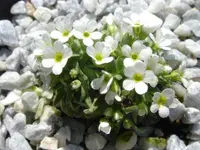
Androsace pubescens is a compact alpine perennial, forming dense, cushion-like mats close to the ground. It belongs to the primrose family and stays very low and tight. Small rosettes of hairy, gray-green leaves create a soft texture, often dotted with tiny white to pale pink flowers in cool seasons. The woolly foliage helps the plant cope with strong sun, wind, and cold in its native high mountain habitats of European and other temperate alpine regions. It can be challenging for beginners, as it dislikes heat, humidity, and poorly drained soil. Gardeners who care for Androsace pubescens usually grow it in rock gardens, troughs, or crevice plantings with very sharp drainage and plenty of light.

Care Difficulty
Hard Care

Light Preference
Full Sun

Water Requirements
Low Water

Temperature Preference
Cold Hardy

Hardiness Zone
3–7

Soil Texture
Sandy, Loamy, Rocky

Soil pH
Acidic (5.5–6.5), Slightly acidic (6.5–7.0)

Soil Drainage
Well-drained

Fertilization
Minimal (feed rarely)
Scan your plant to receive care tips personalized for your specific plant
Available on iOS and Android
This alpine cushion plant prefers bright, cool conditions that mimic high-mountain habitats.
Moisture management is critical, as this species dislikes both drought and standing water.
This high-alpine species prefers cool conditions and tolerates significant cold when drainage is excellent.
This alpine species prefers cool, fairly dry air and does not need elevated humidity.
This plant needs a sharply drained, mineral-rich mix that keeps roots cool and dry around the crown.
This species is suitable for container growing, especially in troughs or shallow alpine pots.
This alpine cushion plant grows best in lean, sharply drained soil and needs only minimal feeding.
Pruning needs for Androsace pubescens are minimal and mainly focused on hygiene.
This alpine species dislikes disturbance, so repotting or transplanting should be infrequent and gentle.
Propagation of Androsace pubescens is possible but requires precise conditions and patience.
This alpine cushion is cold hardy but benefits from careful winter moisture management.

Plant Health Check
Not sure what's wrong with your plant? Check your plant's health inside the app.
This species naturally grows in tiny crevices and ledges of high limestone cliffs in the European Alps, often above 2,000 m where conditions are cold, windy, and very exposed.
Its leaves form compact cushions covered in fine hairs, which trap air and reduce water loss, helping the plant withstand intense sun, frost, and desiccating mountain winds.
The roots can penetrate small cracks in calcareous rock, slowly enlarging fissures and anchoring the plant in near-vertical habitats that many other species cannot colonize.

Androsace pubescens is considered one of the most challenging alpine primrose relatives to cultivate, and even experienced rock gardeners often struggle to grow Androsace pubescens successfully outside its very specific high-mountain conditions.
This alpines species usually blooms in late spring to early summer, often from May to June. The flowering period is relatively short, typically 3–5 weeks, depending on temperature, light, and how well drainage and moisture are balanced.
Keep your plants happy and healthy with plant identification, disease detection, and easy care guidance.