Mulch For Coolness
Apply a 3–5 cm layer of leaf mold or fine bark around the rhizomes to keep the root zone cool, conserve moisture, and mimic the natural woodland litter they prefer.

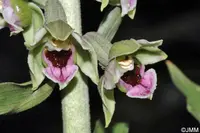
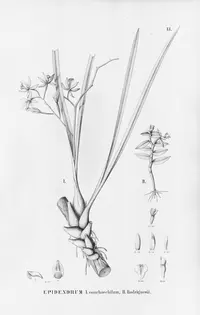
Epipactis condensata is a terrestrial orchid native to parts of Europe and western Asia, usually found in open woodlands, scrub, and rocky, calcareous slopes. It forms upright stems with alternating lance-shaped leaves and slender spikes of small, greenish to purplish flowers in summer.
This species has a clumping habit, slowly expanding from short rhizomes, and tends to stay relatively compact. It can be moderately challenging in gardens, as it dislikes disturbance and prefers cool conditions with consistent moisture and sharply drained, lime-rich soil.
Gardeners who want to care for Epipactis condensata should provide conditions that mimic its natural habitat, including partial shade and protection from extreme heat and drought.

Care Difficulty
Hard Care

Light Preference
Partial Shade

Water Requirements
Keep Soil Moist

Temperature Preference
Cool Climate

Hardiness Zone
5–8

Soil Texture
Loamy, Silty, Organic-rich

Soil pH
Acidic (5.5–6.5)

Soil Drainage
Moist but well-drained

Fertilization
Minimal (feed rarely)
Scan your plant to receive care tips personalized for your specific plant
Available on iOS and Android
This hardy terrestrial orchid prefers bright but not harsh light in garden settings.
This species prefers consistently moist, cool soil without becoming waterlogged.
This orchid is adapted to temperate climates with cool to mild conditions.
This species prefers moderately moist air but usually adapts to typical household humidity.
Epipactis condensata grows best in loose, humus-rich soil that stays evenly moist yet drains freely.
This orchid can be grown in containers if the pot supports its creeping rhizomes and stable moisture levels.
This hardy woodland orchid needs only light feeding to support flowering in lean soils.
This species needs minimal pruning, mainly to keep clumps healthy and tidy.
This orchid is usually grown in the ground and only moved when clumps become congested or poorly sited.
This plant is most commonly increased by careful division of established clumps rather than by seed.
This hardy terrestrial orchid usually overwinters outdoors in temperate climates with only light protection.

Plant Health Check
Not sure what's wrong with your plant? Check your plant's health inside the app.
This orchid is naturally associated with dry, rocky steppe and forest-steppe margins around the Black Sea region, especially in Crimea and parts of the Caucasus, rather than the moist woodlands typical for many other Epipactis species.
It shows a strong preference for calcareous substrates, often growing in thin, humus-rich soils over limestone or marl, which distinguishes its habitat choice from several related Epipactis taxa that tolerate more acidic conditions.
Compared with many congeners, it typically forms relatively short, dense flowering spikes, with closely spaced greenish to yellowish flowers that are adapted to exposed, sunlit sites rather than deep shade.
This species spreads slowly by short rhizomes and self-seeding where conditions suit it. It usually forms loose clumps rather than dense colonies and is not considered aggressively spreading in typical garden or naturalistic settings.
Keep your plants happy and healthy with plant identification, disease detection, and easy care guidance.