Sturdy plant support
Install low, discreet stakes or a ring support in late spring before stems reach full height to prevent wind from snapping the tall flowering stalks.

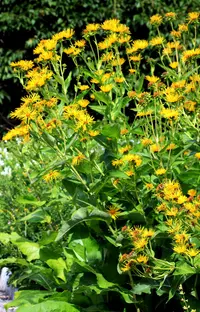
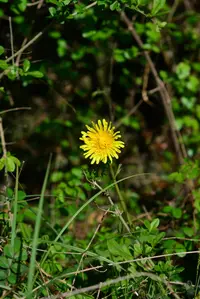
Elecampane, Inula helenium, is a robust perennial herb in the sunflower family, grown mainly for its tall presence and traditional herbal use. It forms a clump of large, rough, gray‑green leaves and sends up strong stems topped with bright yellow, daisy-like flowers in summer.
In the wild it is native to Europe and western Asia, and it has naturalized in parts of North America, especially in meadows and open, disturbed ground. The plant is generally easy to grow, provided it has full sun, consistent moisture, and deep, well-drained soil.
Gardeners who learn how to care for Elecampane usually find it dependable, though it needs space and can spread in suitable conditions.

Care Difficulty
Easy Care

Light Preference
Full Sun

Water Requirements
Regular Water

Temperature Preference
Cold Hardy

Hardiness Zone
3–8

Soil Texture
Loamy, Sandy, Organic-rich

Soil pH
Acidic (5.5–6.5), Slightly acidic (6.5–7.0)

Soil Drainage
Moist but well-drained

Fertilization
Minimal (feed rarely)
Scan your plant to receive care tips personalized for your specific plant
Available on iOS and Android
This tall herbaceous perennial prefers consistent, direct light for strong growth and flowering.
This deep-rooted perennial prefers evenly moist, not soggy, soil, especially while establishing.
This hardy perennial is well adapted to cool and temperate climates with cold winters.
Inula helenium tolerates a wide humidity range and usually does not need special humidity management outdoors.
Inula helenium prefers deep, moist but well-drained soil that supports its large root system and tall growth.
This tall, deep-rooted species is only moderately suitable for container growing and needs very large, stable pots outdoors.
This deep-rooted perennial needs only modest feeding on reasonably fertile soil.
Pruning helps maintain healthy, manageable Inula helenium clumps and can tidy flowering stems.
This tall perennial is usually grown in the ground, so focus on thoughtful transplanting rather than frequent repotting.
Inula helenium is commonly propagated by root division or from seeds, both suitable for home gardens.
This hardy perennial tolerates typical winters in most temperate climates and needs minimal special care.

Plant Health Check
Not sure what's wrong with your plant? Check your plant's health inside the app.
The bright yellow flowerheads are actually dense composites, each made up of many tiny florets arranged in a central disc with long, narrow ray florets that attract pollinators such as bees and hoverflies.
This species routinely reaches 1.5–2 m in height with broad, coarse leaves, creating a vertical structure that can act as a wind-filtering screen and a visual backdrop in temperate gardens.
In the wild it grows mainly in damp meadows, stream banks, and lightly disturbed, nutrient-rich soils, so it often indicates moist, fertile ground in parts of Europe and western Asia.

Inula helenium produced the original botanical reference material (a so‑called type specimen) used by Carl Linnaeus when formally describing the species in the 18th century, making it historically important in the development of modern plant taxonomy.
This species is highly attractive to bees, butterflies, and other beneficial insects. Large, daisy-like yellow flowers provide abundant nectar and pollen from mid to late summer, so it works well in wildlife-friendly or pollinator-focused plantings.
Keep your plants happy and healthy with plant identification, disease detection, and easy care guidance.