Deadhead Spent Blooms
Remove faded flowers and their short flower stalks every few days during the flowering season to encourage continuous bud formation and keep clumps looking tidy.

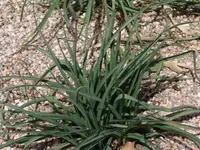
Prairie spiderwort, Tradescantia occidentalis, is a clumping perennial native to central and western North American prairies and open grasslands. It is often found in sunny, well-drained sites. The plant forms upright, arching stems with narrow, grass-like leaves and produces three-petaled flowers in shades of violet to blue that open in the morning and fade by midday. Flowers appear in succession, so a healthy clump can bloom for many weeks. This species is generally resilient, tolerating drought once established and coping with a range of soils as long as drainage is good. These traits make it relatively straightforward to care for prairie spiderwort in low-maintenance gardens or naturalized plantings.

Care Difficulty
Easy Care

Light Preference
Full Sun

Water Requirements
Moderate Water

Temperature Preference
Cold Hardy

Hardiness Zone
4–9

Soil Texture
Sandy, Loamy, Rocky

Soil pH
Acidic (5.5–6.5), Slightly acidic (6.5–7.0)

Soil Drainage
Well-drained

Fertilization
Minimal (feed rarely)
Scan your plant to receive care tips personalized for your specific plant
Available on iOS and Android
This sun-loving prairie perennial needs strong light to flower and stay compact.
This species prefers evenly moist but not saturated soil during active growth.
This hardy prairie plant tolerates a wide range of outdoor temperatures once established.
This species tolerates a wide humidity range but benefits from slightly moist air in very dry climates.
This plant prefers well-drained, moderately fertile soil that never stays waterlogged.
This species adapts well to container growing outdoors on patios, balconies, or in small gardens.
This North American native needs only light feeding in typical garden soil, but responds to modest nutrition in poor sites.
Pruning helps Tradescantia occidentalis stay compact, upright, and floriferous in garden settings.
This perennial is usually grown in the ground, with transplanting more relevant than repotting for long-term Tradescantia occidentalis plant care.
New plants are most commonly produced by division, though seed propagation is also possible for Tradescantia occidentalis.
This herbaceous perennial is cold hardy through typical winters in much of the US and needs minimal winter care outdoors.

Plant Health Check
Not sure what's wrong with your plant? Check your plant's health inside the app.
This species is native to the central North American Great Plains, where it grows mainly in dry prairies, open grasslands, and rocky hillsides rather than in forested habitats.
The purple to rose flowers typically open in the cool morning and often close or wither by midday heat, so flowering is most noticeable in the early hours.
Its flowers provide nectar and pollen for native bees and other insects in prairie ecosystems, contributing to early- to mid-season resources in relatively dry habitats.

This species is one of several Tradescantia used in genetic and radiation biology research, because its flower pollen and stamen hairs show visible chromosomal damage, making it a living bioindicator for environmental radiation and mutagens.
Lack of blooms often results from too much shade, overcrowded clumps, or nutrient-poor soil. Division every 3–4 years and a light spring fertilizer can restore flowering. Avoid excessive nitrogen, which favors foliage over flowers.
Keep your plants happy and healthy with plant identification, disease detection, and easy care guidance.