Sand mulch ring
Apply a 2–3 cm ring of coarse sand or fine gravel around the crown to keep the base dry, discourage crown rot, and make it easier to distinguish seedlings from nearby weeds.

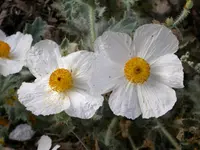
Mojave pricklypoppy (Argemone corymbosa) is a drought-tolerant perennial wildflower native to arid regions of the southwestern United States. It typically grows in open desert washes, rocky slopes, and disturbed soils.
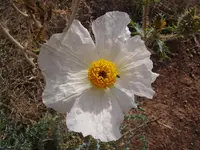
The plant forms a low, branching mound with bluish green, spiny leaves and large, crinkled white flowers with bright yellow centers. Papery petals and sharp prickles give it a striking but defensive look.
This species is adapted to full sun, very dry conditions, and lean, fast-draining soil, which makes it easier to maintain in xeric or waterwise plantings. Understanding how to care for Mojave pricklypoppy starts with respecting its need for strong light and minimal watering.

Care Difficulty
Easy Care

Light Preference
Full Sun

Water Requirements
Low Water

Temperature Preference
Warm Climate

Hardiness Zone
7–10

Soil Texture
Sandy, Loamy, Rocky

Soil pH
Slightly alkaline (7.0–7.5), Alkaline (7.5–8.5)

Soil Drainage
Well-drained

Fertilization
Minimal (feed rarely)
Scan your plant to receive care tips personalized for your specific plant
Available on iOS and Android
This desert perennial thrives in strong sun and sparse shade when established in open, well-drained sites.
This species is highly drought-tolerant and prefers infrequent, deep watering in sharply draining soil.
This plant is adapted to hot, arid climates and tolerates a wide temperature range once established.
This desert perennial tolerates very low humidity and rarely needs special moisture management.
This species needs very fast-draining, mineral soil that mimics desert or rocky habitat.
This species can be grown in containers if the pot is designed to stay dry and airy around the roots.
Argemone corymbosa is adapted to poor, sandy soils and generally needs minimal feeding for healthy growth.
Pruning Argemone corymbosa is mainly done to maintain plant health and manage its self-seeding habit.
This deep-rooted desert perennial dislikes disturbance, so transplanting should be minimal and carefully timed.
Argemone corymbosa is most reliably propagated from seed, as its taproot makes division and cuttings impractical.
This Mojave pricklypoppy is generally cold hardy in its native range and needs little winter attention in well-drained soil.

Plant Health Check
Not sure what's wrong with your plant? Check your plant's health inside the app.
This Mojave Desert species produces large white flowers with a pale yellow center, which stand out strongly against its gray-green, spiny foliage on very dry, open slopes and sandy washes.
It is narrowly native to arid regions of the Mojave and adjacent deserts, typically growing on gypsum-rich or calcareous soils where few other broadleaf plants tolerate the high mineral load and low moisture.
The blue-green, heavily spined leaves reduce herbivory and also limit water loss by presenting less soft tissue surface, an adaptation that supports growing Mojave pricklypoppy in extremely hot, dry environments.

This species produces a milky latex in its tissues, a characteristic of the poppy family that helps seal wounds quickly and may deter many herbivores due to its bitter taste and sticky texture.
All parts of this species contain toxic alkaloids that can affect the nervous system and liver. Ingestion may cause vomiting, lethargy, or more serious symptoms in pets and humans. Keep children and animals from chewing or grazing on it.
Keep your plants happy and healthy with plant identification, disease detection, and easy care guidance.