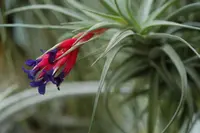
Jungle geranium Care (Ixora coccinea)

Also known as: Jungle flame, Flame-Of-The-Woods
Jungle geranium

About Jungle geranium

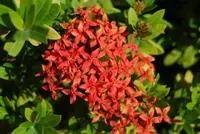
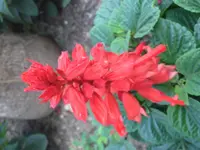
Jungle geranium (Ixora coccinea) is a compact evergreen shrub valued for its dense clusters of small, tubular flowers in red, orange, yellow, or pink. The glossy, medium-green leaves form a rounded, bushy shape that fits well in hedges, borders, or containers in warm climates.

This species is native to tropical regions of South and Southeast Asia, where it grows in humid, bright conditions. It is moderately easy to grow when its basic needs are met, but it can decline quickly in cold, dry, or very alkaline conditions.

It prefers warm temperatures, consistent moisture without waterlogging, and slightly acidic, well-drained soil. Understanding how to care for Jungle geranium helps keep it blooming and healthy over time.


Main Plant Requirements

Care Difficulty

Moderate Care

Light Preference

Full Sun

Water Requirements

Keep Soil Moist

Temperature Preference

Tropical / Frost Sensitive

Hardiness Zone

10–12

Soil Texture

Sandy, Loamy, Organic-rich

Soil pH

Strongly acidic (4.5–5.5), Acidic (5.5–6.5)

Soil Drainage

Moist but well-drained

Fertilization

Moderate (every 2–4 weeks)

Get Personalized Care Plan

Scan your plant to receive care tips personalized for your specific plant

Available on iOS and Android

How to Care for the Jungle geranium

Ixora coccinea flowers best with strong, indirect light and some gentle direct sun each day.

  • Provide 4–6 hours of morning sun or late-afternoon sun, with light shade during harsh midday hours to prevent leaf scorch.
  • Tolerates partial shade, but blooming decreases if it receives less than 3–4 hours of bright light; dense shade leads to weak, leggy growth.
  • In hot summers, use dappled or filtered light; in cooler seasons, increase direct exposure by trimming overhead shade so Jungle geranium still gets several bright hours.

Ixora coccinea prefers evenly moist, well-drained soil that never stays soggy.

  • Water when the top 2–4 cm of soil feels dry, soaking the root zone thoroughly, then let excess drain to avoid standing water.
  • Reduce frequency in cooler months, letting the top 4–5 cm dry; in hot periods, monitor more often and use mulch to slow evaporation in garden beds.
  • Yellowing, soft leaves and blackened roots suggest overwatering, while dull, wilting leaves and dry, crumbly soil indicate the plant needs a deep drink.

This shrub thrives in warm, frost-free climates and reacts poorly to cold snaps.

  • Aim for 70–85°F (21–29°C) for best growth and flowering, with stable warmth and good air movement around the plant.
  • Protect from temperatures below 55°F (13°C); sustained exposure near 40°F (4°C) can cause leaf drop, and frost can kill young shoots or entire plants.
  • Tolerates short heat waves up to about 95°F (35°C) if soil moisture is stable and roots are mulched, but hot, dry winds increase stress and scorch risk.

This species benefits from moderately high humidity and reacts to very dry indoor air.

  • Aim for 50–70% humidity, especially in heated or air-conditioned rooms.
  • Dry air causes leaf-edge browning, yellowing between veins, and increased leaf drop.
  • Group plants, place the pot on a pebble tray with water, or use a small room humidifier rather than misting, which adds little lasting humidity.

This shrub prefers slightly acidic, airy, and consistently moist but well-drained soil.

  • Use a mix of 50–60% peat or coco coir, 20–30% composted organic matter, and 20–30% perlite or coarse sand for structure and drainage.
  • Target a soil pH of 5.0–6.5, since alkaline media causes chlorosis, seen as yellow leaves with green veins.
  • Ensure the mix is loose and crumbly so water drains within a few seconds from the pot base but the surface does not crust hard after drying.
  • Avoid heavy clay, high-lime potting mixes, or soils that stay waterlogged, as poor aeration quickly leads to root decline in Ixora coccinea.

This shrub is well suited to container growing when the pot and drainage are managed carefully.

  • Choose a stable, slightly wider-than-deep container to balance the shrub’s dense top growth and reduce tipping in wind.
  • Select terracotta if extra evaporation is needed in wet climates, or plastic/fiberglass in hot, dry areas to slow moisture loss.
  • Raise the pot on feet or bricks so drainage holes stay clear and excess water exits rapidly after rain or irrigation.

Ixora coccinea responds well to consistent, light feeding for sustained flowering.

  • Use a balanced, acid-forming fertilizer (for example 10-10-10 or 14-14-14) or a slow-release formula suited to Jungle geranium.
  • Feed every 4–6 weeks during the warm growing season when the plant is actively producing new leaves and buds.
  • Dilute liquid fertilizers to 1/2 strength to avoid root burn, especially in containers.
  • Reduce or stop feeding in fall and winter, when growth slows and nutrient demand is low.

Pruning Ixora coccinea helps maintain a compact shape and encourages new flowering growth.

  • Carry out main pruning in late winter or early spring before strong new growth starts.
  • Remove dead, diseased, or crossing stems first, then thin crowded interior shoots for better light and airflow.
  • Lightly shorten stem tips after flowering to shape the shrub and stimulate branching.
  • Use clean, sharp hand pruners; disinfect blades between plants to reduce disease transmission.

Container-grown Ixora benefits from occasional repotting or transplanting when roots become crowded.

  • Repot when roots circle the pot, emerge from drainage holes, or when growth and flowering slow despite good care.
  • Plan major repotting or transplanting for late spring or early summer, once temperatures are consistently warm.
  • Move up only 1 pot size, using a well-draining, slightly acidic mix, and keep the root ball as intact as possible.
  • Water thoroughly after repotting, shade from strong sun for several days, and avoid heavy fertilizing until new growth appears.

Ixora coccinea is most commonly propagated from semi-hardwood cuttings under warm, humid conditions.

  • Take 7–10 cm semi-hardwood stem cuttings in late spring or summer from non-flowering shoots.
  • Remove lower leaves, optionally dip the base in rooting hormone, and insert into a sterile, well-draining medium.
  • Maintain 75–80°F, high humidity, and bright, indirect light to support steady root formation.
  • Seeds are possible but slower; sow fresh, cleaned seed in warm conditions and keep the medium evenly moist, not waterlogged.

Ixora coccinea is frost-sensitive and needs protection in regions with cool or freezing winters.

  • In USDA zones below 10, grow in containers and move plants indoors before nights drop below 50°F.
  • Provide bright, indirect indoor light and slightly drier soil during winter to prevent root problems.
  • In mild climates, apply a 5–8 cm mulch layer over the root zone to buffer temperature swings and conserve moisture.

Care Tips

Iron and micronutrients

Apply a chelated iron and micronutrient drench or foliar spray 1–2 times per growing season if new leaves look pale or yellow between the veins, as Ixora is sensitive to micronutrient deficiencies in neutral or alkaline soils.

pH monitoring routine

Test soil pH at least once a year and, if it rises above 6.0, correct it gradually with sulfur or an acidifying fertilizer to maintain the slightly acidic conditions this species needs for healthy roots and flowering.

Salt buildup control

Every 2–3 months, leach container-grown plants by slowly running clean water through the pot until it drains freely, which helps remove accumulated fertilizer salts that can burn Ixora’s fine roots.

Heat and sun acclimation

When moving a plant from shade or indoors into stronger sun, increase light exposure over 7–10 days to prevent leaf scorch and help the plant build thicker, more resilient foliage.

Preventing root disturbance

Use a pot only 2–4 cm wider when repotting and keep the root ball as intact as possible, since this species resents heavy root disturbance and may drop buds or leaves if handled roughly during repotting while caring for Jungle geranium.

Common Pests and Diseases

Scale insects

This pest feeds on stems and leaf undersides, causing yellowing, leaf drop, and sticky honeydew that can lead to sooty mold growth.

Solution

Prune heavily infested stems, then wipe remaining scale with cotton pads dipped in 70% isopropyl alcohol or insecticidal soap, repeating every 7–10 days until clear; for outdoor shrubs, a light horticultural oil spray can help, applied in mild, dry weather.

Mealybugs

These insects appear as white, cottony clusters in leaf axils and on roots, leading to stunted growth, curled leaves, and sticky honeydew.

Solution

Isolate affected plants, remove visible clusters with a cotton swab dipped in alcohol, then treat foliage and stems with insecticidal soap or neem oil, ensuring coverage into leaf joints and repeating treatments until no new insects appear.

Sooty mold

This disease is a black, soot-like fungal growth that develops on honeydew left by sap-feeding insects, reducing photosynthesis and making leaves look dirty.

Solution

Control the underlying pest problem first, then gently wash leaves with lukewarm water and a mild soap solution to remove the fungal coating, and improve air movement and light exposure so new growth stays clean, which is key for Ixora coccinea care.

Iron chlorosis

This disorder causes young leaves to turn yellow while veins remain green, especially in alkaline or lime-rich soils where iron becomes unavailable to roots.

Solution

Lower soil pH with elemental sulfur or acid-forming fertilizers, avoid hard, high-lime irrigation water, and apply a chelated iron product to the soil or foliage according to label directions to restore normal green color over several weeks.

Phyllosticta leaf spot

This disease produces small, brown to purplish spots on leaves that may merge into larger patches, sometimes leading to premature leaf drop in warm, humid conditions.

Solution

Remove and discard affected leaves, avoid overhead watering, increase spacing or airflow around plants, and if spots continue to spread, use a copper-based or other labeled ornamental fungicide applied in dry, mild weather following package directions.

Interesting Facts

Ever-blooming tropical shrub

In frost-free climates, this species can produce clusters of small tubular flowers almost year-round, because it does not have a strict seasonal dormancy period. The continuous blooming habit makes it a key nectar source for butterflies and other pollinators in gardens and hedges.

Acid-loving preference

This plant naturally occurs on acidic, lateritic or sandy soils and shows iron chlorosis when grown in alkaline conditions. The need for low pH substrates explains its frequent yellowing in calcareous urban soils if not managed with appropriate fertilization.

Dense corymb flower heads

Each flower cluster is a corymb, where many short-stalked flowers form a flat to slightly rounded head, maximizing visibility to pollinators. The individual flowers are only about 1–2 cm long, but hundreds on one shrub can create a strong visual signal in the landscape.

Botan icon

Did you know?

Ixora coccinea is believed to be one of the earliest tropical ornamentals introduced from India and Sri Lanka into European-controlled botanical gardens in the 18th century, and it later became a parent species for numerous modern Ixora hybrids widely used in tropical landscaping.

FAQs about Jungle geranium

Poor flowering usually comes from insufficient light, low nutrients, or old, unpruned wood. Provide bright conditions, use a balanced fertilizer during the growing season, and lightly prune after flowering to stimulate new, flower-bearing shoots and buds.

Grow Healthy Plants with Botan Care

Keep your plants happy and healthy with plant identification, disease detection, and easy care guidance.

Botan plant care app — identify plants on mobile

Explore More Plants