Bluefruit Currantrhus Care (Searsia crenata)

Also known as: Dune crow-berry, Crowberry, Blue-Fruited Currant-Rhus
Bluefruit Currantrhus

About Bluefruit Currantrhus

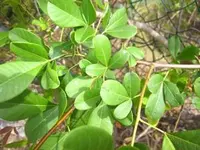
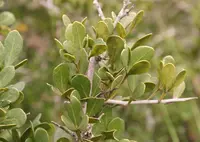
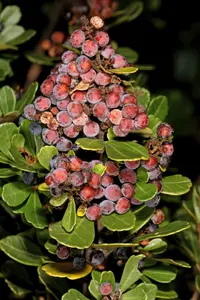
Bluefruit Currantrhus (Searsia crenata) is a dense, evergreen shrub known for its small glossy leaves and clusters of decorative blue-black berries. It usually grows with a rounded, bushy form that handles pruning well, making it suitable for hedges or container cultivation.

This species is native to coastal areas of South Africa, where it tolerates wind, salt spray, and variable moisture. These traits make it relatively forgiving and adaptable in many mild climates.

Gardeners who want to care for Bluefruit Currantrhus should know it prefers sun to light shade, moderately moist but well-drained soil, and benefits from protection from severe frost.

Main Plant Requirements

Care Difficulty

Easy Care

Light Preference

Full Sun

Water Requirements

Low Water

Temperature Preference

Warm Climate

Hardiness Zone

9–11

Soil Texture

Sandy, Loamy, Rocky

Soil pH

Slightly acidic (6.5–7.0), Neutral (7.0)

Soil Drainage

Well-drained

Fertilization

Minimal (feed rarely)

Get Personalized Care Plan

Scan your plant to receive care tips personalized for your specific plant

Available on iOS and Android

How to Care for the Bluefruit Currantrhus

Searsia crenata prefers bright outdoor conditions with a balance of sun and light shade.

  • Provide 4–6 hours of direct morning sun with light afternoon shade, especially in hotter regions, to reduce leaf scorch risk.
  • Plant where it receives partial shade or dappled light under taller shrubs or trees; Bluefruit Currantrhus tolerates coastal wind and reflected light from walls.
  • Watch leaf color and density; sparse, stretched growth indicates insufficient light, while crisped leaf edges signal too much intense midday or afternoon sun.

Searsia crenata is drought tolerant once established and prefers infrequent, deep watering.

  • Allow the top 3–5 cm of soil to dry before watering; in the ground this often means deep watering only after several dry days during active growth.
  • Ensure sharply drained soil; water until the root zone is moistened, then let excess drain away to prevent sour smell, yellowing leaves, or soft stems from overwatering.
  • In cooler months reduce frequency, using foliage cues such as dull, folding leaves for underwatering and sudden leaf drop or blackened roots for excess moisture.

This shrub adapts well to mild, coastal-type climates with moderate seasonal changes.

  • Aim for active growth in 60–80°F (16–27°C); growth slows outside this range but established plants remain stable.
  • Mature plants tolerate brief drops to about 25°F (-4°C), but repeated hard frosts below this can damage young shoots and tips.
  • In heat above 90°F (32°C), provide mulch and some afternoon shade; during cold snaps, protect young plants with frost cloth to limit tissue damage.

This shrub manages well in typical indoor humidity but benefits from moderately moist air.

  • Aim for 40–60% humidity; Bluefruit Currantrhus tolerates short dips lower without major stress.
  • Crisping leaf tips and slow new growth in heated rooms indicate air is too dry.
  • Use a pebble tray under the pot or group plants together to gently raise local humidity.

Soil for Searsia crenata should be free-draining and moderately fertile to prevent root problems.

  • Use a sandy or loamy mix with clear structure, such as 50% all-purpose potting mix, 30% coarse sand, 20% fine bark or perlite.
  • Ensure fast drainage; the soil should never stay waterlogged for more than a few hours after watering.
  • A slightly acidic to neutral pH around 6.0–7.0 suits this shrub and supports balanced nutrient uptake.
  • Avoid heavy clay, peat-dense mixes, or compacted ground; lighten them with coarse sand and perlite to improve aeration.

This species adapts well to container growing for patios, balconies, or small gardens.

  • Choose a wide, heavy pot to counter the shrub’s woody, sometimes top-heavy canopy in windy spots.
  • Select pots with thick walls (terracotta or concrete) if extra stability and slightly faster moisture loss are needed in wet climates.
  • Leave a shallow, gravel-only layer at the base above drainage holes to prevent mix from clogging while still allowing rapid water escape.

Searsia crenata is adaptable and often grows well with minimal feeding but benefits from light, targeted nutrition in containers or poor soils.

  • Use a balanced, slow-release fertilizer (for example 10-10-10) or well-rotted compost in early spring when growth starts.
  • Feed container plants every 6–8 weeks during the growing season at 1/2 label strength to avoid salt buildup.
  • Avoid fertilizing in late fall and winter, as growth naturally slows and excess nutrients can stress roots.
  • When caring for Bluefruit Currantrhus in poor native soil, lightly top-dress with compost once a year rather than heavy granular feed.

Searsia crenata responds well to thoughtful pruning that maintains its dense, tidy form.

  • Carry out structural pruning in late winter or very early spring before active growth begins.
  • Remove dead, damaged, crossing, or inward-facing branches first to improve light penetration and air movement.
  • Use clean, sharp hand pruners or loppers, making cuts just above an outward-facing bud or side branch.
  • Light thinning and tip pinching after flowering help control size and shape without stressing the shrub.

This shrub is usually grown in the ground, so focus on careful transplanting or occasional pot ups for container specimens.

  • Transplant or move Searsia crenata in late winter to early spring when soil is workable and before strong new growth.
  • Look for roots circling the pot, water running straight through, or slowing growth as signs a container plant needs a larger pot every 2–3 years.
  • Lift with as much root ball as possible, keep roots shaded and moist, and replant at the same depth in free-draining soil.
  • Water thoroughly after planting, then keep evenly moist for several weeks to limit transplant shock and encourage new root growth.

Searsia crenata is commonly propagated from semi-ripe cuttings or seeds with some attention to timing and conditions.

  • Take semi-ripe cuttings in late summer, 7–10 cm long, from healthy, non-flowering shoots.
  • Remove lower leaves, dip the cut end in rooting hormone, and place cuttings in a coarse, free-draining medium under bright, indirect light.
  • Maintain high humidity and mild bottom warmth around 70–75°F to support root development over several weeks.
  • Sow cleaned ripe seeds in fall or early spring, barely covered, in a gritty mix and keep lightly moist until germination.

Searsia crenata is generally hardy in mild coastal climates and needs only modest winter attention.

  • In regions with occasional light frost, add a 5–8 cm mulch layer around the root zone, keeping it just clear of stems.
  • Reduce watering in winter, allowing the top layer of soil to dry between waterings, especially in containers.
  • Move potted plants to a sheltered, unheated but frost-free spot if temperatures drop well below the plant’s normal hardiness range.

Care Tips

Wind exposure training

In the first 1–2 years, gradually increase wind exposure by removing temporary windbreaks in stages so the shrub develops sturdier stems and a deeper root system without suffering sudden windburn or branch breakage.

Salt spray management

In coastal sites, lightly hose down foliage every few weeks during dry periods to remove salt deposits, which reduces leaf scorch and keeps stomata functioning efficiently.

Deep root encouragement

Once established, water less often but for longer durations so moisture penetrates 20–30 cm deep, encouraging a robust root system that improves drought resilience and slope stability.

Bird and berry control

If unwanted self-seeding is a problem, thin out fruit clusters or net the shrub after flowering to reduce berry set and subsequent volunteer seedlings in surrounding beds.

Low hedge shaping

For dense, low screens, tip back new shoots by 2–4 cm several times through the growing season instead of doing one heavy cut, which creates tighter branching and a more compact hedge when growing Bluefruit Currantrhus.

Common Pests and Diseases

Scale insects

This pest feeds on stems and leaves, often forming raised brown or grey bumps that excrete sticky honeydew and can lead to sooty mold on Searsia crenata hedging and coastal plantings.

Solution

Scrub off visible scale with a soft brush or cloth dipped in soapy water, then spray thoroughly with a horticultural oil to coat remaining insects; repeat every 7–10 days until no new scale appears and prune out heavily infested twigs if needed.

Leaf spot

This disease causes dark, rounded spots on the foliage, sometimes with a yellow halo, and can lead to premature leaf drop in dense or poorly ventilated hedges.

Solution

Remove and dispose of affected leaves, thin the canopy slightly to improve airflow, avoid overhead watering, and apply a copper-based or other labeled ornamental fungicide if new spots continue to appear in suitable weather for fungal spread.

Aphids

These insects cluster on young shoots and leaf undersides, sucking sap and causing distorted growth, curled leaves, and honeydew that may attract ants on this shrub.

Solution

Blast colonies off with a firm stream of water, then treat remaining aphids with insecticidal soap or a light horticultural oil, ensuring full coverage of shoot tips and leaf undersides and repeating weekly until populations collapse.

Powdery mildew

This disease produces a white to grey powdery film on leaves and young stems, which can lead to dull, distorted foliage in sheltered or shaded positions.

Solution

Prune to improve light penetration and airflow, remove the most affected leaves, then apply a sulfur-based or other labeled powdery mildew fungicide to new and existing foliage, repeating according to label directions during humid, mild periods.

Interesting Facts

Coastal wind specialist

This shrub is naturally adapted to exposed South African coasts, tolerating strong salt-laden winds that quickly damage most inland shrubs.

Key dune stabilizer

Its dense, branching root system helps bind sandy soils and stabilize coastal dunes, making it an important component of natural dune-veld vegetation.

Magnet for small birds

The dark, glossy berries are an important winter food source for fruit-eating birds, which in turn disperse the seeds and help maintain coastal shrub communities.

Botan icon

Did you know?

Searsia crenata is commonly used in South African coastal restoration projects because it establishes reliably from nursery stock in harsh seaside sites and forms a tough, wind-sheared canopy that protects more sensitive species during early succession stages.

FAQs about Bluefruit Currantrhus

This species is evergreen in mild, frost-free or only lightly frosty climates, keeping foliage year-round. In colder areas it may thin or partially defoliate in winter, but generally maintains a dense leafy structure compared with many shrubs.

Grow Healthy Plants with Botan Care

Keep your plants happy and healthy with plant identification, disease detection, and easy care guidance.

Botan plant care app — identify plants on mobile

Explore More Plants