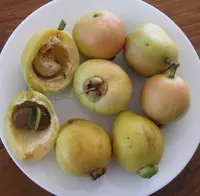
Big-leaved Acacia Care (Acacia mangium)

Big-leaved Acacia

About Big-leaved Acacia

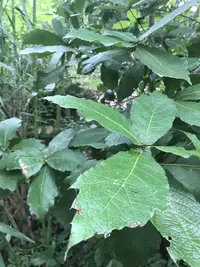
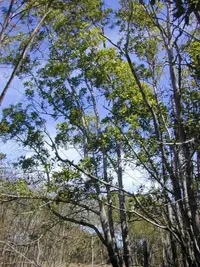
Big-leaved acacia (Acacia mangium) is a fast-growing evergreen tree from the legume family, valued for timber, windbreaks, and soil improvement. It typically develops a straight trunk, broad canopy, and long sickle-shaped leaves that give the tree a dense, tropical look.

This species is native to northern Australia, Papua New Guinea, and parts of Southeast Asia, where it thrives in warm, humid, lowland climates. It adapts well to poor, acidic soils because its roots host nitrogen-fixing bacteria, which makes it useful in reforestation and erosion control.

Big-leaved acacia is vigorous and relatively easy to establish in suitable climates but can become invasive outside its native range. Those who want to learn how to care for Big-leaved Acacia should note its preference for full sun, regular moisture, and well-drained soil.

Main Plant Requirements

Care Difficulty

Moderate Care

Light Preference

Full Sun

Water Requirements

Moderate Water

Temperature Preference

Tropical / Frost Sensitive

Hardiness Zone

11–12

Soil Texture

Sandy, Loamy, Clay

Soil pH

Strongly acidic (4.5–5.5), Acidic (5.5–6.5)

Soil Drainage

Well-drained

Fertilization

Minimal (feed rarely)

Get Personalized Care Plan

Scan your plant to receive care tips personalized for your specific plant

Available on iOS and Android

How to Care for the Big-leaved Acacia

This fast-growing tropical tree prefers strong light and benefits from direct sun in warm climates.

  • Provide 6–8 hours of direct sun daily; full sun is best for sturdy stems and dense foliage in open ground.
  • Tolerates light partial shade, especially afternoon shade in very hot regions, but prolonged shade causes lanky growth and fewer branches in Big-leaved Acacia.
  • In the first year, protect young plants from harsh, reflective midday sun with temporary shade cloth or nearby taller vegetation to reduce leaf scorch.

This species prefers evenly moist, well-drained soil during establishment, then becomes increasingly drought tolerant.

  • Water when the top 3–5 cm of soil feel dry, focusing on deep soaking rather than frequent light sprinkling to promote a strong root system.
  • Reduce watering in cooler or rainy seasons; soil should drain freely within a few hours and not remain soggy or form standing water around the trunk.
  • Signs of overwatering include yellowing leaves and soft new growth, while curled, dry leaf edges and slow growth point to underwatering in Acacia mangium.

This tropical tree thrives in warm, frost-free climates with stable temperatures.

  • Optimal growth occurs around 70–90°F (21–32°C); growth slows noticeably below 65°F (18°C) but usually resumes when temperatures rise.
  • Tolerates short hot spells up to about 100°F (38°C) if soil moisture is adequate and roots are mulched to limit heat stress.
  • Very sensitive to frost; damage often appears near 32°F (0°C), and young trees may die below 28°F (−2°C), so choose frost-free sites or provide seasonal protection.

Acacia mangium tolerates a wide humidity range but grows best with moderate ambient moisture.

  • Aim for 40–60% humidity; it usually adapts to typical indoor or outdoor household conditions.
  • Dry air is tolerated, but prolonged exposure can cause leaf tip browning and increased leaf drop in Big-leaved Acacia.
  • Increase humidity locally with grouped plants, a nearby water tray, or occasional misting in very dry, heated rooms.

Acacia mangium prefers freely draining, moderately fertile, slightly acidic to neutral soil.

  • Use a sandy or sandy-loam base blended with 20–30% compost to provide structure without becoming dense.
  • Ensure fast drainage by adding coarse sand or fine gravel; avoid mixes that stay wet or sticky after watering.
  • Target soil pH around 5.5–7.0; avoid strongly alkaline substrates that can reduce nutrient availability and cause chlorosis.
  • Improve aeration by incorporating chunky particles such as pine bark fines, which keep pores open around the root zone.

This species can be grown in containers for early stages or small specimens, but it is not ideal long term.

  • Choose a deep, heavy pot to counter the plant’s fast upward growth and reduce the risk of tipping in wind.
  • Select thicker-walled clay or concrete containers to moderate moisture swings and prevent roots from overheating in sun.
  • Raise the container slightly on feet or blocks so drainage holes clear quickly and roots avoid standing water at the base.

Acacia mangium grows fast and benefits from light, balanced feeding on poor soils.

  • Use a balanced slow-release fertilizer (around 10-10-10) or well-rotted compost at the start of the growing season.
  • Apply fertilizer every 3–4 months during active growth, especially on sandy or depleted soils.
  • Use fertilizers at 50–75% of label strength to avoid excessive, weak growth.
  • Stop feeding in late fall and avoid winter applications, as growth naturally slows.

Pruning Acacia mangium is mainly done to maintain structure, safety, and clearance.

  • Carry out structural pruning in late winter or early spring before vigorous growth starts.
  • Remove dead, diseased, rubbing, or storm-damaged branches first using clean, sharp bypass pruners or a handsaw.
  • Thin crowded interior shoots to improve light penetration and wind resistance, shaping a single strong leader where possible.
  • Avoid heavy canopy reduction; use small, well-placed cuts just outside the branch collar to promote healthy healing.

This species is usually field-grown, so care focuses on transplanting young trees from containers to the ground.

  • Transplant when roots lightly circle the pot or growth slows despite good care, typically after 6–18 months in a nursery container.
  • Choose late winter to early spring for transplanting, after major frosts and before strong summer heat.
  • Water well before and after moving, keep the root ball intact, and disturb roots only enough to loosen tight circling roots.
  • Plant in a slightly larger hole with well-drained soil, firm gently, and mulch 5–8 cm deep to reduce evaporation and root stress.

Acacia mangium is most commonly propagated from seed for forestry and restoration uses.

  • Collect mature, dark pods and extract seeds at the end of the dry season or late summer.
  • Scarify hard seeds by pouring hot (not boiling) water over them, then soak 12–24 hours to improve germination.
  • Sow seeds in a free-draining, low-salt mix, barely covered, and keep at 70–85°F with bright light.
  • Maintain even moisture, then pot on seedlings once they develop several true leaves and a sturdy taproot.

This tropical tree is frost-sensitive and needs protection in regions with cool winters.

  • In frost-prone areas, grow Acacia mangium as a container plant and move it indoors or into a greenhouse before temperatures drop below 40°F.
  • Use a thick 5–8 cm mulch layer around outdoor trees in mild-winter climates to insulate the root zone.
  • For young plants, wrap the lower trunk with breathable horticultural fleece or burlap during brief cold snaps.

Care Tips

Establish strong leader

Select 1 straight central stem in young trees and prune away competing upright shoots early so the trunk develops a single, stable leader that resists wind damage.

Wind-firm staking

In very windy sites, use 2–3 loosely tied stakes positioned outside the root zone for only the first 6–12 months, allowing slight trunk movement to encourage strong wood formation.

Nitrogen-fixing support

Avoid disturbing the root zone deeply so the nitrogen-fixing root nodules and associated bacteria remain intact, and reserve soil cultivation for a shallow top layer only when necessary.

Phosphorus-sensitive fertilizing

Use low-phosphorus, balanced fertilizers and avoid repeated high-P applications, as this species is adapted to nutrient-poor soils and can suffer from excess phosphorus over time.

Scheduled health checks

Inspect foliage and new shoots every 2–4 weeks for signs of psyllids, scale, or leaf miners, so any infestation is treated early with targeted controls as part of caring for Big-leaved Acacia.

Common Pests and Diseases

Gall rust

This disease causes swollen, woody galls on stems and branches that can girdle young trees and weaken older ones. Symptoms include distorted growth, dieback beyond the gall, and rough, cracked tissues around infected areas.

Solution

Prune out and destroy infected twigs and branches during dry weather, cutting at least 15–20 cm below visible galls, and disinfect pruning tools between cuts. Avoid planting highly susceptible trees in areas with known rust problems, maintain good spacing for airflow, and remove nearby alternate Acacia hosts or heavily infected volunteer seedlings to reduce spore sources.

Pink disease

This disease is caused by the fungus Erythricium salmonicolor and produces pinkish to white crusts on bark, often at branch forks, followed by branch dieback. Symptoms include wilting foliage on affected branches and sunken, cracked cankers on stems.

Solution

Cut out affected branches well below visible cankers and destroy prunings, then improve canopy airflow by thinning overcrowded branches. In humid, high-risk areas, apply a registered copper-based fungicide to pruning wounds and main stems during the wet season, and avoid water stress to reduce tree susceptibility.

Heart rot

This disease leads to internal decay of the trunk and major branches, often entering through pruning wounds or storm damage. Symptoms include formation of trunk cavities, brittle wood, and sometimes fungal fruiting bodies on the bark surface.

Solution

Prevent infection by avoiding unnecessary wounding, making clean pruning cuts, and removing broken or damaged limbs promptly. Trees with extensive heart rot and structural weakness should be professionally assessed and removed if they pose a hazard, and future plantings should emphasize good Acacia mangium care with proper spacing and protection from mechanical damage.

Coreid bugs

These insects are large sap-sucking bugs that feed on young shoots, pods, and seeds, causing shriveling and reduced seed quality. Symptoms include distorted new growth, aborted pods, and visible clusters of brownish bugs on tender tissues.

Solution

Hand-pick and remove bugs and egg masses where infestations are light, and encourage natural predators by maintaining diverse surrounding vegetation. In nursery or small-scale plantings, use fine insect netting on young trees during peak bug activity and, if necessary, apply targeted insecticidal soap or neem-based sprays directly to bugs, repeating as needed.

Bagworms

These caterpillars live in small, camouflaged cases made of leaves and twigs, feeding on foliage and sometimes defoliating branches on young trees. Symptoms include irregular leaf damage and many hanging cases on twigs and small branches.

Solution

Pick off and destroy bags by hand during the early stages of infestation, focusing on young trees and lower branches. For heavier outbreaks, use a biological control such as Bacillus thuringiensis (Bt) applied to foliage when caterpillars are small, and reduce plant stress through proper watering and mulching to help trees recover leaf loss.

Interesting Facts

Fast tropical pioneer

This species is one of the fastest-growing tropical trees, often used as a pioneer species to quickly cover degraded land and create shade and organic matter for slower forest species.

Nitrogen-fixing partnership

Its roots form nodules with nitrogen-fixing bacteria, allowing the tree to enrich poor soils with biologically available nitrogen and improve fertility for nearby plants.

High-yield pulpwood tree

It is widely planted in Southeast Asia and South America as a major source of short-fiber pulpwood for paper production due to its rapid growth, straight stem, and wood properties.

Botan icon

Did you know?

Acacia mangium is one of the parent species of the widely planted hybrid Acacia mangium × Acacia auriculiformis (often called Acacia hybrid), which combines fast growth, good wood quality, and broad environmental tolerance, making it a dominant plantation tree in parts of tropical Asia.

FAQs about Big-leaved Acacia

This species is considered fast-growing, often adding 1–3 m per year in suitable tropical or subtropical climates. Growth slows in poor soil, dry conditions, or cooler regions, and young trees establish more quickly than older ones.

Grow Healthy Plants with Botan Care

Keep your plants happy and healthy with plant identification, disease detection, and easy care guidance.

Botan plant care app — identify plants on mobile

Explore More Plants