


Staggered Planting Blocks
Plant in informal blocks of 5–9 plants spaced 30–40 cm apart to create a dense stand that shades the soil surface, suppresses weeds, and improves overall flower display and pollinator activity.

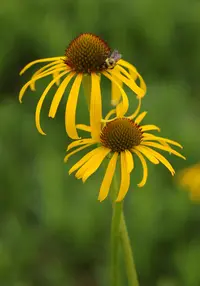
Bush's purple coneflower (Echinacea paradoxa) is a hardy perennial wildflower known for its daisy-like blooms with drooping yellow petals and a raised central cone. It forms upright clumps and typically stays neatly contained, making it suitable for mixed borders and naturalistic plantings.
This species is native to dry prairies and open rocky slopes in the central United States, so it is naturally adapted to heat, sun, and relatively poor soils. Once established, it is generally easy to grow and tolerates short dry spells, which helps simplify how to care for Bush's purple coneflower.
It prefers full sun, well-drained soil, and moderate moisture, but does not do well in waterlogged conditions or deep shade.

Care Difficulty
Easy Care

Light Preference
Full Sun

Water Requirements
Low Water

Temperature Preference
Cold Hardy

Hardiness Zone
4–9

Soil Texture
Sandy, Loamy, Rocky

Soil pH
Slightly acidic (6.5–7.0), Neutral (7.0)

Soil Drainage
Well-drained

Fertilization
Minimal (feed rarely)
Scan your plant to receive care tips personalized for your specific plant
Available on iOS and Android
This sun-loving prairie perennial performs best with strong, direct light.
This species prefers dry to moderately moist soil and is highly drought tolerant once established.
This hardy perennial is adapted to wide outdoor temperature swings in temperate climates.
Humidity is rarely a concern for Echinacea paradoxa, which naturally thrives in dry prairie air.
Echinacea paradoxa prefers lean, well-drained soil that mimics dry prairie conditions.
This species can be grown in containers if the pot is set up to stay free-draining and stable.
This drought-tolerant prairie perennial needs only light feeding on moderately fertile soil, so caring for Bush's purple coneflower stays simple.
Pruning Echinacea paradoxa is mainly used to manage appearance and encourage prolonged flowering, rather than to control size.
This deep-rooted perennial is more often transplanted in garden beds than kept long term in containers.
New plants are commonly raised from seed, with division used less often due to the strong taproot of Echinacea paradoxa.
This species is cold hardy in most temperate gardens and generally needs minimal winter care once established.

Plant Health Check
Not sure what's wrong with your plant? Check your plant's health inside the app.
This species is the only member of the Echinacea genus with naturally yellow, drooping ray florets, in contrast to the purple or pink rays of its relatives.
It is restricted in the wild to the Ozark region of Missouri and Arkansas, where it grows on thin, rocky soils over limestone or dolomite in glades and dry open woodlands.
The long ray florets curve strongly downward away from the cone, an unusual floral form in the genus that likely helps expose the central disk to pollinators such as native bees and butterflies.

Genetic and morphological studies indicate that this species is evolutionarily distinct within the genus and has been used in hybridization programs to introduce true yellow flower color into ornamental echinacea cultivars.
This species is highly attractive to bees, butterflies, and other pollinators due to its prominent central cone and nectar-rich petals. Planting several together creates a reliable summer nectar source and supports local pollinator populations.
Keep your plants happy and healthy with plant identification, disease detection, and easy care guidance.

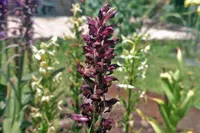
Bug Orchid
Anacamptis coriophora
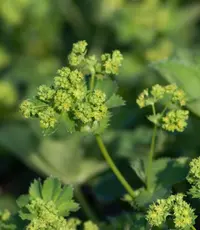
hairy lady's mantle
Alchemilla monticola
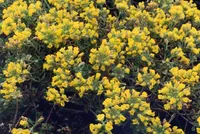
Alyssum loiseleurii
Alyssum loiseleurii

spotted calla lily
Zantedeschia albomaculata
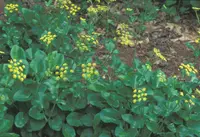
meadow zizia
Zizia aptera
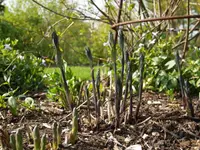
eastern bluestar
Amsonia tabernaemontana var. salicifolia
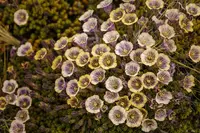
Patagonian petunia
Petunia patagonica
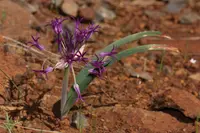
scytheleaf onion
Allium falcifolium