Summer dormancy management
Allow foliage to yellow and die back naturally after flowering, then gradually reduce watering and keep the pot or planting area just barely moist to protect the resting tubers from rot.

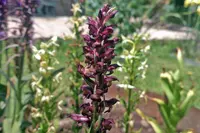
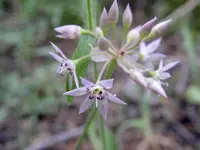
Bug orchid, Anacamptis coriophora, is a terrestrial orchid species known for its dense spikes of small, tubular flowers with a distinctive musky scent. Plants are relatively short, with narrow, grasslike leaves and flower spikes that range in color from greenish to reddish purple, often mottled.
This orchid is native to parts of Europe and the Mediterranean region, where it grows in open grasslands, light scrub, and sometimes damp meadows. It can be moderately challenging to grow in cultivation because it is adapted to specific seasonal patterns and prefers well-drained, low-fertility soils. Gardeners who care for Bug Orchid usually focus on providing bright light, cool to mild temperatures, and steady but not excessive moisture during its active growth period.

Care Difficulty
Hard Care

Light Preference
Partial Sun

Water Requirements
Moderate Water

Temperature Preference
Cool Climate

Hardiness Zone
5–8

Soil Texture
Sandy, Loamy, Silty

Soil pH
Slightly acidic (6.5–7.0), Neutral (7.0)

Soil Drainage
Moist but well-drained

Fertilization
Minimal (feed rarely)
Scan your plant to receive care tips personalized for your specific plant
Available on iOS and Android
This Mediterranean terrestrial orchid prefers bright, open conditions but not intense, all-day summer sun.
This species prefers moist but not waterlogged soil during active growth and significantly drier conditions when dormant.
This orchid is adapted to temperate climates with cool to mild winters and warm, not extreme, summers.
This terrestrial orchid prefers moderately moist air but adapts to typical indoor humidity if watering is well managed.
This species needs a loose, mineral-rich, and sharply draining substrate to prevent root and tuber rot.
This species can be grown in containers if the pot is set up to mimic its airy, free-draining natural sites.
This terrestrial orchid is adapted to low-nutrient soils, so use very light feeding for Bug Orchid in cultivation.
Anacamptis coriophora needs only minimal pruning focused on hygiene rather than shaping.
This orchid dislikes disturbance, so repot or transplant only when clearly necessary.
Propagation of Anacamptis coriophora is specialized and not usually attempted by casual growers.
This hardy terrestrial orchid tolerates cool winters but still benefits from some root-zone attention.

Plant Health Check
Not sure what's wrong with your plant? Check your plant's health inside the app.
This orchid produces a strong, sometimes goat-like or bug-like odor that attracts specific pollinating insects, especially certain beetles and flies, rather than relying mainly on visual signals like many showy orchids.
It is strongly associated with damp to wet, often calcareous meadows and fens across parts of Europe, making it an indicator of relatively undisturbed, seasonally moist grassland habitats.
Its dense spikes can show a range of flower colors from greenish and brownish-red to purplish tones, with darker spots and stripes, and this natural variation has led to taxonomic discussions and confusion with close relatives in the field.

This species is protected or regionally red-listed in several European countries because the drainage of wetlands and the intensification of agriculture have caused marked declines in its natural populations over the last century.
Lack of flowering usually comes from insufficient winter chill, too much shade, or nutrient‑rich soil. This species needs a cool dormant period, bright but not harsh light, and relatively lean, well‑drained substrate to initiate flower spikes.
Keep your plants happy and healthy with plant identification, disease detection, and easy care guidance.