Mandarin Poker Care (Kniphofia triangularis)

Mandarin Poker

About Mandarin Poker

Mandarin poker, Kniphofia triangularis, is a compact, clump-forming perennial known for its upright spikes of tubular, orange to red flowers above narrow, grass-like leaves. It stays smaller than many other red hot pokers, which makes it suitable for mixed borders and smaller gardens.

This species is native to mountainous regions of southern Africa, where it experiences cool nights, strong light, and well-drained soils. It is generally easy to grow if given full sun, moderately moist but free-draining soil, and protection from waterlogged conditions. These traits make it straightforward to care for Mandarin Poker in many temperate gardens.

Main Plant Requirements

Care Difficulty

Moderate Care

Light Preference

Full Sun

Water Requirements

Moderate Water

Temperature Preference

Cool Climate

Hardiness Zone

6–9

Soil Texture

Sandy, Loamy, Rocky

Soil pH

Slightly acidic (6.5–7.0), Neutral (7.0)

Soil Drainage

Well-drained

Fertilization

Minimal (feed rarely)

Get Personalized Care Plan

Scan your plant to receive care tips personalized for your specific plant

Available on iOS and Android

How to Care for the Mandarin Poker

This sun-loving perennial flowers best with strong, direct light in open garden sites.

  • Provide 6–8 hours of full sun daily; morning and midday sun promote sturdy stems and vivid flower color in Mandarin Poker.
  • In hotter climates, give full sun until early afternoon, then very light shade to reduce leaf scorch and premature flower fade.
  • It tolerates light partial shade (around 4 hours sun) but blooms less; in dense shade, expect weak growth, fewer spikes, and more floppy foliage.

This plant prefers evenly moist, sharply drained soil and copes better with brief drought than with saturation.

  • In active growth, water only when the top 3–5 cm of soil feel dry, then soak the root zone deeply and let excess drain away.
  • Use gritty, free-draining soil; standing water or heavy clay causes root rot, yellowing leaves, and collapsing flower spikes in Kniphofia triangularis.
  • In cool or wet seasons, reduce watering and rely more on rainfall; underwatering shows as drooping, browning leaf tips, while overwatering leads to soft, mushy crowns.

This species prefers temperate conditions and handles moderate heat but dislikes prolonged hard frost.

  • Optimal growth occurs around 60–75°F (16–24°C), with strong flowering in mild summers that are neither extremely hot nor humid.
  • Established clumps usually tolerate short drops to about 10–15°F (-12–-9°C) if soil drains well; mulch crowns in colder regions for added protection.
  • Heat above 90°F (32°C) is tolerated if soil moisture is stable; in hot spells, avoid waterlogged soil, which combined with heat increases crown and root rot risk.

Humidity is rarely a concern for this species in typical household or outdoor conditions.

This plant prefers sharply drained, moderately fertile soil that does not stay wet after rain or watering.

  • Use a sandy or gritty loam with plenty of mineral content to prevent waterlogging around the roots.
  • Aim for slightly acidic to neutral pH, roughly 6.0–7.0, which supports nutrient uptake for Kniphofia triangularis.
  • In heavy or clay soils, mix in coarse sand, fine gravel, and some compost to improve drainage and aeration.
  • Avoid compacted or boggy sites, as persistent wetness encourages root rot and weakens the crowns.

This species can be grown in containers if the pot provides fast drainage and enough depth for its fibrous roots.

  • Choose a tall, heavy container so the top growth does not tip the pot in wind or rain.
  • Fill the pot with a gritty mix and stand it slightly raised on feet or bricks so water exits the drainage holes freely.
  • Place the container where strong sun keeps the potting mix drying between waterings, reducing risk of crown rot in Mandarin Poker.

Kniphofia triangularis is not a heavy feeder but responds well to modest nutrition during active growth.

  • Apply a balanced slow-release fertilizer (around 10-10-10) or well-rotted compost in early spring as new growth starts.
  • Lightly top-dress or side-dress Mandarin Poker once during mid-summer if soil is poor, avoiding direct contact with crowns.
  • Use fertilizers at 1/2 labeled strength in containers to limit salt buildup and root burn risk.
  • Stop feeding in late summer to allow growth to harden before winter and avoid soft, frost-prone tissue.

Pruning Kniphofia triangularis is mainly about tidiness and supporting repeat flowering.

  • Deadhead spent flower spikes in summer by cutting them at the base with clean, sharp pruners to encourage additional blooms.
  • Remove dead, damaged, or heavily spotted leaves at the base throughout the season to reduce disease pressure.
  • In late fall or very early spring, cut back collapsed foliage, leaving any firm green leaves intact.
  • Disinfect blades between plants with alcohol to limit spreading fungal or bacterial problems.

This species is usually grown in the ground, so focus on careful transplanting rather than frequent repotting.

  • Transplant clumps in early spring or early fall when temperatures are mild and soil is workable.
  • Look for signs such as congested crowns, weak flowering, or roots circling inside a pot as indicators it needs more space.
  • Lift the clump with a broad root ball, disturbing roots as little as possible and replanting at the same depth in well-drained soil.
  • Water thoroughly after planting, then keep soil evenly moist but not waterlogged for 2–3 weeks to help roots re-establish.

Propagation of Kniphofia triangularis is commonly done by division, with seed used mainly for larger batches.

  • Divide mature clumps in early spring or just after flowering, when growth is active but heat is moderate.
  • Lift the plant and separate crowns by hand or with a clean knife, keeping several shoots and roots on each division.
  • Replant divisions at original depth in free-draining soil, spacing them to allow air flow and future expansion.
  • For seeds, sow in a gritty mix at 65–70°F, keep lightly moist, and expect variable germination times.

Kniphofia triangularis is moderately cold hardy but benefits from some winter preparation in cooler regions.

  • In climates colder than about USDA zone 6–7, apply a 5–10 cm mulch layer around the crown after the ground cools.
  • Leave some foliage in place in milder areas to act as a natural insulation over the crown.
  • For container plants, move pots to a sheltered, frost-free or minimally heated area with good light.
  • Reduce watering in winter, keeping the root zone just barely moist to avoid rot in cold, wet soil.

Care Tips

Staggered Clump Planting

Plant several small groups on a slight slope or raised bed to improve drainage and create a longer, more natural-looking bloom display along the planting line.

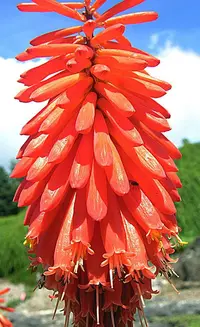
Deadhead For Rebloom

Cut spent flower spikes back to the base of the stem as soon as they fade to encourage a second flush of flowers and reduce seed production that can weaken the clump.

Winter Crown Protection

In colder regions, leave a loose collar of coarse gravel or small stones around the crown to keep it slightly raised and drier over winter, reducing the risk of rot.

Division Timing Strategy

Divide congested clumps right after flowering rather than in early spring so the plant has warm, bright conditions to re-root quickly before winter.

Targeted Slug Management

Place rough barriers such as crushed stone or horticultural grit around young shoots in early spring to deter slugs and snails that can disfigure new growth when growing Mandarin Poker.

Common Pests and Diseases

Aphids

These insects feed on young flower spikes and foliage, sucking sap and causing distortion, sticky honeydew, and reduced flowering.

Solution

Spray the affected spikes and leaves with a strong jet of water to dislodge colonies, then treat remaining insects with insecticidal soap or a light horticultural oil, repeating weekly until under control. Encourage natural predators such as lady beetles and avoid high-nitrogen fertilizer that promotes soft, aphid-prone growth when caring for Mandarin Poker.

Red lily beetle

This pest may chew linear holes and notches in leaves and flower stalks, and its larvae often hide under dark, slimy excrement on the foliage.

Solution

Hand-pick and crush adults and larvae as soon as they are seen, checking plants daily during warm weather. Where infestations are persistent, use a targeted pyrethrin-based spray in the evening, directing it only onto affected foliage to limit impact on beneficial insects.

Leaf spot

This disease causes brown, tan, or purplish spotting on leaves, sometimes with yellow halos, leading to premature leaf dieback in humid or crowded plantings.

Solution

Remove and discard affected leaves and any heavy thatch around the clump, then improve air circulation by spacing plants properly and avoiding overhead watering late in the day. In regions with recurring problems, apply a copper or chlorothalonil-based fungicide at label rates at the first sign of spotting to protect new foliage.

Crown rot

This disease affects the base of the clump, where symptoms include yellowing leaves, a collapsing center, and soft or foul-smelling tissue at the crown, often after prolonged wet or poorly drained conditions.

Solution

Dig up affected plants, cut away all soft or discolored tissue, and replant only firm, healthy divisions into sharply drained soil or a raised bed. Avoid overwatering, keep mulch pulled back 5–8 cm from the crown, and in heavy soils consider adding grit or sand to improve drainage and reduce recurrence.

Interesting Facts

Afro-alpine specialist

This species is naturally restricted to high-altitude grasslands and rocky slopes in the Drakensberg mountain range of South Africa and Lesotho, where it experiences intense sun, strong wind, and regular summer storms.

Cold-tolerant poker

Unlike many other torch lilies from warmer habitats, this species tolerates significant frost and even occasional snow in its native range, which reflects its evolution in cool, montane conditions.

Compact flower spikes

Compared with the tall, showy hybrids commonly sold as red hot pokers, this species produces relatively short, dense inflorescences that help reduce mechanical damage from mountain winds and driving rain.

Botan icon

Did you know?

In its native Drakensberg habitats, this species often flowers during the local summer storm season, providing a reliable nectar source for mountain sunbirds and other pollinators when few other brightly colored, tubular flowers are available at those elevations.

FAQs about Mandarin Poker

Lack of blooms usually comes from insufficient sun, soil that is too rich in nitrogen, or clumps that are overcrowded. Division every 3–4 years and following basic Kniphofia triangularis care often restores flowering.

Grow Healthy Plants with Botan Care

Keep your plants happy and healthy with plant identification, disease detection, and easy care guidance.


Botan plant care app — identify plants on mobile

Explore More Plants