Bulb clump management
Lift and divide dense clumps every 3–4 years in late summer after foliage dies back to prevent overcrowding and maintain strong flowering.

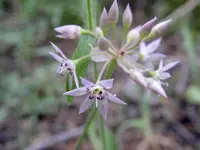
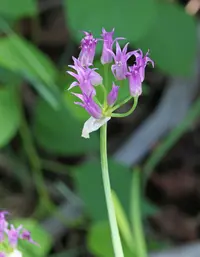
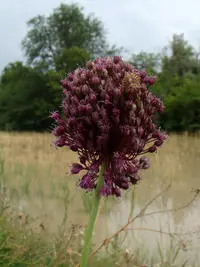
Dusky onion, Allium campanulatum, is a small bulb-forming perennial in the onion family, producing loose clusters of bell-shaped pink to rose-purple flowers. It typically forms low clumps of narrow, grasslike leaves with upright flowering stems that add soft color and texture to dry, open plantings.
This species is native to dry slopes and foothills of western North America, especially California and nearby regions. Its tolerance of poor, rocky soils and summer drought makes it relatively easy in low-water gardens.
Gardeners who care for dusky onion should note that it prefers sunny, well-drained sites and does not perform well in heavy, waterlogged soil.

Care Difficulty
Easy Care

Light Preference
Full Sun

Water Requirements
Low Water

Temperature Preference
Cold Hardy

Hardiness Zone
5–9

Soil Texture
Sandy, Loamy, Rocky

Soil pH
Slightly acidic (6.5–7.0), Neutral (7.0)

Soil Drainage
Well-drained

Fertilization
Minimal (feed rarely)
Scan your plant to receive care tips personalized for your specific plant
Available on iOS and Android
This western North American bulb thrives in bright, open sites with plenty of sun.
This bulb prefers slightly dry, free-draining conditions and is sensitive to excess moisture.
This species is adapted to climates with cool winters and warm, dry summers.
Humidity is not a significant factor for Allium campanulatum, which is adapted to dry air.
Allium campanulatum prefers lean, fast-draining, mineral-rich soil that mimics its native rocky habitats.
This species can be grown in containers if the potting setup strongly prioritizes sharp drainage.
Allium campanulatum benefits from modest feeding in lean soils but often manages without fertilizer in rich ground.
Pruning needs for Allium campanulatum are minimal and focused on cleanliness rather than shaping.
This species is usually grown in the ground, so transplanting clumps is more common than repotting individual bulbs.
Allium campanulatum is commonly propagated by bulb division and sometimes by seed for larger plantings.
This allium is generally cold hardy in suitable climates and needs little winter care in the ground.

Plant Health Check
Not sure what's wrong with your plant? Check your plant's health inside the app.
This species is naturally restricted to dry, open slopes and foothills of California and adjacent Oregon, often on decomposed granite or rocky soils that many other bulbs cannot tolerate.
Its flowers form loose, nodding clusters of bell-shaped, pale to deep pink florets with darker midveins, giving the inflorescence a softer, more open look than the tight globes typical of many ornamental onions.
The plant emerges and blooms in late spring to early summer, then quickly enters a dry summer dormancy, with foliage disappearing above ground while the bulb persists below the soil surface.

This species is considered an indicator of relatively intact native grassland and chaparral communities in parts of its range, so botanists sometimes use its presence as one clue that a site still retains significant native plant diversity.
Lack of flowering usually comes from insufficient sun, overly rich or waterlogged soil, or bulbs planted too shallow or deep. Crowded clumps may also stop blooming and benefit from lifting, dividing, and replanting every few years.
Keep your plants happy and healthy with plant identification, disease detection, and easy care guidance.