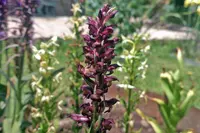
eastern bluestar Care (Amsonia tabernaemontana var. salicifolia)

Also known as: Willow Amsonia, Blue Dogbane, Blue Star, Woodland Blue Star, Willow-Leaf Blue Stars
eastern bluestar

About eastern bluestar

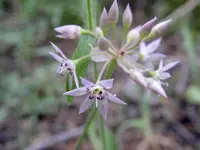
Eastern bluestar, Amsonia tabernaemontana var. salicifolia, is a hardy herbaceous perennial grown mainly for its soft blue spring flowers and fine, willow-like foliage. It forms upright clumps that slowly widen over time and create a neat, shrubby outline in garden borders or naturalistic plantings.

This species is native to moist meadows and open woodlands in eastern North America, where it experiences full sun to light shade and seasonally damp soils. Its deep root system and generally low pest pressure make it a dependable, long-lived plant once established, so learning how to care for eastern bluestar is straightforward for most home gardeners.

In cultivation it usually prefers sun to light shade, moderately moist but well-drained soil, and benefits from consistent conditions rather than frequent disturbance.

Main Plant Requirements

Care Difficulty

Easy Care

Light Preference

Full Sun

Water Requirements

Moderate Water

Temperature Preference

Cold Hardy

Hardiness Zone

3–9

Soil Texture

Sandy, Loamy, Clay

Soil pH

Acidic (5.5–6.5), Slightly acidic (6.5–7.0)

Soil Drainage

Moist but well-drained

Fertilization

Minimal (feed rarely)

Get Personalized Care Plan

Scan your plant to receive care tips personalized for your specific plant

Available on iOS and Android

How to Care for the eastern bluestar

This sun-loving perennial performs best with ample light but adapts to a range of garden exposures.

  • Provide 6–8 hours of direct sun daily for strongest stems and heaviest flowering; morning sun with light afternoon shade works well in hotter regions.
  • It tolerates partial shade (3–5 hours of sun), but eastern bluestar may grow looser with fewer blooms and more leaning toward the light source.
  • Avoid deep shade, which leads to weak, floppy growth; in hot summers, protect from intense late-afternoon sun to prevent leaf scorch, especially in dry soils.

This plant prefers steady soil moisture during establishment, then becomes moderately drought tolerant.

  • In the first growing season, water when the top 3–5 cm of soil feel dry; aim for deep, infrequent soakings rather than light surface watering.
  • Use well-drained soil; yellowing lower leaves, soft stems, or a sour smell in the root zone signal overwatering or poor drainage problems.
  • Mature Amsonia tabernaemontana var. salicifolia usually needs extra water only during prolonged dry spells, shown by slight leaf droop or loss of spring turgor.

This hardy perennial tolerates a wide temperature range once established in the ground.

  • Active growth is strongest around 65–80°F (18–27°C); consistent warmth in spring supports sturdy stems and bud formation.
  • It is cold hardy and survives winter freezes well below 0°F (-18°C) when planted in the ground, dying back to the crown and resprouting in spring.
  • During summer, it handles heat up to about 90–95°F (32–35°C) if soil moisture is adequate; extended extreme heat with drought can cause leaf scorch and reduced flowering.

Humidity is rarely a limiting factor for eastern bluestar grown outdoors in its typical climates.

Amsonia tabernaemontana var. salicifolia prefers deep, well-drained, moderately fertile soil for long-lived clumps.

  • Use a loamy or sandy-loam soil with some organic matter so roots spread easily without staying waterlogged.
  • Aim for slightly acidic to neutral pH around 6.0–7.0, avoiding highly alkaline or compacted sites.
  • Improve drainage and aeration by mixing in compost plus coarse sand or fine grit where soil is heavy.
  • Avoid spots that puddle after rain or stay saturated, which encourages root decline and weak, floppy growth.

This species can be grown in containers if the pot is large and drains very freely.

  • Choose a tall, heavy container to anchor the plant’s upright, bushy growth against wind and prevent tipping.
  • Fill the pot with a coarse, fast-draining mix such as garden loam blended with grit or coarse sand to avoid soggy roots.
  • Position the container where rainwater can run off easily so the pot does not sit in a tray or saucer of standing water.

This native perennial needs minimal feeding, as eastern bluestar thrives in average garden soil.

  • If growth is weak on poor soil, apply a light layer of compost in early spring as the main nutrient source.
  • On very lean sites, use a balanced slow-release fertilizer (around 10-10-10) once in spring at half the label rate.
  • Avoid fertilizing in late summer or fall to prevent soft growth before winter dormancy.

Pruning is mainly used to maintain shape and vigor in Amsonia tabernaemontana var. salicifolia.

  • Cut back old stems to 5–10 cm in late winter or very early spring before new growth emerges.
  • Shear plants lightly by one-third just after flowering to keep a compact mound and encourage bushier growth.
  • Remove dead, damaged, or crossing stems during the growing season using clean, sharp hand pruners.
  • Avoid heavy midsummer cutting, which can stress plants in heat and reduce ornamental foliage effect.

This species is usually grown in the ground and only rarely kept long-term in containers.

  • Plan transplanting for early spring or early fall so roots can establish in cool, moist conditions.
  • Move clumps only when necessary, such as overcrowding, poor flowering, or decline in vigor.
  • Dig a wide root ball, keep soil around the roots intact, and replant at the same depth into well-drained soil.
  • Water thoroughly after transplanting, then keep soil evenly moist for several weeks to limit transplant shock.

Propagation of this plant is moderate in difficulty but reliable with the right method and timing.

  • Divide mature clumps in early spring or early fall, keeping several shoots and roots in each division.
  • Sow fresh seeds in fall outdoors or use cold stratification at 35–40°F for 6–8 weeks before spring sowing.
  • Plant seeds in a free-draining mix, keep lightly moist, and provide bright, indirect light for germination.
  • Softwood cuttings in late spring to early summer root best in a moist, airy medium under high humidity.

This hardy perennial generally needs little winter attention in most temperate gardens.

  • Established plants tolerate typical winter frost and snow in USDA zones suited to Amsonia tabernaemontana var. salicifolia care.
  • After hard frost, stems can be left standing for structure, then cut back in late winter if desired.
  • In colder or exposed sites, apply 5–7 cm of mulch around the crown to moderate soil temperature.

Care Tips

Early season staking

Install low, discreet ring stakes or short pea netting around the clump in early spring before stems elongate, so mature plants stay upright without flopping after heavy rain or wind.

Clump division timing

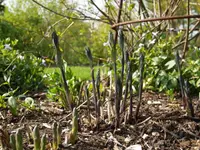
Divide crowded clumps only in early spring just as new shoots emerge, replanting divisions at the same depth and watering them in well to reduce transplant stress and maintain flowering performance.

Weed‑suppressing mulch

Apply a thin 3–5 cm layer of shredded bark or composted leaf mulch around, but not touching, the crowns to suppress weeds and keep the root zone cool without encouraging rot.

Seedhead management

If volunteer seedlings are not wanted, deadhead spent flowers once the color fades but before seed pods fully mature, leaving the foliage intact so it can continue to photosynthesize and feed the crown.

Spring growth check

Mark plant locations and inspect in early spring to confirm new shoots, then lightly top‑dress with compost and remove encroaching turf so caring for eastern bluestar remains low maintenance over time.

Common Pests and Diseases

Rust

This disease causes small orange, yellow, or brown pustules on leaves, often appearing on lower foliage in humid conditions. Symptoms include gradual thinning of clumps as affected leaves yellow and die back early.

Solution

Remove and dispose of affected leaves, avoid overhead watering, and thin dense clumps to improve airflow. In sites with repeated issues, use a sulfur or chlorothalonil-based fungicide early in the season according to label directions and rotate to a drier, sunnier location when possible.

Leaf spot

This disease produces small tan to brown spots on leaves that may merge into larger blotches, especially during extended wet weather. Symptoms include cosmetic damage and premature leaf drop on heavily affected plants.

Solution

Cut off and discard spotted leaves and clean up fallen debris at the end of the season to reduce fungal spores. Improve spacing and air circulation, irrigate at soil level, and in severe or recurring cases apply a labeled ornamental leaf-spot fungicide at the first sign of spotting.

Spider mites

These pests feed on leaf undersides, leading to fine stippling, dull gray-green foliage, and occasional light webbing in hot, dry weather. Symptoms include reduced vigor and early leaf drop when populations are high.

Solution

Spray foliage thoroughly with a strong stream of water to knock mites off, focusing on the undersides of leaves, and increase humidity around the plant if possible. For persistent infestations, use insecticidal soap or horticultural oil, repeating applications as directed to cover new mite hatchings while avoiding spraying during high heat.

Interesting Facts

Narrow willowlike leaves

This variety has distinctly narrow, linear leaves that resemble young willow foliage, giving clumps a fine-textured, almost grasslike appearance compared with the broader-leaved typical form of Amsonia tabernaemontana.

Season-long color shift

Plants open with soft blue star-shaped flowers in late spring, then the slim seed pods extend interest through summer, and the foliage often turns clear golden-yellow in autumn, so the same clump provides three visually different seasonal phases.

Late-emerging perennial habit

Shoots often emerge relatively late in spring and can be slow to reach full height, so established clumps may appear sparse early in the season before filling out into dense, vase-shaped mounds by early summer, a growth pattern important to understand when growing eastern bluestar in mixed borders.

FAQs about eastern bluestar

This species spreads slowly by clumping, not by running roots or stolons. Over time, clumps widen modestly, but it rarely becomes troublesome. Division every few years keeps the footprint manageable and helps maintain vigorous growth and flowering.

Grow Healthy Plants with Botan Care

Keep your plants happy and healthy with plant identification, disease detection, and easy care guidance.

Botan plant care app — identify plants on mobile

Explore More Plants