Vanillaleaf Care (Achlys triphylla)

Also known as: sweet after death, Deerfoot, Sweet-after-death, Achlys, Deer's Foot, Deervetch Vanillaleaf
Vanillaleaf

About Vanillaleaf

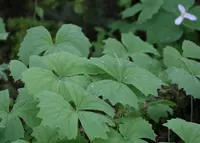
Vanillaleaf, Achlys triphylla, is a low-growing woodland perennial from the forests of western North America. It forms loose colonies of soft, three-part leaves that release a light vanilla-like scent when dried. Small, upright spikes of tiny white flowers appear in spring above the foliage, giving a delicate, airy look. The plant spreads slowly by rhizomes, creating a natural groundcover under trees. In gardens, it suits cool, shaded sites that mimic its native forest floor. Moist, humus-rich soil and consistent shade make it easier to care for Vanillaleaf than many other woodland species.

Main Plant Requirements

Care Difficulty

Moderate Care

Light Preference

Partial Shade

Water Requirements

Regular Water

Temperature Preference

Cold Hardy

Hardiness Zone

5–9

Soil Texture

Loamy, Silty, Organic-rich

Soil pH

Acidic (5.5–6.5)

Soil Drainage

Moist but well-drained

Fertilization

Minimal (feed rarely)

Get Personalized Care Plan

Scan your plant to receive care tips personalized for your specific plant

Available on iOS and Android

How to Care for the Vanillaleaf

This woodland perennial prefers cool, filtered light rather than strong, direct sun.

  • Provide bright dappled shade or light filtered through trees, with 1–3 hours of gentle morning sun and no harsh afternoon sun.
  • Site Vanillaleaf on the north or east side of buildings or under deciduous shrubs to mimic forest understory light conditions.
  • Watch foliage for stress: scorched, bleached, or crispy leaves indicate too much sun, while very sparse, leaning growth suggests insufficient light.

This plant prefers consistently moist, cool soil similar to a natural forest floor.

  • Water when the top 2–3 cm of soil feel slightly dry, aiming to keep the root zone evenly damp but never waterlogged.
  • Use humus-rich, well-drained soil so excess water can drain away, reducing the risk of root rot and sour, anaerobic conditions.
  • In spring and early summer, moisture needs rise; in late summer and fall, allow slightly drier intervals and watch for drooping leaves or crisp edges as stress signs.

This species is adapted to cool, temperate woodland climates with moderate seasonal change.

  • Optimal active growth occurs around 50–70°F (10–21°C), with the plant most comfortable in cool springs and mild summers.
  • Mature clumps tolerate winter cold down to about 10–15°F (-12 to -9°C) when mulched, dying back above ground and resprouting in spring.
  • Heat above 80°F (27°C), especially with dry soil, can stress plants, so provide extra shade and moisture during hot spells to prevent wilting and leaf scorch.

This woodland species prefers moderately moist air rather than very dry conditions.

  • Aim for 50–70% humidity to mimic its natural forest habitat and keep foliage turgid.
  • It tolerates short dry spells but prolonged air below 40% can crisp leaf edges and slow growth in Vanillaleaf.
  • Increase humidity with grouped woodland plants, shallow pebble trays under pots, or a short daily mist in dry indoor air.

Achlys triphylla grows best in cool, moist, humus-rich soil with steady moisture and drainage.

  • Use a loose mix such as 50% garden loam, 30% leaf mold or compost, and 20% fine bark for woodland-style structure.
  • Ensure soil drains freely yet stays evenly moist; avoid compacted clay and any mix that stays waterlogged after 24 hours.
  • Aim for slightly acidic to neutral pH around 5.5–7.0, which supports nutrient uptake and root health.
  • Improve aeration and drainage by working in shredded leaf mold, fine bark, or a small amount of perlite rather than coarse sand.

This species can be grown in containers if the pot mimics cool, shaded woodland soil conditions.

  • Choose a wide, shallow container to accommodate its spreading rhizomes and allow an even moisture profile.
  • Use a thick-walled or terracotta pot in shade to buffer rapid temperature swings and prevent root overheating.
  • Elevate the container slightly off the ground so drainage holes remain clear and excess water escapes quickly.

This woodland perennial grows best in humus-rich soil and usually needs only light feeding in gardens.

  • Apply a thin layer of compost or leaf mold around clumps in early spring to mimic its natural forest habitat.
  • Use a mild, balanced liquid fertilizer at 1/4–1/2 strength once a month during active growth if soil is poor.
  • Avoid synthetic high-nitrogen products; excessive feeding can reduce Achlys triphylla vigor and natural form.
  • Stop feeding in late summer so Vanillaleaf can harden off and enter dormancy naturally over fall and winter.

Achlys triphylla needs minimal pruning, mainly to keep clumps tidy and healthy.

  • Cut back dead or damaged leaves in late winter or very early spring before new growth emerges.
  • Remove spent flower stalks at the base to maintain a clean appearance and direct energy to roots and foliage.
  • Thin out crowded or yellowing leaves with sharp, clean scissors or hand pruners to improve airflow in dense clumps.
  • Avoid heavy cutting into healthy rhizomes, as this woodland species prefers a natural, low, spreading habit.

This woodland groundcover is usually grown in the ground, so focus on careful transplanting rather than frequent repotting.

  • Transplant in early spring or early fall when temperatures are mild and soil moisture is consistent.
  • Move plants only when clumps are overcrowded or growth declines, typically every 3–5 years in garden beds.
  • Lift clumps with a broad trowel or spade, keeping the shallow rhizomes and fine roots as intact as possible.
  • Replant at the same depth in cool, humus-rich, moist soil, then water gently and shade from strong sun to limit stress.

This species is most reliably propagated by division of rhizomes, with seed used mainly for patient growers.

  • Divide established clumps in early spring just as new shoots appear, when soil is moist and cool.
  • Lift the plant carefully and separate sections, ensuring each division has several buds and healthy roots.
  • Replant divisions at the same depth in humus-rich, shaded soil, then water thoroughly to settle soil around roots.
  • Sow fresh seed in fall in a cold frame or sheltered tray, allowing natural winter chilling to break dormancy.

This plant is cold hardy in much of its native range and typically needs only basic winter care outdoors.

  • Tolerates typical winter frosts once established, with foliage naturally dying back to dormant rhizomes.
  • Apply a 3–5 cm layer of leaf litter or bark mulch over the root zone in late fall to buffer freeze–thaw cycles.
  • For container plants, move pots to a sheltered, unheated but frost-free area and keep soil just barely moist.

Care Tips

Maintain Cool Dormancy

Allow the plant to go fully dormant in late fall by letting foliage die back naturally, then keep the rhizomes in a cool, evenly moist but not saturated woodland bed through winter to support reliable regrowth.

Leaf-Litter Mulch Layer

Top-dress the planting area each autumn with 3–5 cm of shredded deciduous leaves to mimic forest duff, which helps conserve moisture, moderate soil temperature, and gradually add organic matter without disturbing shallow rhizomes.

Gentle Colony Expansion

When clumps become crowded, slice off outer rhizome sections with a sharp knife in early spring and replant them immediately at the same depth to expand a groundcover while preserving the original colony structure.

Protect From Foot Traffic

Install stepping stones or a simple edging around plantings in paths or play areas, since repeated treading compacts soil and damages the delicate leaves and surface rhizomes.

Understory Companion Planning

Combine this plant with taller, open-canopy shrubs or deciduous trees that cast light shade, such as vine maple or serviceberry, to create a stable microclimate that supports long-term success when growing Vanillaleaf.

Common Pests and Diseases

Slugs and snails

This pest is strongly attracted to the tender spring foliage and can chew large holes or completely skeletonize young leaves, especially in moist woodland beds.

Solution

Hand-pick at dusk or early morning, use iron phosphate slug baits labeled for ornamental beds, and reduce hiding spots such as dense debris or boards on the soil surface; in high-pressure areas, ring clumps with copper tape or rough barriers to protect emerging shoots.

Leaf spot fungi

This disease occasionally appears as small brown to purplish spots on leaves that may merge into irregular patches during extended cool, wet periods under dense shade.

Solution

Remove and discard affected leaves, avoid overhead watering, and thin nearby vegetation slightly to improve air movement; in sites with repeated issues, keep mulch off the crown and space plants so foliage dries more quickly after rain.

Powdery mildew

This disease can develop on foliage as a light white to gray powdery coating when Vanillaleaf grows in still, shaded, and humid woodland corners late in the season.

Solution

Trim out heavily coated leaves, increase air circulation by careful thinning of surrounding plants, and water at soil level rather than on the foliage; in persistent cases, apply a labeled low-toxicity fungicide such as potassium bicarbonate or horticultural oil according to instructions.

Interesting Facts

Pacific Northwest native

This woodland herb is naturally found in moist, shady forests from northern California to British Columbia, usually under conifers such as Douglas-fir and western hemlock.

Distinct three-part leaves

Its name refers to the characteristic leaves divided into three broad leaflets, which often form dense, low carpets on the forest floor.

Unique bloom structure

Instead of showy petals, it produces slender spikes covered in tiny greenish-white flowers, with the petal-like structures formed by enlarged stamens and pistils rather than true petals.

Botan icon

Did you know?

Dried leaves of this species were traditionally scattered on cabin floors or included in bedding by Indigenous peoples and early settlers in the Pacific Northwest, because the crushed foliage releases a strong vanilla-like aroma that helped freshen indoor spaces.

FAQs about Vanillaleaf

This woodland perennial spreads slowly by rhizomes, forming loose colonies rather than dense mats. It is not considered aggressive. In suitable shade and moisture, it will gradually fill gaps but is usually easy to manage by division.

Grow Healthy Plants with Botan Care

Keep your plants happy and healthy with plant identification, disease detection, and easy care guidance.

Botan plant care app — identify plants on mobile

Explore More Plants