tongue orchid Care (Dendrobium linguiforme)

tongue orchid

About tongue orchid

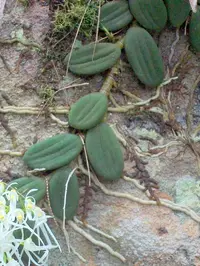
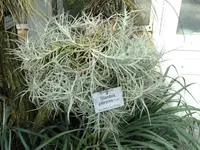
The tongue orchid, Dendrobium linguiforme, is a compact epiphytic orchid that often grows on tree trunks or rocks, forming tight mats of short, flattened leaves. Its growth habit is creeping rather than tall, so it suits small displays, mounts, or hanging arrangements.

In nature it occurs mainly in eastern Australia, where it experiences bright light, moving air, and periods of dryness between rain. It produces clusters of small white flowers in season, often in large numbers on a well-established plant.

This species is considered relatively tough for an orchid, as long as it receives good light, fast drainage, and regular but moderate moisture. These traits make it a suitable choice for growers who want to learn how to care for tongue orchid without starting with a very demanding species.

Main Plant Requirements

Care Difficulty

Moderate Care

Light Preference

Partial Sun

Water Requirements

Low Water

Temperature Preference

Warm Climate

Hardiness Zone

10–11

Soil Texture

Rocky, Sandy, Organic-rich

Soil pH

Acidic (5.5–6.5), Slightly acidic (6.5–7.0)

Soil Drainage

Well-drained

Fertilization

Light (every 4–6 weeks)

Get Personalized Care Plan

Scan your plant to receive care tips personalized for your specific plant

Available on iOS and Android

How to Care for the tongue orchid

This compact epiphytic orchid prefers bright light with some protection from intense midday sun.

  • Provide 4–6 hours of morning sun or bright, filtered light each day; light shade is useful from about 11 a.m. to 3 p.m.
  • Tolerates partial shade, but flowering in tongue orchid declines if grown in deep shade or under dense tree canopies.
  • Watch foliage: firm, slightly pale green pads indicate enough light, while scorched, yellowed patches signal sunburn from excessive direct sun.

This species prefers a thorough wet–dry cycle rather than constantly moist conditions.

  • Allow roots and mounting surface or mix to dry almost completely between soakings; rewater when it feels dry and lighter, not cool and damp.
  • Increase watering during active growth and warmer months, but reduce in cooler seasons, avoiding prolonged wetness around the root zone to prevent rot.
  • Shriveled leaves or canes suggest underwatering, while blackened roots and a sour smell indicate overwatering in Dendrobium linguiforme.

This orchid is adaptable but performs best in mild, frost-free conditions.

  • Aim for 65–80°F (18–27°C) in the growing season, with a slight drop at night to support healthy growth and flowering.
  • It tolerates brief dips to about 40°F (4°C) if kept dry, but repeated frost or hard freezes can damage roots and pads.
  • In hot spells above 90°F (32°C), provide shade and extra air movement to limit heat stress, especially on exposed rock or tree mounts.

This epiphytic orchid prefers moderate air moisture but tolerates typical household humidity if watering is consistent.

  • Aim for 40–60% humidity; short dips lower are tolerated if roots do not fully dry between waterings.
  • Crisping leaf tips and shriveling pseudobulbs indicate air is too dry or drying is too rapid after watering.
  • Use local humidity boosts such as grouping plants, placing pots on pebble trays with water below the pot base, or running a small nearby humidifier.

Dendrobium linguiforme prefers a very open, fast-draining, low-organic substrate similar to an orchid mount rather than dense potting soil.

  • Use a coarse epiphytic mix: medium-fine orchid bark with some chunky perlite, pumice, or scoria for strong aeration.
  • Keep drainage extremely free; water must run out within seconds, leaving roots moist but never sitting in a soggy layer.
  • A slightly acidic pH around 5.5–6.5 suits this species, which naturally grows on rock and bark with minimal decomposed material.
  • Avoid peat-heavy or compact mixes; if using a shallow pot, fill mostly with bark and inorganic grit to prevent compaction over time.

This species adapts well to container culture, especially in shallow, very free-draining setups.

  • Choose a shallow, wide container or basket to match the creeping habit and prevent water pooling in deep media layers.
  • Use rigid, heavy containers or secure mounts if grown outdoors, as the spreading mat can become unstable in strong wind.
  • Select slatted wooden baskets, mesh pots, or clay orchid pots that allow lateral air movement around roots and very rapid drying after rain.

This tongue orchid benefits from light feeding but is adapted to low‑nutrient conditions.

  • Use a balanced orchid fertilizer (for example 20-20-20) at 1/4–1/2 strength rather than rich compost or heavy slow-release products.
  • Feed every 4–6 weeks during active growth in spring and summer, after watering so roots are moist.
  • Reduce or stop fertilizing in autumn and winter when growth slows, especially in cooler conditions.
  • Flush the mount or pot with plain water monthly to prevent fertilizer salt buildup on roots.

Pruning Dendrobium linguiforme is minimal and focuses on cleanliness rather than shaping.

  • Best time is after flowering, so you do not remove developing buds or current blooms.
  • Cut away dead, rotted, or clearly damaged canes and leaves with clean, sharp scissors or pruners.
  • Leave healthy pseudobulbs and short canes, as they store energy and may flower again.
  • Disinfect tools before and after use with alcohol or a 1:10 bleach solution to limit disease spread.

This compact lithophytic orchid is usually mounted or kept tight in small pots and dislikes frequent disturbance.

  • Consider repotting or remounting only when roots circle densely, medium decomposes, or growth noticeably slows.
  • Aim to repot in late winter to early spring, just before new root growth begins, about every 3–4 years at most.
  • Gently loosen the root mass, trim only dead or mushy roots, and keep healthy roots intact to limit stress.
  • Secure the plant firmly on a mount or in a free-draining orchid mix, then keep slightly shaded and evenly moist until established.

Dendrobium linguiforme is most often propagated vegetatively rather than from seed.

  • Use division during late winter or early spring, when new roots and shoots are starting.
  • Separate clumps so each division carries several healthy pseudobulbs and an active growth point.
  • Attach divisions to a new mount or place in a very free-draining orchid mix under bright, indirect light.
  • Maintain high humidity (60–80%) and gentle air movement until roots reattach and new growth appears.

This species is relatively cool tolerant but still needs sensible winter management, especially in containers.

  • In mild climates it tolerates light frosts, but prolonged freezes can damage exposed roots and foliage.
  • Move potted plants indoors or to a cold greenhouse when temperatures approach 32°F, giving bright, indirect light.
  • Reduce watering in winter, keeping the medium almost dry while avoiding complete desiccation.
  • Mounted outdoor plants in marginal climates benefit from a sheltered wall position and good air movement to prevent rot.

Care Tips

Mounting strategy

Mount this orchid on hardwood, cork, or rock with a thin layer of sphagnum only under the roots so the plant dries quickly and anchors firmly, mimicking its natural cliff and tree-habitat.

Horizontal positioning

Position mounts nearly horizontal or slightly tilted so water runs off the foliage and pseudobulbs rapidly, which reduces rot and encourages tight, mat-forming growth.

Controlled division

Only divide large, well-established mats into sections with at least 10–15 healthy pseudobulbs, and secure each division tightly on its new mount to minimize stress and improve establishment.

Airflow management

Place the plant where it receives constant light air movement from a fan or open window, which helps the thick leaves dry after watering and greatly lowers the risk of fungal issues.

Seasonal rest signal

In late autumn, gradually reduce water and stop feeding while keeping the plant bright and cool, which signals a rest period that can improve flowering performance when growing tongue orchid.

Common Pests and Diseases

Scale insects

This pest often settles along canes and leaf bases, sucking sap and causing yellowing, sticky residue, and weak growth. Symptoms include small dome-shaped bumps that may be brown, tan, or white and are hard to remove with a fingernail.

Solution

Isolate the plant, then wipe canes and leaf surfaces with cotton pads dipped in 70% isopropyl alcohol to remove adults and nymphs, repeating weekly until clear. Improve air movement, avoid overfertilizing with high nitrogen, and if the colony is large, use a labeled horticultural oil spray, taking care to apply in the cooler part of the day to avoid leaf burn.

Spider mites

These insects thrive on mounted or basket-grown plants kept too dry, causing fine stippling, dull leaves, and very fine webbing between leaves and pseudobulbs. This pest is more common in warm, dry indoor setups with poor humidity and limited air movement.

Solution

Rinse the plant thoroughly under lukewarm running water, focusing on the undersides of leaves and tight crevices, and repeat every few days for 2–3 weeks. Raise humidity to 50–60%, increase airflow, and if needed apply an insecticidal soap or miticide labeled for orchids, ensuring good coverage of the undersides of leaves and around the stem bases.

Mealybugs

This pest hides in the tight clusters of pseudobulbs and along roots, leaving cottony white masses and sticky honeydew. Infestations can stunt new growth and attract sooty mold on outdoor plants.

Solution

Inspect crevices, then remove visible insects with alcohol-dampened cotton swabs and trim severely infested, nonessential growth. Follow up with a systemic insecticide suitable for orchids or a repeated insecticidal soap treatment every 7–10 days, and avoid moving infested plants near healthy orchids until no new mealybugs appear.

Bacterial brown spot

This disease produces soft, water-soaked lesions on succulent leaves and pseudobulbs, which quickly turn brown and may emit a foul odor. Symptoms include rapid tissue collapse after overhead watering in warm, stagnant conditions, especially on tightly clumping mats.

Solution

Remove and discard all infected tissue with a sterile tool, cutting well into healthy material, then allow cuts to dry and dust them lightly with ground cinnamon or a copper-based bactericide. Reduce overhead watering, water early in the day so plants dry quickly, increase airflow around the clump, and avoid splashing water between plants to limit spread.

Black rot (Pythium/Phytophthora)

This disease affects the base of canes and new growths, turning them black and mushy and often starting where water collects in crowns or at mounting points. Symptoms include rapid spread along rhizomes, especially when plants are kept cool and very wet on mounts or slabs.

Solution

Immediately cut out all affected tissue several centimeters into firm, green tissue using sterilized tools, and discard infected material. Allow the plant to dry, improve drainage and watering frequency on mounts, increase air movement, and treat the remaining plant and mounting surface with a fungicide labeled for Pythium/Phytophthora, repeating as directed on the label as part of broader Dendrobium linguiforme care instructions.

Interesting Facts

Miniature succulent orchid

This species forms tight, mat-like clumps of very short, fleshy leaves and tiny pseudobulbs that store water, giving it a distinctly succulent appearance compared with many other Dendrobium species.

Specialist rock and bark dweller

It naturally grows as both an epiphyte on rough-barked trees and a lithophyte on sandstone or granite outcrops in eastern Australia, anchoring itself into crevices where leaf litter and moisture accumulate.

Cool-tolerant Australian native

Native to New South Wales and Queensland, it experiences relatively cool, seasonally dry winters in habitat and can tolerate lower temperatures than many tropical Dendrobium relatives, especially when kept on the dry side.

Botan icon

Did you know?

The flowers are strongly fragrant and are mainly pollinated by native Australian bees, which are attracted to the pale cream to white blooms that often cover the clumps so densely that the foliage is almost hidden during peak flowering.

FAQs about tongue orchid

Lack of flowers often comes from insufficient light, too much nitrogen fertilizer, or skipping a cooler, drier rest period after growth. Slightly brighter conditions and a short, controlled dry rest usually restart blooming.

Grow Healthy Plants with Botan Care

Keep your plants happy and healthy with plant identification, disease detection, and easy care guidance.

Botan plant care app — identify plants on mobile

Explore More Plants