Brazilian Candles Care (Pavonia multiflora)

Brazilian Candles

About Brazilian Candles

Brazilian candles, Pavonia multiflora, is a compact tropical shrub valued for its unusual, layered flower spikes that resemble small, upright candelabras. It typically forms a dense, bushy plant with glossy, medium-green leaves that frame the showy purple and red blooms.

This species is native to the Atlantic Forest regions of Brazil, where it grows in warm, humid, partially shaded habitats. Its need for consistent moisture, protection from cold, and stable light makes it moderately challenging for beginners, but manageable with attention.

Those who want to learn how to care for Brazilian Candles should know it prefers bright, filtered light, evenly moist but well-drained soil, and shelter from temperature extremes and dry air.

Main Plant Requirements

Care Difficulty

Moderate Care

Light Preference

Partial Shade

Water Requirements

Keep Soil Moist

Temperature Preference

Tropical / Frost Sensitive

Hardiness Zone

10–11

Soil Texture

Loamy, Organic-rich

Soil pH

Acidic (5.5–6.5), Slightly acidic (6.5–7.0)

Soil Drainage

Moist but well-drained

Fertilization

Light (every 4–6 weeks)

Get Personalized Care Plan

Scan your plant to receive care tips personalized for your specific plant

Available on iOS and Android

How to Care for the Brazilian Candles

This shrub prefers bright, indirect light with some gentle direct sun for best flowering.

  • Provide 3–5 hours of soft morning sun or late-afternoon sun, with dappled or filtered light the rest of the day.
  • Tolerates light shade, but flowering of Brazilian Candles drops in deep shade and stems may stretch and weaken.
  • Avoid harsh midday summer sun, which can scorch leaves; in cooler months, shift plants to a brighter position to maintain bud production.

This plant prefers evenly moist, well-drained soil and reacts quickly to extremes in watering.

  • Water when the top 2–3 cm of soil feels dry, aiming for moist but not soggy conditions in the root zone.
  • Use a free-draining mix and ensure excess water runs out easily to reduce root rot and yellowing lower leaves from overwatering.
  • In cooler months, allow the top layer to dry a bit deeper and watch for wilting or dull, drooping leaves as a sign to water Pavonia multiflora.

This species favors warm, stable temperatures and is sensitive to frost.

  • Ideal growth occurs around 65–80°F (18–27°C), supporting steady foliage growth and flowering.
  • Avoid temperatures below 40–45°F (4–7°C); prolonged exposure or light frost can damage leaves and young shoots.
  • In hot spells above 90°F (32°C), provide light shade and consistent soil moisture to prevent heat stress and bud drop.

This species prefers moderately humid air indoors and benefits from stable moisture around the foliage.

  • Aim for 50–60% humidity; it tolerates brief dips to 40% but prolonged dry air slows growth and bud formation.
  • Low humidity stress shows as crisp leaf edges, premature bud drop, and curling younger leaves.
  • Increase humidity by grouping plants, placing the pot on a pebble tray with water below the base, or using a small room humidifier near Brazilian Candles.

Pavonia multiflora grows best in light, airy, organic-rich soil that drains quickly yet retains some moisture.

  • Use a loose mix such as 50–60% peat or coco coir, 20–30% compost, and 20–30% perlite or pine bark to balance moisture and aeration.
  • Ensure fast drainage; water should exit the pot within seconds, not pool on the surface or in the saucer.
  • Keep soil slightly acidic to neutral, around pH 5.8–7.0, to support nutrient uptake and steady flowering.
  • Avoid heavy clay, compacted mixes, or those with high fine sand content that hold water around roots and reduce oxygen.

This shrub adapts well to container cultivation when given a stable, well-drained setup.

  • Select a relatively deep, heavy pot that resists tipping as the plant becomes tall and top-heavy in bloom.
  • Choose slightly porous materials such as terracotta if overwatering is a risk, since they allow faster evaporation from the root zone.
  • Use a pot only 3–5 cm wider than the root ball so the mix does not stay wet for long periods after watering.

Pavonia multiflora responds well to moderate feeding that supports flowering without forcing soft, weak growth.

  • Use a balanced liquid fertilizer (for example 10-10-10 or 20-20-20) at 1/2 strength every 2–4 weeks during the active growing season.
  • Alternatively, apply a slow-release balanced fertilizer in spring, following label rates for container shrubs.
  • Pause or reduce feeding to once every 6–8 weeks in fall and winter when growth slows.
  • Avoid high-salt or heavy compost applications that can scorch roots, especially in smaller pots.

Pruning Pavonia multiflora maintains a compact shape and encourages more branching and blooms.

  • Best time for structural pruning is late winter or early spring before strong new growth begins.
  • Use clean, sharp hand pruners to remove dead, damaged, crossing, or inward-growing stems.
  • Shorten long, leggy shoots by up to 1/3 to encourage bushier growth and more flowering tips.
  • Lightly trim after main flowering flushes to keep Brazilian Candles dense while avoiding hard cuts into old, woody stems.

Container-grown Pavonia multiflora benefits from occasional repotting to refresh soil and relieve root congestion.

  • Check for roots circling the pot, emerging from drainage holes, or unexplained slow growth as signs it needs a larger container.
  • Plan to repot every 2–3 years in late winter or early spring, just before vigorous growth starts.
  • Move up only 1 pot size, using a well-drained, peat-free potting mix and a container with good drainage holes.
  • Gently loosen circling roots, keep the root ball slightly moist, and shade the plant from intense sun for 3–7 days after repotting to reduce stress.

Pavonia multiflora is most often propagated from cuttings rather than seed to maintain desired traits.

  • Take 8–12 cm semi-ripe stem cuttings in late spring or summer, choosing non-flowering shoots.
  • Remove lower leaves, dip the base in rooting hormone, and insert into a well-drained mix such as 50% perlite and 50% peat-free compost.
  • Maintain 70–75°F, high humidity, and bright, indirect light; bottom heat improves rooting success.
  • Once roots form and new growth appears, gradually reduce humidity and pot each cutting into individual containers.

Pavonia multiflora is frost-tender and needs protection anywhere winter temperatures drop near freezing.

  • Move container plants indoors before nights fall consistently below 45°F, placing them in bright, indirect light.
  • In mild climates, mulch the root zone with 5–8 cm of organic material to insulate soil around outdoor specimens.
  • Avoid cold drafts and sudden temperature swings; aim for an indoor range of 55–70°F through winter.
  • Water more sparingly than in summer, keeping the mix slightly moist but never waterlogged to prevent root rot.

Care Tips

Rotate for symmetry

Turn the pot 90° every 1–2 weeks so flower spikes develop evenly around the plant instead of leaning toward the brightest side.

Support tall shoots

Install a slim stake or small hoop support and loosely tie the longest flowering stems so the plant does not flop or snap under the weight of multiple buds.

Refresh pot surface

Each spring, scrape off the top 2–3 cm of tired potting mix, discard it, and replace with fresh mix to renew nutrients and improve aeration around the crown.

Controlled size management

After main flowering, selectively shorten the longest branches by 1/3 to keep the shrub compact and stimulate new flowering wood rather than doing frequent minor trims.

Seasonal pest checks

During warm, dry indoor periods, inspect leaf undersides and stem joints weekly with a hand lens for early signs of spider mites or whitefly, and treat promptly to keep caring for Brazilian Candles trouble-free.

Common Pests and Diseases

Spider mites

This pest often appears on indoor or greenhouse plants kept in warm, dry air, causing fine webbing, tiny pale stippling, and general leaf dullness.

Solution

Rinse foliage thoroughly with lukewarm water, then increase humidity and improve air circulation; for persistent infestations, apply insecticidal soap or a horticultural oil, repeating every 5–7 days until new growth appears clean.

Mealybugs

These insects form white, cottony clusters in leaf axils and along stems, sucking sap and causing distorted growth and sticky honeydew on Brazilian candles.

Solution

Wipe visible insects with cotton swabs dipped in 70% isopropyl alcohol, then treat all plant surfaces with insecticidal soap or a light horticultural oil, repeating treatments and isolating the plant until no new mealybugs appear.

Scale insects

This pest shows as small, tan to brown bumps along stems and leaf veins, leading to yellowing leaves, reduced flowering, and sticky honeydew that can attract sooty mold.

Solution

Gently scrape or rub off scales with a soft cloth or fingernail, prune heavily infested stems, and follow with several rounds of horticultural oil or insecticidal soap, making sure to coat stems and leaf undersides thoroughly.

Leaf spot

This disease produces brown or purplish spots with possible yellow halos on leaves, often appearing after extended leaf wetness or poor airflow in humid conditions.

Solution

Remove and discard affected leaves, avoid overhead watering, and increase spacing and airflow; if spotting continues, apply a copper-based or other labeled ornamental fungicide according to directions until new foliage stays clean.

Botrytis blight

This disease develops as soft, brown patches on flowers, buds, and tender stems, often covered in gray fuzzy mold under cool, humid, low-light conditions.

Solution

Promptly remove all affected flowers and stems, improve ventilation and reduce humidity around the plant, keep foliage dry, and, if needed, use a registered fungicide for ornamental plants to protect new buds and shoots.

Interesting Facts

Unusual floral structure

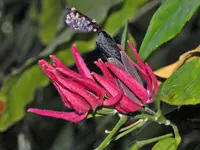
Each flower consists of a tight, upright cluster of deep purple bracts that surround and partially hide the true petals and reproductive parts, giving the appearance of a miniature shuttlecock or lantern. This layered structure protects the inner flower organs from excess rain in its native Atlantic Forest habitat.

Atlantic Forest native

The species is naturally found in the understory of Brazil’s Atlantic Forest, a biodiversity hotspot characterized by warm temperatures, filtered light, and high air humidity. Its shade-tolerant growth habit reflects adaptation to dappled light beneath taller trees and shrubs.

Extended blooming season

In suitable warm, bright conditions, this shrub can produce flowers over a long season rather than in a short flush. In mild or controlled climates, it often blooms repeatedly from late spring into fall.

Botan icon

Did you know?

In cultivation, plants grown from cuttings can start producing their distinctive purple flower heads while still relatively small and young, often blooming within their first year if provided with stable warmth and bright, indirect light.

FAQs about Brazilian Candles

Poor flowering usually comes from insufficient light intensity, low humidity, or lack of nutrients. Check that the plant is not rootbound, has regular balanced fertilization, and avoid heavy pruning right before its main flowering season.

Grow Healthy Plants with Botan Care

Keep your plants happy and healthy with plant identification, disease detection, and easy care guidance.

Botan plant care app — identify plants on mobile

Explore More Plants