running rockcress Care (Arabis procurrens)

Also known as: prostrate rock-cress
running rockcress

About running rockcress

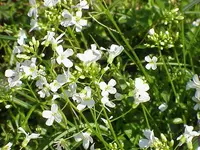
Running rockcress (Arabis procurrens) is a low, spreading perennial often used as a groundcover in rock gardens, borders, and along paths. It forms dense mats of small, gray-green leaves that hug the soil surface.

In spring, it produces clusters of small white flowers that create a clean, bright carpet effect. The plant naturally occurs in rocky slopes and open, well-drained sites in southeastern Europe.

Its creeping habit and relatively slow vertical growth make it easy to manage in small spaces. Arabis procurrens generally prefers full sun to light shade and free-draining soil, and these conditions guide how to care for running rockcress.

Main Plant Requirements

Care Difficulty

Easy Care

Light Preference

Full Sun

Water Requirements

Moderate Water

Temperature Preference

Cold Hardy

Hardiness Zone

4–9

Soil Texture

Sandy, Loamy, Rocky

Soil pH

Slightly acidic (6.5–7.0), Slightly alkaline (7.0–7.5)

Soil Drainage

Well-drained

Fertilization

Minimal (feed rarely)

Get Personalized Care Plan

Scan your plant to receive care tips personalized for your specific plant

Available on iOS and Android

How to Care for the running rockcress

Arabis procurrens prefers bright outdoor conditions with several hours of direct sun, especially in cooler climates.

  • Provide 4–6 hours of sun daily, ideally with morning or late-afternoon sun and light midday shade, which keeps foliage compact and flowering strong.
  • Tolerates partial shade, especially in warmer zones; in hot summers, protect from harsh afternoon sun to prevent leaf scorch and dry, bleached patches.
  • In winter, full sun is beneficial; in hotter months, monitor for wilting or crispy leaf edges that signal excessive exposure and increase shade slightly.

This plant prefers evenly moist but not saturated soil, with short dry periods between waterings.

  • In well-drained garden soil, water when the top 3–5 cm feels dry, then soak the root zone thoroughly so moisture reaches 10–15 cm deep.
  • During spring and early summer growth, monitor more often; in cooler or rainy seasons, reduce watering to avoid soggy conditions that promote root rot.
  • Signs of overwatering include yellowing lower leaves and soft stems, while drooping foliage and dry, shrinking soil surface indicate the need for a deep drink.

This low-growing perennial is cold-hardy and tolerates a wide outdoor temperature range when established.

  • Optimal growth occurs around 50–70°F (10–21°C), with strongest flowering in cool spring conditions and moderate summer temperatures.
  • Running rockcress survives down to about -20°F (-29°C) in the ground, provided soil drains well and winter waterlogging is avoided.
  • It handles summer heat up to about 85–90°F (29–32°C) if soil moisture is maintained and roots are shaded by surrounding plants or mulch.

This alpine perennial handles a wide humidity range and rarely needs special humidity management.

This mat-forming perennial prefers lean, sharply drained soil that stays airy around the roots.

  • Use gritty, sandy or sandy-loam soil with small gravel to mimic rocky slopes and prevent compaction.
  • Ensure very fast drainage; raised beds or rock-garden style mounds help water run off quickly.
  • Keep pH slightly alkaline to neutral around 7.0–7.5, adding a small amount of lime where soils are acidic.
  • Limit rich compost or manure; Arabis procurrens flowers best in relatively low-fertility, mineral-based substrates.

This species suits container growing, especially in shallow, wide pots or troughs.

  • Choose a low, wide container so the spreading mats can cascade without smothering nearby plants.
  • Use heavy clay or stone pots outdoors to prevent wind tipping as the foliage spreads over the rim.
  • Position containers on pot feet or bricks so drainage holes stay clear and runoff leaves quickly after rain.

This low-maintenance groundcover needs only light feeding to stay dense and floriferous.

  • Apply a balanced, slow-release fertilizer (around 10-10-10) at half strength once in early spring as new growth begins.
  • Alternatively, top-dress with a thin layer of finished compost to improve soil structure and gentle nutrition.
  • Avoid rich, frequent feeding, which can cause lanky growth and reduce flower production in running rockcress.
  • Do not fertilize in late fall or winter, when the plant is dormant and nutrient demand is low.

Light pruning keeps Arabis procurrens compact, encourages flowering, and maintains a tidy mat.

  • Shear back spent flower stems and straggly growth right after blooming in late spring or early summer.
  • Remove dead, damaged, or diseased foliage with clean, sharp scissors or hand pruners to reduce stress and disease risk.
  • Thin out overcrowded patches by cutting or lifting small sections to improve airflow and reduce rot.
  • Trim lightly around the edges of paths or borders to control spread and maintain the desired shape.

This mat-forming perennial is usually grown in the ground and only occasionally moved or divided.

  • Transplant in early spring or early fall, when temperatures are mild and soil moisture is steady.
  • Look for signs such as thinning centers, bare patches, or very root-bound plugs in containers as cues to lift and reset plants.
  • Lift clumps with a hand fork, keeping roots as intact as possible, and replant at the same depth into well-drained soil.
  • Water thoroughly after transplanting, then keep soil slightly moist for 1–2 weeks to limit transplant shock and support new root growth.

Arabis procurrens is commonly propagated by division, cuttings, or seed to expand groundcover areas.

  • Divide established clumps in early spring or early fall, replanting healthy sections with firm roots and young shoots.
  • Take 5–7 cm non-flowering stem cuttings in late spring, insert into gritty, well-drained mix, and keep lightly moist until rooted.
  • Sow seeds on the surface of well-draining soil in late summer or early spring; light aids germination.
  • Maintain cool to mild temperatures and good air movement to reduce damping-off and encourage strong young plants.

This species is generally cold hardy and needs minimal winter care in most temperate gardens.

  • Tolerates typical winter frosts in many regions when planted in well-drained soil.
  • Apply a thin, 2–3 cm mulch layer around, but not over, crowns in colder zones to buffer freeze–thaw cycles.
  • In containers, move pots to a sheltered, unheated area to prevent root damage from prolonged freezing and waterlogging.

Care Tips

Edge Containment

Install shallow edging 5–8 cm deep around beds to prevent this carpeting perennial from spreading into lawns or neighboring plantings by surface runners.

Rock Crevice Planting

Tuck divisions into rock crevices or between paving stones with a gritty mix so roots anchor firmly and foliage can drape without trapping excess moisture against the crowns.

Post-Flower Shear

Shear back spent flower stems and straggly growth by about one-third right after bloom to keep the mat dense, reduce self-seeding, and encourage fresh foliage.

Winter Drainage Check

Before winter, confirm that planting sites shed water quickly and top-dress with coarse grit or gravel around crowns to reduce freeze–thaw damage and crown rot.

Targeted Pest Monitoring

Inspect foliage and stems every few weeks in spring for aphids or flea beetle damage and treat early with a strong water spray or a labeled insecticidal soap to prevent weakening of the low mat when growing running rockcress.

Common Pests and Diseases

Downy mildew

This disease causes yellowed, patchy areas on upper leaf surfaces with grey or white fuzzy growth underneath, especially in cool, damp weather. Symptoms include slowed growth and premature leaf drop in dense groundcover mats.

Solution

Remove and discard affected leaves to reduce spread, then thin or divide crowded clumps to improve air circulation. Avoid overhead watering, water early in the day so foliage dries quickly, and if the problem recurs, use a labeled copper or phosphonate fungicide as a preventive spray in cool, wet periods.

Leaf spot

This disease produces small brown or purplish spots on leaves that can merge into larger blotches, often starting in humid or overly wet conditions. Symptoms include cosmetic damage and gradual thinning of foliage in older plantings.

Solution

Cut off and dispose of heavily spotted leaves and any plant debris around the crowns, then adjust watering so that soil is moist but not constantly wet. Improve airflow by lightly thinning the planting, and in persistent cases apply a targeted ornamental-leaf-spot fungicide according to label directions during wet spells.

Aphids

These insects cluster on new shoots and flower stems, sucking sap and causing distortion, sticky honeydew, and possible sooty mold on the low foliage. This pest can reduce flowering and weaken young or recently planted rockcress clumps.

Solution

Rinse colonies off with a firm stream of water, repeating every few days until numbers drop, and encourage natural predators such as lady beetles by avoiding broad-spectrum insecticides nearby. For heavier infestations, treat soft growth with insecticidal soap or a light horticultural oil, coating stems and leaf undersides thoroughly.

Spider mites

These pests thrive in hot, dry sites and cause fine stippling on leaves, dulling the grey-green foliage and sometimes producing thin webbing between stems. Symptoms include a dusty or bronzed look on the mat of foliage and gradual decline in vigor.

Solution

Spray foliage with a strong jet of water, focusing on the undersides of leaves, and increase ambient humidity slightly by occasional hosing during dry spells without leaving foliage wet overnight. If populations remain high, apply insecticidal soap or a miticide labeled for ornamental groundcovers, repeating at the interval stated on the label to break the life cycle.

Interesting Facts

Carpet-forming stolons

This species spreads using slender above-ground stems called stolons that root at the nodes, forming a dense, mat-like groundcover that can outcompete many low weeds in open, sunny sites.

Rocky habitat specialist

In nature, it often grows on rocky slopes, scree, and limestone outcrops in southeastern Europe, showing a strong adaptation to shallow, well-drained, often alkaline soils.

Early-season nectar source

Its small white spring flowers provide an early food source for bees and other pollinating insects when few other rock-garden plants are in bloom.

Botan icon

Did you know?

Arabis procurrens has naturalized beyond its native Balkan range in parts of western and central Europe, where its vigorous mat-forming habit allows it to escape from cultivation and establish in dry, rocky habitats.

FAQs about running rockcress

This species spreads steadily by creeping stems, forming a low mat 30–60 cm wide over time. It is not usually invasive, but can edge into nearby areas, so use edging or occasional trimming to contain it.

Grow Healthy Plants with Botan Care

Keep your plants happy and healthy with plant identification, disease detection, and easy care guidance.

Botan plant care app — identify plants on mobile

Explore More Plants