Root zone protection
Apply a 5–8 cm layer of coarse organic mulch around the root zone, keeping it 5–10 cm away from the trunk, to reduce soil temperature extremes and protect surface feeder roots from mechanical damage.

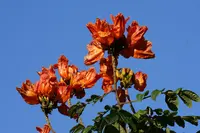
The African tulip tree, Spathodea campanulata, is a fast-growing tropical tree valued for its large, tulip-shaped orange to red flowers and dense, glossy foliage. It can reach substantial height and spread, forming a broad canopy that provides deep shade in suitable climates.
This species is native to tropical Africa but is widely planted in warm regions worldwide as an ornamental shade and street tree. It is relatively easy to establish in frost-free areas but can be invasive in some locations.
To care for African tulip tree, provide full sun, moderate moisture, and well-drained soil, as it dislikes cold, waterlogged, or very dry conditions for long periods.

Care Difficulty
Moderate Care

Light Preference
Full Sun

Water Requirements
Regular Water

Temperature Preference
Tropical / Frost Sensitive

Hardiness Zone
10–12

Soil Texture
Sandy, Loamy, Organic-rich

Soil pH
Acidic (5.5–6.5), Slightly acidic (6.5–7.0)

Soil Drainage
Moist but well-drained

Fertilization
Minimal (feed rarely)
Scan your plant to receive care tips personalized for your specific plant
Available on iOS and Android
This fast-growing tropical tree needs abundant sunlight to flower and maintain a strong canopy.
This species prefers consistently moist but not waterlogged soil, especially during establishment.
This tropical tree thrives in warm, frost-free climates and reacts poorly to prolonged cold.
This species prefers moderately humid air but usually copes with typical household conditions.
This tree performs best in deep, well‑structured soil that drains freely yet holds some moisture.
This fast‑growing tree can be grown in large containers for a limited time, especially in cooler climates.
Nutrient inputs support fast growth and flowering of Spathodea campanulata in managed landscapes or containers.
Pruning helps manage size, structure, and safety of Spathodea campanulata, especially in small gardens.
This fast-growing tree is usually transplanted from containers to the ground while still young to reduce shock.
Spartodea campanulata is most often propagated from seeds or semi-hardwood cuttings in warm conditions.
In frost-prone climates, this tropical tree needs thoughtful winter management, especially when young or container-grown.

Plant Health Check
Not sure what's wrong with your plant? Check your plant's health inside the app.
The tree produces long, brown seed pods that dry and split open suddenly, flinging papery, winged seeds away from the parent tree and helping it spread rapidly in suitable climates.
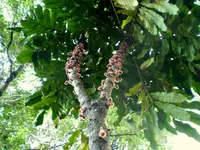
Its large, cup-shaped orange-red flowers are rich in nectar and structured to attract and accommodate sunbirds and other nectar-feeding birds, which act as its primary pollinators in many parts of its range.
Although native to tropical Africa, this species has become highly invasive in many Pacific islands, parts of Australia, and tropical America, where it can outcompete native vegetation and alter local ecosystems.

The flower buds of this species are so tightly packed with watery fluid that children in some tropical regions traditionally use them as natural water squirters, squeezing the unopened buds to shoot jets of liquid.
Lack of flowering usually comes from insufficient maturity, inadequate light, or heavy pruning of young shoots. Trees often need several years to bloom well. Avoid cutting branch tips and ensure the plant experiences consistently warm, bright outdoor conditions.
Keep your plants happy and healthy with plant identification, disease detection, and easy care guidance.