Trunk training
In the first 2–3 years, select 3–5 strong stems and remove competing shoots at the base to create a stable multi-stem framework that resists wind and supports heavy flowering clusters.

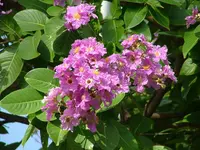
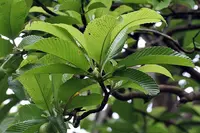
Giant crape-myrtle (Lagerstroemia speciosa) is a tropical, deciduous tree valued for its large clusters of crinkled summer flowers and smooth, mottled bark. It typically forms a rounded crown and can become a small to medium landscape tree in warm climates.
In nature it occurs across South and Southeast Asia, often in warm, humid lowland areas. It is generally considered moderately easy to grow when given enough sun, warmth, and well-drained soil.
Understanding how to care for Giant Crape-myrtle focuses on providing consistent moisture while avoiding waterlogged conditions, plus enough space for its roots and canopy to expand over time.

Care Difficulty
Moderate Care

Light Preference
Full Sun

Water Requirements
Moderate Water

Temperature Preference
Tropical / Frost Sensitive

Hardiness Zone
10–12

Soil Texture
Sandy, Loamy, Organic-rich

Soil pH
Acidic (5.5–6.5), Slightly acidic (6.5–7.0)

Soil Drainage
Moist but well-drained

Fertilization
Minimal (feed rarely)
Scan your plant to receive care tips personalized for your specific plant
Available on iOS and Android
Lagerstroemia speciosa develops best flowering and foliage color in full sun with some tolerance for light afternoon shade.
Lagerstroemia speciosa prefers evenly moist, well-drained soil, especially while establishing deep roots.
This species thrives in warm, frost-free climates and responds poorly to extended cold.
This species prefers moderately humid air but adapts to many outdoor conditions.
This tree performs best in deep, well-structured, freely draining mineral soil.
This species can be grown in containers when managed as a pruned shrub or small tree.
Lagerstroemia speciosa benefits from moderate, focused feeding during its warm growing season.
Pruning guides the structure and flowering performance of Lagerstroemia speciosa.
This tree is usually grown in the ground, so management focuses on transplanting rather than frequent repotting.
Propagation of Lagerstroemia speciosa is typically done by seeds or semi-hardwood cuttings under warm conditions.
This tropical tree has low frost tolerance and needs thoughtful winter care in cooler climates.

Plant Health Check
Not sure what's wrong with your plant? Check your plant's health inside the app.
This crape-myrtle naturally sheds most or all of its leaves in the dry season in tropical climates, forming a clear deciduous pattern that is unusual among many evergreen tropical ornamentals.
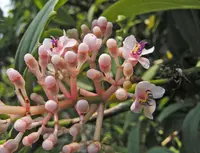
The tree produces large, branched flower clusters called panicles, often 20–40 cm long, with crinkled petals that give the blossoms a crepe-like texture and a showy, layered appearance.
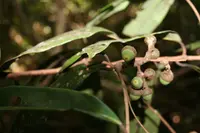
Its woody, capsule-like fruits contain seeds that are small and often winged or buoyant, allowing dispersal by wind and water along rivers and flooded areas in its native range.

In parts of South and Southeast Asia, this species is a dominant flowering tree of riverine and lowland forests, where its dense, deep root system helps stabilize riverbanks and reduce soil erosion during seasonal monsoon floods.
Poor flowering often comes from too much shade, excessive nitrogen fertilizer, or heavy pruning at the wrong time that removes flower buds. Mature trees also bloom less if stressed by drought, root damage, or compacted soil.
Keep your plants happy and healthy with plant identification, disease detection, and easy care guidance.