Chinese Apple Care (Ziziphus mauritiana)

Also known as: Indian jujube, Buffalo Thorn
Chinese Apple

About Chinese Apple

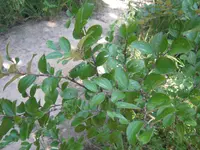
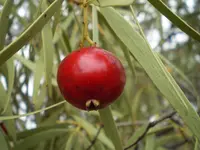
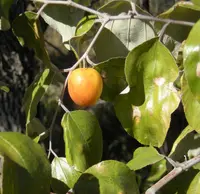
Chinese apple (Ziziphus mauritiana) is a small to medium fruit tree, often thorny, with glossy green leaves and rounded, olive-sized fruits. It has a dense, somewhat irregular crown and can be grown as a standalone tree or in informal orchards.

This species is native to arid and semi-arid regions of South and Southeast Asia but is now cultivated in many warm, dry climates. It is valued for its edible fruit, tolerance of heat, and ability to cope with relatively poor, well-drained soils.

These traits make it generally forgiving once established, though young plants benefit from regular watering and full sun exposure. Understanding how to care for Chinese Apple focuses mainly on providing warmth, light, and good drainage.

Main Plant Requirements

Care Difficulty

Easy Care

Light Preference

Full Sun

Water Requirements

Low Water

Temperature Preference

Tropical / Frost Sensitive

Hardiness Zone

10–12

Soil Texture

Sandy, Loamy, Rocky

Soil pH

Slightly acidic (6.5–7.0), Slightly alkaline (7.0–7.5)

Soil Drainage

Well-drained

Fertilization

Minimal (feed rarely)

Get Personalized Care Plan

Scan your plant to receive care tips personalized for your specific plant

Available on iOS and Android

How to Care for the Chinese Apple

This sun-loving fruit tree thrives in open, bright positions in warm climates.

  • Provide 6–8 hours of direct sun daily; full sun exposure is best for flowering and fruiting in Chinese Apple orchards.
  • Tolerates light partial shade, especially with morning sun and light afternoon shade in very hot regions, but yields may drop in dense shade.
  • Avoid deep shade, which causes weak, lanky growth, and monitor in summer so reflective heat from walls or pavement does not scorch young foliage.

This drought-tolerant tree prefers deep, infrequent watering once established rather than constant surface moisture.

  • Allow the top 5–8 cm of soil to dry before watering, then irrigate slowly so moisture penetrates 20–30 cm into the root zone.
  • Reduce irrigation in cool seasons; in hot, dry periods, use visual cues such as slight leaf droop or very dry soil rather than a fixed schedule.
  • Use well-drained, sandy or loamy soil to prevent standing water, which can cause yellowing leaves, dieback, and root rot in Ziziphus mauritiana.

This species is adapted to hot, semi-arid to tropical climates and dislikes prolonged cold or frost.

  • Optimal growth occurs around 77–95°F (25–35°C), with warm, dry weather favoring flowering and fruit ripening.
  • Mature trees tolerate heat up to about 104–113°F (40–45°C) if soil moisture is adequate, but young trees can suffer leaf scorch in extreme, dry heat.
  • Avoid temperatures below 32°F (0°C); light frost can damage new shoots, and repeated freezes below 28°F (−2°C) may kill young or unacclimated trees.

Humidity is rarely a limiting factor for this drought-adapted tree.

  • Performs well in 30–50% humidity, similar to most dry indoor and outdoor environments.
  • Tolerates very dry air without leaf drop, as long as watering is appropriate for its root zone.
  • Humidity stress shows mainly as marginal leaf browning combined with prolonged heat and water deficit; improve by shading and soil-level watering rather than misting.

This species prefers well-drained, slightly gritty soil that does not stay wet for long periods.

  • Use a sandy or sandy-loam mix, such as 50–60% coarse sand plus 30–40% loam and 10–20% organic matter for structure.
  • Aim for slightly acidic to neutral pH around 6.0–7.5, which supports nutrient availability without stressing roots.
  • Improve drainage and aeration by adding coarse sand or fine gravel; avoid heavy clay that compacts and holds standing water.
  • For Ziziphus mauritiana in containers, ensure extra drainage with added perlite and avoid dense peat-only mixes that stay soggy.

This species can be grown in containers if the pot is large, deep, and drains quickly.

  • Choose a tall, heavyweight pot to counter the tree’s eventual top-heavy crown and reduce tipping in strong winds.
  • Leave a 5–8 cm air gap below the soil line to allow thorough watering without spillover and better gas exchange at the surface.
  • Raise the container on feet or bricks so drainage holes stay clear and runoff escapes quickly, preventing chronic moisture around the root zone.

Ziziphus mauritiana benefits from modest, targeted feeding rather than heavy fertilization.

  • Use a balanced granular or slow-release NPK fertilizer or well-rotted compost at the start of the warm growing season.
  • Feed 1–2 times per growing season, focusing on young or container-grown Chinese Apple trees.
  • Apply at half the label rate for young plants, and water in thoroughly to avoid root burn.
  • Stop feeding in late summer so growth can harden before cooler weather and winter dormancy.

Pruning Ziziphus mauritiana helps maintain structure, fruiting wood, and safe, manageable size.

  • Carry out main pruning in late winter or very early spring before active growth begins.
  • Remove dead, diseased, crossing, or inward-growing branches to open the canopy and improve light penetration.
  • Shorten very long or upright shoots to encourage a balanced, spreading framework and better fruiting.
  • Use clean, sharp bypass pruners or a small saw, making smooth cuts just above a bud or branch junction.

Transplanting Ziziphus mauritiana is more common than long-term container culture, as it prefers open ground.

  • Look for roots circling the pot, water running straight through, or slowed growth as signs a container plant needs more space.
  • Plan transplanting for late winter to early spring, when temperatures are mild and new growth is just starting.
  • Move young trees every 2–3 years at most, shifting into a hole or container only 1–2 sizes larger to limit shock.
  • Water deeply before and after moving, keep the root ball intact, and shade the tree for 1–2 weeks to reduce stress.

Ziziphus mauritiana is commonly propagated from seeds and vegetative material in warm climates.

  • Sow fresh seeds in late spring when soil is warm, after lightly scarifying the hard seed coat to improve germination.
  • Provide 75–85°F bottom warmth, evenly moist but well-drained medium, and bright light for seedlings.
  • Take semi-hardwood cuttings in mid to late summer, using 10–15 cm pieces with several nodes.
  • Dip cuttings in rooting hormone, place in a porous mix, and maintain high humidity until firm roots develop.

Ziziphus mauritiana is a warm-climate tree that dislikes prolonged frost and benefits from simple winter precautions.

  • In regions with light frost, add 5–8 cm of organic mulch over the root zone, keeping it away from the trunk.
  • Wrap young trunks with tree wrap or horticultural fleece in cold snaps to limit bark injury.
  • Move container-grown plants indoors or into a frost-free greenhouse when temperatures approach 32°F, ensuring good light.

Care Tips

Establish Strong Framework

In the first 2–3 years, select 3–4 evenly spaced main branches and remove steep, crossing, or low branches to build an open, bowl-shaped canopy that supports heavy fruit loads and good air movement.

Manage Fruit Load

Once fruit has set, thin excess clusters so that only 1–2 fruits remain per spur, which reduces branch breakage and improves final fruit size and quality.

Protect From Wind

In windy sites, use sturdy stakes or install a windbreak on the windward side during the first years to prevent root rock, trunk bending, and bark damage that can weaken long-term structure.

Targeted Pest Monitoring

From late spring onward, check new growth and undersides of leaves weekly for scale, mites, and borers, and treat early with horticultural oil or pruning out localized infestations to avoid broader chemical use.

Seasonal Sanitation

After harvest, remove mummified fruits, dead twigs, and leaf litter from around the base to reduce overwintering pests and diseases, an important step when caring for Chinese Apple in warm regions.

Common Pests and Diseases

Fruit borer

This pest attacks developing fruits, with larvae tunneling inside and causing premature fruit drop and internal decay. Symptoms include small entry holes, frass (sawdust-like droppings), and misshapen or shriveled fruit.

Solution

Collect and destroy infested and fallen fruits regularly to break the life cycle, and prune to open the canopy so birds and beneficial insects can access pests more easily. For heavy infestations, use fruit bagging or fine mesh netting on clusters and apply a targeted biological insecticide containing Bacillus thuringiensis at dusk, following label directions.

Leaf webber

These insects web young leaves and tender shoots together and feed from inside the shelter, leading to skeletonized foliage, distortion, and slowed growth. Symptoms include rolled or webbed leaves containing small greenish caterpillars.

Solution

Hand-pick and destroy webbed leaf clusters and affected shoot tips, and encourage natural predators by avoiding broad-spectrum insecticides. In larger trees, a light pruning of heavily infested shoots combined with a biological spray such as neem-based products on new flushes can reduce future damage.

Fruit fly

This pest lays eggs in ripening fruit, and the hatching maggots feed on the pulp, causing soft spots, internal breakdown, and rapid rotting. Symptoms include small puncture marks on the skin and fruit that collapses or ferments quickly after picking.

Solution

Collect and dispose of infested and fallen fruits in sealed bags away from the planting area, and harvest fruit as soon as it reaches usable maturity rather than leaving it to soften on the tree. Use bait traps or lure traps placed around the canopy and consider fruit bagging for higher-value crops, especially if caring for Chinese Apple in warm, fly-prone regions.

Powdery mildew

This disease forms white, powdery fungal growth on young leaves, shoots, and sometimes fruit, leading to curling, distortion, and reduced vigor. Symptoms include whitish patches that can merge into a continuous coating, especially in warm, dry conditions with high humidity at night.

Solution

Prune to improve airflow and remove heavily infected shoots, disposing of them away from the plant. During active outbreaks, apply a sulfur-based fungicide or a potassium bicarbonate spray to young foliage and new flushes, following label directions and avoiding treatments during very hot weather to prevent leaf burn.

Leaf spot

This disease causes small brown or dark lesions on leaves that may enlarge and coalesce, leading to yellowing and premature leaf drop, especially during warm, wet periods. Symptoms include scattered circular or irregular spots, sometimes with a pale halo around the affected tissue.

Solution

Rake and discard fallen leaves, and avoid overhead watering that keeps foliage wet for long periods. If the problem recurs, thin the canopy lightly to increase air movement and use a copper-based fungicide on new foliage at the start of the wet season, following the product label carefully.

Interesting Facts

Desert heat tolerance

This species continues to grow and set fruit in very high temperatures and semi-arid conditions where many fruit trees fail, making it a key crop in hot, dry regions of South and Southeast Asia.

Remarkable salinity resistance

The roots and leaves tolerate relatively saline soils and irrigation water compared with most commercial fruit trees, so it can produce harvests on marginal land that is unsuitable for many other crops.

Exceptional vitamin C content

Ripe fruits can contain vitamin C levels comparable to or higher than many citrus fruits, so in several rural areas they are eaten fresh or dried as an important seasonal source of dietary vitamin C.

Botan icon

Did you know?

This species has been widely introduced outside its native range and can form dense, thorny thickets that outcompete local vegetation, so in parts of Australia and the Pacific it is managed as a serious invasive woody weed rather than as a fruit tree.

FAQs about Chinese Apple

Growth is moderately fast in warm climates, often 30–90 cm per year once established. Seedlings usually start fruiting in 3–5 years, grafted trees sooner. Rate depends on temperature, water availability, soil fertility, and rootstock.

Grow Healthy Plants with Botan Care

Keep your plants happy and healthy with plant identification, disease detection, and easy care guidance.


Botan plant care app — identify plants on mobile

Explore More Plants