Native frangipani Care (Hymenosporum flavum)

Also known as: Australian frangipani, Sweetshade
Native frangipani

About Native frangipani

Native frangipani (Hymenosporum flavum) is an evergreen tree or large shrub valued for its fragrant, creamy-yellow flowers and neat, upright form. It typically develops a narrow crown with glossy green leaves and a moderate growth rate.

This species is native to rainforests of eastern Australia and New Guinea, where it grows as an understorey or edge tree. In gardens it is often used as a feature tree, along driveways, or near outdoor living areas for its scent.

It is considered relatively easy to grow where winters are mild, provided it receives good light, protection from severe frost, and well-drained soil. Understanding how to care for Native frangipani mainly involves managing its need for warmth and avoiding waterlogged conditions.

Main Plant Requirements

Care Difficulty

Moderate Care

Light Preference

Partial Sun

Water Requirements

Moderate Water

Temperature Preference

Warm Climate

Hardiness Zone

9–11

Soil Texture

Sandy, Loamy, Organic-rich

Soil pH

Acidic (5.5–6.5), Slightly acidic (6.5–7.0)

Soil Drainage

Moist but well-drained

Fertilization

Minimal (feed rarely)

Get Personalized Care Plan

Scan your plant to receive care tips personalized for your specific plant

Available on iOS and Android

How to Care for the Native frangipani

Hymenosporum flavum grows best in bright positions with some protection from harsh afternoon sun.

  • Provide 4–6 hours of direct morning sun, then light shade or filtered light after midday, especially in hot inland areas.
  • Tolerates partial shade (bright dappled light all day), but dense shade reduces flowering and causes sparse, leggy growth in Native frangipani.
  • In summer, monitor for leaf scorch on west-facing sites; in winter, ensure at least 3–4 hours of bright light to maintain compact growth and flower bud formation.

Watering for Hymenosporum flavum should keep the root zone moist but never saturated.

  • In the ground, water when the top 3–5 cm of soil feels dry; in most climates this means deeper, less frequent soakings rather than light daily sprinkling.
  • Use well-drained soil so water drains within a few minutes; persistent puddling, yellowing leaves, and soft stems indicate overwatering and possible root rot.
  • During hot, dry periods, increase watering and watch for drooping or curling leaves as a sign it needs a deep drink, then reduce frequency in cool or rainy seasons.

This species prefers mild to warm climates and dislikes frost or extreme heat stress.

  • Ideal growing temperatures are 65–80°F (18–27°C), which support steady vegetative growth and reliable flowering.
  • It tolerates brief dips to about 28–30°F (-2 to -1°C), but repeated frosts damage young tips; protect small plants if frost below 32°F (0°C) is forecast.
  • In hot regions, it handles up to 95°F (35°C) if soil moisture is stable and roots are mulched, but prolonged heat above this can cause leaf scorch and reduced flowering.

This species handles a wide humidity range but grows best with moderate ambient moisture.

  • Aim for 40–60% humidity; prolonged air below 30% can slow growth and cause leaf-edge browning.
  • Native frangipani generally tolerates typical household dryness but benefits from sheltered, less windy spots outdoors.
  • Increase humidity locally with grouped plants, a nearby tray of water and stones, or brief misting in very dry, hot weather.

Hymenosporum flavum prefers a slightly acidic, well-drained but moisture-retentive soil.

  • Use a loamy mix with 40–60% organic matter such as compost plus mineral components like coarse sand or fine gravel.
  • Target pH 6.0–6.5; in alkaline soils, incorporate peat-free acidic compost and avoid heavy liming materials.
  • Improve drainage and aeration by blending in chunky pine bark or perlite so water drains in seconds, not minutes, after watering.
  • Avoid compacted clay, waterlogged sites, or pure sand that dries within hours, as roots need both air and consistent moisture.

This species can adapt well to container culture when the pot supports its eventual height and root mass.

  • Choose a tall, heavy container that resists tipping, as the plant becomes top-heavy when mature.
  • Select thick-walled terracotta or other porous materials to help moderate moisture in the large volume of substrate needed.
  • Ensure a deep, free-draining mix and elevate the pot slightly so drainage holes never sit in collected runoff water.

This small tree responds well to modest feeding, though established Native frangipani in the ground often grows acceptably in reasonable soil.

  • Use a balanced slow-release fertilizer (around 10-10-10 or similar) at the start of spring for container or nutrient-poor garden plants.
  • Supplement with a light compost layer over the root zone to improve soil structure and microbial activity.
  • Feed every 6–8 weeks during the main growing season, using fertilizer at 1/2 the label strength for container plants.
  • Stop fertilizing in late summer so new growth hardens before winter and avoid feeding during winter dormancy.

Hymenosporum flavum benefits from light, targeted pruning to maintain structure and encourage flowering wood.

  • Carry out main pruning in late winter to early spring before vigorous new growth starts.
  • Remove dead, diseased, crossing, or storm-damaged branches first using clean, sharp bypass pruners or loppers.
  • Thin congested inner branches to improve airflow and light penetration, which supports healthier foliage and better flowering.
  • Tip back overly long or leggy shoots to shape the crown and control height, making only small, staged reductions.

This species is usually grown in the ground, so management focuses more on careful transplanting than frequent repotting.

  • Transplant young trees in late winter to early spring when soil is workable and temperatures are mild.
  • Look for signs such as roots circling the container, roots emerging from drainage holes, or slowed growth before moving container-grown plants.
  • Shift to a container 1–2 sizes larger, using a free-draining mix, and keep the root ball as intact as possible to reduce stress.
  • Water deeply after planting, provide shade or wind protection for 1–2 weeks, and keep soil evenly moist until new growth confirms establishment.

New plants are most often raised from seed, with stem cuttings used less frequently for Hymenosporum flavum.

  • Collect ripe seed pods in late summer to autumn, then sow fresh seeds in a well-drained, sandy mix.
  • Maintain 68–77°F, bright indirect light, and lightly moist substrate to support even germination.
  • For semi-hardwood cuttings, take 10–15 cm pieces in late spring to summer, using rooting hormone on the cut end.
  • Place cuttings in a humid, warm, bright environment with bottom heat if available, ventilating regularly to reduce rot risk.

This plant is only mildly frost tolerant and benefits from simple winter precautions in cooler regions.

  • In ground, apply a 5–8 cm mulch layer over the root zone in late fall, keeping it slightly away from the trunk.
  • In climates with freezes, wrap young trunks with breathable horticultural fleece on the coldest nights.
  • Move container plants to a sheltered porch, unheated greenhouse, or bright indoor spot when temperatures approach freezing.
  • Reduce watering in winter, keeping soil barely moist to avoid root rot in cold, slow-drying conditions.

Care Tips

Formative leader training

In the first 3–5 years, select a single strong central stem as the leader and lightly remove competing uprights so the tree develops a stable framework and is less prone to storm damage later.

Wind and stake management

In exposed sites, use 2–3 low, flexible stakes and soft ties for only the first 1–2 years, allowing slight movement so roots anchor well while still protecting the young trunk from snapping.

Understory companion planting

Plant shallow‑rooted, drought‑tolerant groundcovers beneath the canopy to shade the root zone, reduce weed competition, and keep the soil more evenly moist without mulching right against the trunk.

Flowering flush clean‑up

After major blooming flushes, collect and remove spent flowers and leaf litter from around the base to reduce fungal spore buildup and discourage sap‑feeding insects that are attracted to decaying petals.

Targeted scale scouting

From spring to early summer, inspect young stems and leaf undersides every 2–3 weeks for scale insects and sooty mold, and if found, treat early with horticultural oil applied in the cool part of the day according to label directions, which is particularly important when caring for Native frangipani in warm, humid regions.

Common Pests and Diseases

Mealybugs

This pest often shelters in leaf axils and along young stems, feeding on sap and causing leaf distortion, yellowing, and sticky honeydew. Symptoms include sooty mold growth on leaves where honeydew accumulates.

Solution

Inspect leaf bases, new shoots, and stems regularly, then wipe off visible insects with cotton pads dipped in isopropyl alcohol or insecticidal soap. For heavier infestations, repeat thorough sprays of horticultural oil every 7–10 days and prune out badly affected shoots, improving air movement around the plant.

Scale insects

These insects attach firmly to stems and the undersides of leaves, appearing as small brown or grey bumps and weakening the plant through steady sap loss. Symptoms include patchy yellowing, poor flowering, and sticky residue that may attract ants.

Solution

Gently scrape or wipe off individual scales with a soft cloth and soapy water, then treat remaining colonies with horticultural oil, ensuring good coverage of stems and leaf undersides. Reduce ant activity around the plant and repeat treatments as needed until new growth appears clean and vigorous.

Leaf spot

This disease causes small brown to dark purple spots on foliage, sometimes with a yellow halo, which can merge into larger patches and lead to premature leaf drop in humid or crowded conditions. Symptoms include a general thinning of the canopy as older leaves fall early.

Solution

Remove and dispose of affected leaves, avoid wetting the foliage when watering, and increase spacing or pruning to improve airflow. In persistently wet climates, a copper-based fungicide or other labeled ornamental fungicide can be applied at the first sign of spotting to protect new leaves.

Sooty mold

This disease is a superficial black fungal growth that develops on leaves and stems where honeydew from sap-sucking insects has accumulated, reducing light reaching the leaf surface. Symptoms include dull, blackened foliage that may look dirty but the tissue underneath remains mostly intact.

Solution

Address the underlying sap-sucking pests such as scale or mealybugs, then gently wash the leaves with lukewarm water and a mild soap solution to remove the mold. Improving air circulation and light exposure helps foliage dry faster and reduces further fungal buildup, which supports long-term Hymenosporum flavum care.

Interesting Facts

Color-changing fragrance

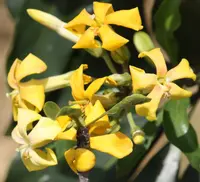
The flowers open cream to pale yellow and age to deeper yellow, and their fragrance typically intensifies in the evening, helping attract nocturnal pollinators such as moths.

Australian rainforest native

This species is naturally found in warm temperate to subtropical rainforests of eastern Australia, where it can grow as an understorey or edge tree reaching small to medium tree size in the wild.

Single-species genus

It is the only species in the genus Hymenosporum, which makes it taxonomically distinctive among Australian rainforest trees.

Botan icon

Did you know?

In cultivation outside its natural range, this species has become a valued urban tree in mild coastal climates because it tolerates light pollution and traffic conditions while still producing heavily scented flowers that are noticeable even at street level.

FAQs about Native frangipani

Growth is moderate. Young plants usually add about 20–40 cm per year under warm, frost-free conditions, slowing as they mature. Growth rate drops in cool climates or if root space, nutrients, or moisture are limited.

Grow Healthy Plants with Botan Care

Keep your plants happy and healthy with plant identification, disease detection, and easy care guidance.

Botan plant care app — identify plants on mobile

Explore More Plants