Wind exposure management
Site plants where they receive good air movement but are shielded from the strongest, drying winds, using low rock walls or adjacent tough grasses as windbreaks to reduce leaf shredding and winter desiccation.

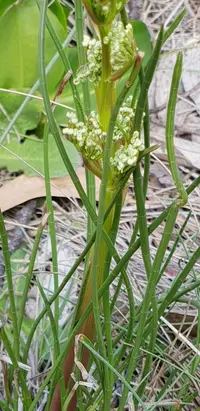
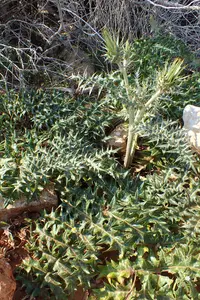
Mountain Aciphyll (Aciphylla simplicifolia) is a hardy, tuft-forming perennial from New Zealand’s alpine and subalpine grasslands. It belongs to the carrot family but has a very different look. Plants form dense clumps of narrow, often sharply divided leaves that create a spiky, architectural mound. Tall, upright flower stalks rise above the foliage, carrying clusters of small, pale flowers. In cultivation it grows slowly and prefers cool conditions, open light, and well-drained, gritty soil. Its main challenges are sensitivity to prolonged heat, humidity, and waterlogging, which can lead to decline. Gardeners who learn how to care for Mountain Aciphyll usually grow it successfully in rock gardens, troughs, or other specialized settings.

Care Difficulty
Hard Care

Light Preference
Full Sun

Water Requirements
Moderate Water

Temperature Preference
Cool Climate

Hardiness Zone
7–9

Soil Texture
Sandy, Loamy, Rocky

Soil pH
Acidic (5.5–6.5), Slightly acidic (6.5–7.0)

Soil Drainage
Well-drained

Fertilization
Minimal (feed rarely)
Scan your plant to receive care tips personalized for your specific plant
Available on iOS and Android
This alpine species prefers bright, cool conditions that mimic open mountain slopes.
This plant prefers free-draining soil and steady, moderate moisture rather than constant wetness.
This mountain species prefers cool to mild conditions and copes better with cold than with strong heat.
This species tolerates a wide humidity range but grows best in moderately dry air.
This species prefers sharply drained, mineral-rich soil that mimics a rocky, alpine slope.
This species can be grown in containers if the pot is deep, stable, and drains very quickly.
This alpine species is naturally adapted to low‑nutrient soils, so Mountain Aciphyll needs only light, infrequent feeding.
Aciphylla simplicifolia needs minimal pruning, mainly to maintain plant health and a clean outline.
This species is best treated as an in‑ground perennial; transplant only when clearly necessary.
Multiplying this plant is usually done from seed, with patience and cool conditions required for success.
This hardy alpine tolerates typical outdoor winters in much of its range with limited intervention.

Plant Health Check
Not sure what's wrong with your plant? Check your plant's health inside the app.
This species is naturally restricted to high-elevation regions of New Zealand’s South Island, where it grows in open alpine herbfields and subalpine grasslands exposed to strong winds and cold conditions.
Unlike many other speargrasses with very rigid, sharply armed leaves, this species has notably narrow, much more finely divided leaf segments that give the plant a softer, tufted appearance in comparison.
Its small yellowish to greenish flowers are arranged in compound umbels typical of the carrot family (Apiaceae) and can be faintly aromatic, attracting small alpine insects even in harsh weather windows.
This species forms tight clumps and spreads slowly from the crown rather than by runners. It does not behave aggressively and is unlikely to crowd out neighboring plants when given suitable, well-drained, open conditions.
Keep your plants happy and healthy with plant identification, disease detection, and easy care guidance.