Encourage Compact Habit
Pinch back soft shoot tips in early spring to encourage branching and a denser, wind-resistant mound rather than long, floppy stems.

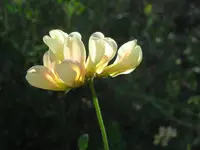
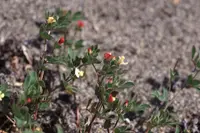
Chaparral bird's-foot trefoil (Acmispon grandiflorus) is a low-growing perennial legume native to dry coastal slopes and chaparral habitats of California and northern Baja California. It often forms small mounds or loose mats with fine, divided foliage and clusters of showy, pea-like flowers in warm yellow to pink tones.
This species is adapted to drought, lean soils, and high light, which makes it suitable for dry native gardens and restoration plantings. Once established, it usually needs minimal supplemental water and care, though good drainage is important. Gardeners who learn how to care for chaparral bird's-foot trefoil often value it for supporting native pollinators and adding soft color to sunny, dry sites.

Care Difficulty
Moderate Care

Light Preference
Full Sun

Water Requirements
Low Water

Temperature Preference
Warm Climate

Hardiness Zone
8–10

Soil Texture
Sandy, Loamy, Rocky

Soil pH
Slightly acidic (6.5–7.0), Neutral (7.0)

Soil Drainage
Well-drained

Fertilization
Minimal (feed rarely)
Scan your plant to receive care tips personalized for your specific plant
Available on iOS and Android
This sun-loving California native thrives in bright, open sites with long daily exposure.
This drought-tolerant legume prefers infrequent, deep watering once established.
This species is adapted to mild, Mediterranean-type climates with dry summers and cool, frost-light winters.
This species naturally tolerates dry, low-humidity conditions and rarely needs humidity adjustment.
This drought-adapted legume prefers lean, fast-draining, sandy or gravelly substrates that never stay waterlogged.
This plant can be grown in containers if the pot is set up to stay dry around the roots.
This drought-adapted native needs minimal feeding, so chaparral bird's-foot trefoil usually grows well in lean soils.
Pruning Acmispon grandiflorus is mainly done to maintain shape and plant health.
This species is usually grown in the ground, so focus on careful transplanting rather than frequent repotting.
Propagation of Acmispon grandiflorus is most reliable from seed, with some attention to seed coat and temperature.
This plant is adapted to mild, Mediterranean-type climates and usually needs little special winter care in suitable regions.

Plant Health Check
Not sure what's wrong with your plant? Check your plant's health inside the app.
This legume is native to coastal scrub and chaparral habitats of California, where it often grows on dry, rocky slopes and sandy soils exposed to strong sun and wind.
Like many members of the pea family, it forms root nodules with nitrogen-fixing bacteria, helping to enrich poor soils and support nearby plants in nutrient-limited chaparral ecosystems.
It produces relatively large, pea-like yellow to orange flowers in late winter to spring, providing an early-season nectar source for native bees in coastal habitats.

This species is considered a regional endemic of California, meaning it occurs naturally only in a limited geographic range along the central and southern coast, where it contributes to the distinctive character and biodiversity of local chaparral and coastal scrub plant communities.
The flowers are very attractive to native bees and small pollinating insects, thanks to their nectar-rich pea-like blooms. In suitable habitats, planting this species can noticeably increase pollinator activity in a dry, low-maintenance garden.
Keep your plants happy and healthy with plant identification, disease detection, and easy care guidance.