Strategic Clump Division
Divide established clumps every 3–4 years in early spring, replanting only the healthiest outer sections to maintain vigor and prevent overcrowded, floppy growth.

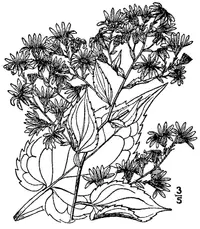
Common blue wood aster (Symphyotrichum cordifolium) is a perennial wildflower native to woodlands and woodland edges in eastern North America. It forms loose clumps with many slender, branching stems.
Plants carry clusters of small, pale blue to lavender daisylike flowers with yellow centers, usually blooming in late summer to fall. The heart-shaped lower leaves give the species its name.
This aster favors partial shade, consistent moisture, and well-drained, moderately rich soil, but it adapts to a range of garden conditions. Its durable nature and tolerance of light competition from other plants make it relatively straightforward to care for common blue wood aster in typical garden settings.

Care Difficulty
Easy Care

Light Preference
Partial Sun

Water Requirements
Moderate Water

Temperature Preference
Cold Hardy

Hardiness Zone
3–8

Soil Texture
Loamy, Silty, Organic-rich

Soil pH
Acidic (5.5–6.5), Slightly acidic (6.5–7.0)

Soil Drainage
Moist but well-drained

Fertilization
Minimal (feed rarely)
Scan your plant to receive care tips personalized for your specific plant
Available on iOS and Android
This woodland perennial prefers bright conditions but tolerates some shade.
This species prefers consistently moist but not saturated soil.
This hardy perennial is adapted to cool to warm temperate climates outdoors.
This species handles a wide humidity range and rarely needs special humidity management outdoors.
This aster prefers loose, moderately moist, well-drained soil with consistent structure.
This species can grow successfully in containers when given enough root space and stable moisture.
This native perennial generally needs minimal feeding, especially in fertile garden soil.
Thoughtful pruning keeps Symphyotrichum cordifolium dense, upright, and floriferous.
This species is typically grown in-ground and benefits from occasional division and transplanting rather than frequent repotting.
Symphyotrichum cordifolium is commonly propagated by division, basal cuttings, or seeds.
This hardy perennial needs little winter care in most temperate climates.

Plant Health Check
Not sure what's wrong with your plant? Check your plant's health inside the app.
The species name cordifolium refers to its typically heart-shaped basal leaves, which help distinguish it from many other North American blue woodland asters that have narrower or differently shaped foliage.
In its native eastern North American woodlands and edges, this plant flowers late in the season and provides an important nectar and pollen source for native bees, syrphid flies, and late-flying butterflies when many other wildflowers have finished blooming.
Unlike many sun-loving asters, this species is naturally adapted to partial shade in deciduous forests, where it can form loose colonies under trees and shrubs without needing full direct sun.

Genetic and morphological studies have shown that this species, once placed in the large aster genus Aster, is distinct enough to belong to the segregate genus Symphyotrichum, which helped clarify the evolutionary relationships among North American asters.
Lack of blooms usually comes from too much shade, nutrient-rich soil with excess nitrogen, or overcrowding. Division every few years, slightly lean soil, and more direct light help restore flowering and support growing common blue wood aster.
Keep your plants happy and healthy with plant identification, disease detection, and easy care guidance.