Acianthus amplexicaulis Care

Acianthus amplexicaulis

About Acianthus amplexicaulis

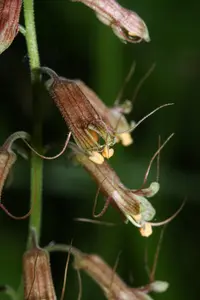
Acianthus amplexicaulis is a small terrestrial orchid native to moist forests of eastern Australia. It forms low clumps of heart-shaped leaves close to the ground. In season, it sends up slender stems with delicate, hooded flowers held above the foliage, giving it a refined, understated look. The plant is dormant part of the year and can disappear from view when conditions are not favorable. It prefers cool to mild conditions, filtered light, and consistently moist, humus-rich soil. In cultivation, how to care for Acianthus amplexicaulis depends largely on recreating its cool, shady forest habitat and protecting its fragile roots and tubers from disturbance.

Main Plant Requirements

Care Difficulty

Hard Care

Light Preference

Partial Shade

Water Requirements

Moderate Water

Temperature Preference

Cool Climate

Hardiness Zone

Unknown

Soil Texture

Loamy, Sandy, Organic-rich

Soil pH

Acidic (5.5–6.5)

Soil Drainage

Well-drained

Fertilization

Minimal (feed rarely)

Get Personalized Care Plan

Scan your plant to receive care tips personalized for your specific plant

Available on iOS and Android

How to Care for the Acianthus amplexicaulis

This terrestrial orchid prefers cool, shaded forest-like light rather than direct sun.

  • Provide bright, dappled shade or filtered light, ideally 1–2 hours of soft morning sun and no harsh midday or afternoon sun to avoid leaf scorch.
  • Site plants under deciduous shrubs or trees where they receive indirect light for 6–8 hours while staying protected from intense exposure.
  • In summer, increase shade if leaves pale or curl from excess sun; in darker seasons, slightly more open shade supports steady growth without stressing Acianthus amplexicaulis.

Moist but not saturated soil best supports healthy roots and tubers.

  • Water when the top 2–3 cm of soil feel barely moist rather than wet, using gentle, even soaking that drains through quickly.
  • During active growth, maintain consistent moisture; in dormancy, reduce watering so the soil stays lightly moist, never fully dry or waterlogged.
  • Watch for yellowing, limp foliage as a sign of overwatering and possible rot, while wrinkling leaves or soft, shriveled tubers indicate underwatering or prolonged dryness.

This species favors cool to mild conditions similar to its native forest floor habitat.

  • Aim for an active growth range around 50–70°F (10–21°C), which supports steady leaf and root development without heat stress.
  • Protect plants from frost below about 32°F (0°C); short, light frosts may be tolerated, but hard or repeated freezes can damage tubers and buds.
  • In hot weather above 80°F (27°C), increase shade and soil moisture while ensuring drainage, since prolonged heat combined with wet, stagnant soil encourages rot.

This terrestrial orchid prefers moderate, stable humidity similar to a mild woodland understory.

  • Aim for 50–70% humidity, avoiding very dry heated rooms for extended periods.
  • Tolerates short dry spells, but leaf edges may brown and buds may abort if air remains below 40%.
  • Increase humidity with a nearby pebble tray or grouped plants, but avoid misting directly onto flowers to reduce fungal risk.

This species performs best in a loose, humus-rich mix that mimics moist forest floor conditions.

  • Use a fine-textured, organic-rich mix such as 50% leaf mold or compost, 25% fine bark, and 25% perlite or coarse sand.
  • Ensure sharp drainage; the mix should stay lightly moist but never waterlogged, which quickly damages the shallow roots.
  • Keep pH slightly acidic to neutral, around 5.5–7.0, avoiding strongly alkaline mineral soils that can limit nutrient uptake.
  • Improve aeration by incorporating fine bark chips and perlite, and avoid heavy clay or compacted garden soil in containers.

This small terrestrial orchid can be grown in containers when its shallow, fibrous roots are given a cool, evenly moist medium.

  • Choose a wide, relatively shallow pot to spread the rhizomes rather than a deep, narrow container.
  • Select a rigid pot material, such as plastic or glazed clay, that maintains consistent moisture without rapid sidewall drying.
  • Raise the pot slightly on feet or bricks so drainage holes clear quickly and excess water does not pool under the base.

This terrestrial orchid usually grows well in lean, humus-rich soil and needs only light supplemental feeding.

  • Use a very dilute balanced liquid fertilizer (around 1/4 strength, such as 10-10-10) during active growth in spring and early summer.
  • Apply no more than every 4–6 weeks, always onto moist substrate to avoid root burn.
  • Avoid fertilizer during dormancy or when foliage dies back, as Acianthus amplexicaulis rests at this time.
  • If soil is poor, mix in a small amount of fine compost or leaf mold rather than using strong synthetic products.

Pruning needs for Acianthus amplexicaulis are minimal and mainly focused on hygiene rather than shaping.

  • Cut back spent flower spikes at the base after flowering using clean, sharp scissors or pruners.
  • Remove any dead, yellowed, or diseased leaves promptly to reduce fungal problems and improve air flow.
  • Avoid heavy cutting into healthy green tissue, as this small orchid has limited energy reserves.
  • Dispose of removed material away from the planting area to limit spread of pests or pathogens.

This small terrestrial orchid dislikes frequent disturbance, so repotting or transplanting should be infrequent and careful.

  • Plan to lift and divide clumps only every 3–4 years, or when growth becomes crowded and flowering declines.
  • Best timing is late summer to early autumn, after flowering but before new root growth begins.
  • Gently tease apart tubers, keeping as much surrounding soil as possible to limit root damage and stress.
  • Replant at the original depth in a free-draining, humus-rich mix, water lightly, and keep shaded until growth resumes.

Propagation of Acianthus amplexicaulis is usually done by careful division rather than seed, which is challenging without specialist techniques.

  • Divide clumps in late summer or early autumn, when the plant is not in active leaf or flower.
  • Lift the plant gently and separate tubers by hand, keeping at least 1 healthy growth bud per division.
  • Replant divisions into loose, humus-rich, well-drained substrate and water lightly to settle the soil.
  • Maintain cool, shaded, evenly moist conditions while new roots establish, avoiding waterlogging.

In mild temperate climates, this terrestrial orchid is fairly cold tolerant and needs only simple winter care.

  • Allow foliage to die back naturally, then remove it to discourage rot and slugs.
  • In colder regions, apply a light mulch of leaf litter or fine bark over the root zone to insulate tubers.
  • Container-grown plants in very cold areas can be moved to a sheltered, frost-free but cool spot until spring.

Care Tips

Mark dormancy zone

Place a small, discreet tag or stone marker where the tubers sit so you avoid disturbing or accidentally digging them up during their leafless summer dormancy.

Use fine surface mulch

Apply a very thin layer of fine pine bark or leaf litter over the growing area to keep the root zone cool and moist while still allowing emerging spikes to push through easily.

Gentle slug management

Set low, beer-free slug traps or use copper tape barriers around the bed in late autumn to protect tender flowering spikes without contaminating the soil with salt or harsh chemicals.

Careful companion planting

Combine it only with shallow-rooted, small woodland species so slower-growing Acianthus amplexicaulis is not shaded or outcompeted by aggressive groundcovers.

Label seasonal position

Use durable labels with both name and flowering season so you can plan dividing, repotting, or other tasks for growing Acianthus amplexicaulis at the correct time of year.

Common Pests and Diseases

Slugs and snails

This pest frequently grazes on tender orchid leaves and flower spikes, especially in damp, shaded conditions typical of this species’ habitat. Symptoms include irregular chew marks, slime trails, and damaged or missing flowers.

Solution

Hand-pick slugs and snails at dusk or early morning, use beer traps or iron phosphate pellets around pots or beds, and reduce hiding spots such as dense ground litter near plants. In container or Acianthus amplexicaulis indoor care, use copper tape barriers around pots and keep the growing area clean and slightly less cluttered to limit shelter sites.

Greenhouse aphids

These insects sometimes colonize new growth and flower stems, particularly in sheltered or greenhouse-grown plants. Symptoms include sticky honeydew, distorted leaves, and weakened flower spikes.

Solution

Remove aphids by gently rinsing stems with a firm stream of water or by wiping them off with a soft cloth. If populations persist, apply an insecticidal soap or ready-to-use neem oil spray, making sure to cover both sides of leaves and repeating weekly until the infestation subsides.

Spider mites

This pest may appear on plants grown in warm, dry, protected conditions, causing stippling and a dull, greyed appearance on leaves. Symptoms include very fine webbing on the undersides of leaves and gradual leaf yellowing or drop.

Solution

Increase humidity around the plant and rinse foliage thoroughly with lukewarm water, focusing on leaf undersides. If needed, use insecticidal soap or a horticultural oil spray in repeated applications, combined with improved airflow to discourage reinfestation.

Botrytis blight

This disease affects flowers and sometimes leaves in cool, humid, low-airflow conditions, causing soft spots that develop into brown lesions with grey, fuzzy fungal growth. Symptoms include premature flower collapse and spotting on petals, especially after prolonged wetting.

Solution

Remove and discard all affected flowers and foliage promptly and avoid overhead watering so that leaves and blooms dry quickly. Improve spacing and ventilation around plants and, in recurring cases, apply a labeled fungicide for ornamental orchids during periods of cool, damp weather.

Interesting Facts

Heart-shaped pouch petals

The flowers have translucent, heart-shaped labella (lip petals) with darker venation, forming a small pouch that guides tiny insect visitors toward the reproductive structures.

Tasmanian forest specialist

This species is naturally restricted to cool, moist forests of Tasmania, where it often grows in leaf litter or mossy soil on shaded slopes and along creek lines.

Winter-flowering habit

It typically sends up its slender flowering stems in the cooler months, when many surrounding forest plants are less active, which may reduce competition for pollinators.

FAQs about Acianthus amplexicaulis

This species is a small terrestrial perennial orchid. It persists through an underground tuber that survives from year to year, even when leaves and flowers die back seasonally. Healthy plants can return reliably each growing season under stable conditions.

Grow Healthy Plants with Botan Care

Keep your plants happy and healthy with plant identification, disease detection, and easy care guidance.

Botan plant care app — identify plants on mobile

Explore More Plants