Alstroemeria pulchra Care

Alstroemeria pulchra

About Alstroemeria pulchra

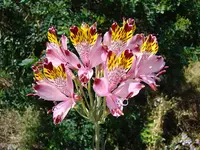
Alstroemeria pulchra is a perennial flowering plant from Chile and nearby regions of South America. It forms clumps of slender stems with whorled, twisting leaves and clusters of funnel-shaped flowers. Blossoms are usually pink, purple, or white with speckled or striped petals, giving a delicate, ornamental look in beds and borders. It grows from underground tubers, which allow the plant to come back each year and slowly spread. Gardeners find it moderately easy to grow when its needs are met, especially good drainage and protection from extreme heat or frost. Understanding how to care for Alstroemeria pulchra helps it flower reliably and maintain healthy foliage.

Main Plant Requirements

Care Difficulty

Moderate Care

Light Preference

Partial Sun

Water Requirements

Regular Water

Temperature Preference

Warm Climate

Hardiness Zone

8–10

Soil Texture

Sandy, Loamy, Organic-rich

Soil pH

Acidic (5.5–6.5), Slightly acidic (6.5–7.0)

Soil Drainage

Moist but well-drained

Fertilization

Light (every 4–6 weeks)

Get Personalized Care Plan

Scan your plant to receive care tips personalized for your specific plant

Available on iOS and Android

How to Care for the Alstroemeria pulchra

Provide bright outdoor light while protecting this species from intense afternoon sun in hot climates.

  • Give 4–6 hours of direct morning sun, then light shade or filtered light in the afternoon, especially in zones with strong summer sun.
  • Tolerates partial shade, but flowering may decrease if it receives less than 3–4 hours of direct or high dappled light per day.
  • Monitor leaves in summer; brown, crisp edges indicate scorching, while long, weak stems and few blooms suggest not enough light for Alstroemeria pulchra.

Maintain steadily moist but not waterlogged soil to support healthy growth and flowering.

  • Irrigate when the top 3–5 cm of soil feels dry, applying a slow, deep soak so moisture reaches the root zone rather than frequent light sprinkling.
  • Use soil with good drainage; pooling water or a sour smell in the root area signals poor drainage and a high risk of rot.
  • Reduce watering in cool seasons when growth slows, watching for wilting and dry, curling leaves as underwatering signs and yellow, soft stems as overwatering signs.

Provide mild, stable temperatures to support vigorous growth and reliable flowering.

  • Optimal growth occurs around 60–75°F (16–24°C), with cool nights encouraging strong stems and long-lasting blooms.
  • Established clumps usually tolerate brief drops to about 20–25°F (-6 to -4°C), but young plants benefit from mulch to buffer cold snaps and soil freezing.
  • In hot summers above 85–90°F (29–32°C), flowering can slow; use mulch and light afternoon shade to keep roots cooler and reduce heat stress on Alstroemeria pulchra.

This species prefers moderately moist air but usually adapts to typical indoor humidity.

  • Aim for 40–60% humidity to reduce leaf edge browning and keep foliage turgid.
  • Dry air tolerance is moderate, but prolonged levels below 30% can cause curled, crispy leaf tips and aborted buds.
  • Increase humidity locally with grouped pots, a pebble tray kept below the pot base, or short daily misting in very dry rooms.

Alstroemeria pulchra grows best in loose, moist, well-aerated soil that drains freely yet holds some organic matter.

  • Use a loamy mix combining garden soil, compost, and coarse material such as perlite or sharp sand for structure and drainage.
  • Aim for slightly acidic to neutral pH around 6.0–7.0 to support balanced nutrient uptake and stable growth.
  • Improve aeration by adding 20–30% coarse particles (perlite, pumice, or fine bark) so the rhizomes and roots do not sit in compacted zones.
  • Avoid heavy clay, unamended topsoil, or peat-only mixes that stay waterlogged or collapse, as this encourages rhizome rot and weak stems.

This species is suitable for container growing when the pot is chosen to support its deep, spreading rhizomes.

  • Select a container at least 30–35 cm deep so the rhizomes can extend downward without crowding and causing stunted stems.
  • Choose a wide, slightly heavier pot to stabilize tall flowering stems against wind, especially on balconies or exposed patios.
  • Ensure large, unobstructed drainage holes so excess water exits rapidly and the lower root zone does not stay saturated.

Nutrient management for Alstroemeria pulchra aims to support flowering without forcing soft, weak growth.

  • Use a balanced, slow-release fertilizer (for example 10-10-10 or 14-14-14) mixed into the top soil in early spring.
  • Supplement with light applications of diluted liquid balanced fertilizer at 1/2 strength every 4–6 weeks during active growth.
  • In fertile garden soil, replace some synthetic feedings with a thin layer of compost around, not touching, the stems.
  • Stop feeding in late summer to early fall and do not fertilize dormant clumps over winter.

Pruning focuses on cleaning and renewing flowering stems while preserving the underground rhizomes of Alstroemeria pulchra.

  • In mid to late spring and through summer, remove spent flowering stems by pulling or cutting them low at the base to encourage new shoots.
  • Cut out dead, damaged, or diseased stems whenever seen, using clean, sharp scissors or pruners to limit infection risk.
  • Thin very crowded clumps after flowering by removing a few weak stems to improve air flow and reduce fungal problems.
  • Do not cut foliage hard in midsummer; green leaves should remain to feed the rhizomes for next season’s growth.

Transplanting and occasional division keep clumps vigorous and prevent overcrowding in Alstroemeria pulchra.

  • Look for signs such as congested rhizomes, roots circling the pot, reduced flowering, or pale, weak shoots as indicators that division or transplanting is due.
  • Plan to lift and divide garden clumps every 3–4 years in early spring or early fall when growth is slower and temperatures are mild.
  • Dig widely and deeply around the clump, lift carefully, then gently tease apart rhizomes, keeping several healthy shoots and roots with each section.
  • Replant divisions at the same depth in well-drained soil, water thoroughly, and shade lightly for 3–5 days to reduce transplant shock.

Propagation of this species relies mainly on division of its underground rhizomes rather than on cuttings.

  • Divide mature clumps in early spring or early fall when soil is workable and temperatures are cool but not freezing.
  • Lift the plant, then separate firm, healthy rhizomes by hand or with a clean knife, keeping several buds and roots on each piece.
  • Replant divisions into loose, well-drained soil, spacing them so new shoots have room to expand and flower.
  • Seed propagation is possible but slow; sow fresh seed in trays, keep evenly moist at 60–68°F, and expect variable flowering quality.

Winter care depends on local climate and planting site, as the rhizomes have moderate cold tolerance.

  • In regions with mild winters, established garden plants often overwinter in the ground with minimal intervention once well rooted.
  • Where temperatures drop below about 20°F, apply a 5–8 cm mulch layer over the root zone after the first hard frost.
  • Allow foliage to die back naturally, then remove it to reduce fungal issues while leaving the mulched crown undisturbed.
  • For container plants in colder zones, move pots to a sheltered, frost-free but cool place and keep soil just barely moist.

Care Tips

Divide clumps strategically

Lift and divide congested rhizome clumps every 3–4 years in late winter or early spring, replanting only firm, healthy segments to maintain vigor and flowering quality.

Use pull-not-cut harvesting

When taking stems for arrangements, gently pull and twist them from the base instead of cutting, which stimulates new flowering shoots and reduces the number of blind (non-flowering) stems.

Mulch for cool roots

Apply a 5–8 cm layer of organic mulch around but not against the crowns to keep roots cool, reduce moisture swings, and protect rhizomes from summer heat stress.

Provide discreet support

Install low, circular plant supports or a grid of soft twine around emerging shoots in spring so tall flowering stems stay upright without snapping in wind or heavy rain.

Monitor virus vectors

Inspect regularly for aphids and thrips, remove heavily infested stems, and use targeted controls if needed, since these insects can vector viruses that permanently weaken plants when growing Alstroemeria pulchra.

Common Pests and Diseases

Botrytis blight

This disease causes brown, water-soaked spots on leaves, buds, and flowers that quickly develop gray, fuzzy mold, especially in cool, damp conditions. Symptoms include flower spotting, petal blight, and collapse of young shoots.

Solution

Remove and discard all infected flowers and foliage, avoid overhead watering, and improve spacing and airflow around plants. In wet, cool periods, use a labeled fungicide containing iprodione or chlorothalonil as a protective spray, and keep mulch and debris away from the crown to support healthy Alstroemeria pulchra care instructions.

Rhizoctonia crown rot

This disease causes yellowing and wilting of shoots, dark sunken lesions at the crown, and rotting of underground rhizomes, often in warm, moist soil. Symptoms include plants collapsing from the base while foliage above may still look green initially.

Solution

Lift and discard badly affected plants, cutting away and destroying all rotted rhizomes and crowns. Replant only firm, healthy pieces in well-drained soil or raised beds, avoid overwatering, and rotate planting sites to reduce pathogen load; in high-value plantings, a labeled soil fungicide drench can be used preventively around healthy crowns nearby.

Alstroemeria mosaic virus

This disease produces mottled, streaked, or line-patterned leaves, distorted growth, and reduced flowering, often more obvious on new foliage. Symptoms include uneven yellow or light green patterns that follow the leaf veins.

Solution

Remove and destroy symptomatic plants to prevent spread, since virus infections cannot be cured. Control aphids and other sap-sucking insects that transmit the virus, avoid using infected plants as propagation material, and disinfect cutting tools between plants with 70% alcohol or a bleach solution.

aphids

These insects cluster on soft stems, undersides of leaves, and flower buds, sucking sap and excreting sticky honeydew that can lead to sooty mold. This pest can cause distorted growth and reduced bud quality, especially in young shoots.

Solution

Wash colonies off with a strong but controlled stream of water and remove heavily infested shoot tips. If needed, apply insecticidal soap or a horticultural oil, making sure to coat leaf undersides, and encourage beneficial insects such as lady beetles by avoiding broad-spectrum insecticides.

leafminers

This pest creates winding, pale tunnels inside leaves as larvae feed between the upper and lower leaf surfaces, which can reduce photosynthesis and make foliage unsightly. Symptoms include serpentine trails that eventually turn brown and dry.

Solution

Remove and discard affected leaves as soon as trails appear to physically remove larvae from the plant. In persistent infestations, use a systemic insecticide labeled for leafminers on ornamentals, apply during peak adult activity, and keep surrounding weeds controlled to reduce alternative host plants.

Interesting Facts

Central Chile specialist

This species is naturally restricted to central Chile, where it grows in sclerophyllous shrublands and open woodlands on well-drained, often rocky soils, showing clear adaptation to a Mediterranean-type climate with wet winters and dry summers.

Tubers for drought survival

It forms underground tuberous storage organs that allow the plant to retreat below ground during dry summer periods and resprout when soil moisture and temperatures become favorable again.

Distinctive yellow markings

The flowers are typically white to pale lilac with yellow markings and fine dark streaks on the inner tepals, a pattern that guides pollinating insects toward nectar and pollen and helps distinguish it from other closely related Alstroemeria species.

Botan icon

Did you know?

Alstroemeria pulchra is one of a small group of Chilean Alstroemeria species that have become important in breeding programs to introduce compact growth and specific flower color patterns into modern florist alstroemeria hybrids, so caring for Alstroemeria pulchra also supports conservation of a valuable wild genetic resource.

FAQs about Alstroemeria pulchra

This species usually flowers from late spring through summer, sometimes into early fall in mild climates. Bloom duration depends on temperature and nutrition, with regular deadheading and balanced feeding helping extend the overall flowering season.

Grow Healthy Plants with Botan Care

Keep your plants happy and healthy with plant identification, disease detection, and easy care guidance.

Botan plant care app — identify plants on mobile

Explore More Plants