largeflower rose gentian Care (Sabatia grandiflora)

largeflower rose gentian

About largeflower rose gentian

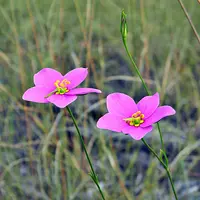
Largeflower rose gentian (Sabatia grandiflora) is a short-lived perennial wildflower known for its star-shaped, bright pink flowers with yellow centers. It usually grows in upright clumps with slender stems and narrow leaves, giving a delicate but not flimsy appearance.

This species is native to the coastal plain of the southeastern United States, where it occurs in moist meadows, flatwoods, and open, seasonally wet sites. It can be somewhat demanding in cultivation because it prefers consistently moist, acidic, low-nutrient soils and open sun.

Gardeners who care for largeflower rose gentian need to respect its need for moisture and light, and avoid heavy, dry, or highly fertilized ground.

Main Plant Requirements

Care Difficulty

Hard Care

Light Preference

Full Sun

Water Requirements

Aquatic

Temperature Preference

Warm Climate

Hardiness Zone

8–10

Soil Texture

Sandy, Loamy, Organic-rich

Soil pH

Acidic (5.5–6.5)

Soil Drainage

Waterlogged tolerant

Fertilization

Minimal (feed rarely)

Get Personalized Care Plan

Scan your plant to receive care tips personalized for your specific plant

Available on iOS and Android

How to Care for the largeflower rose gentian

This species prefers bright, open conditions similar to sunny wet meadows.

  • Provide 6–8 hours of direct sun daily, with exposure to full morning sun and some light afternoon shade in hotter regions.
  • Tolerates light partial shade (around 3–4 hours direct sun) but flowering of largeflower rose gentian decreases and stems may stretch and lean toward brighter areas.
  • In summer, monitor for leaf scorch under intense afternoon sun; in cloudy or short-day seasons, avoid heavy shade from taller plants to maintain strong growth.

This wetland wildflower thrives in consistently moist to wet soil, not in dry conditions.

  • Aim for soil that stays damp through the full root zone; surface may dry slightly but the top 2–3 cm should not become dusty or cracked.
  • In spring and summer growth, use rainfall plus supplemental water so the soil never fully dries; in cooler months, reduce watering only if natural rainfall keeps the site saturated.
  • Watch for stress signs: underwatering leads to limp, dull foliage and crisp leaf edges; overwatering in poorly drained soil causes sour odor, soft stems, and yellowing lower leaves.

This species is adapted to warm, humid climates with mild winters.

  • Optimal growth occurs around 70–85°F (21–29°C), with steady warmth encouraging strong stems and abundant flowering during the growing season.
  • Plants tolerate brief dips to about 30°F (−1°C) but are damaged or killed by hard freezes; in frost-prone areas, treat as an annual or rely on reseeding.
  • Heat tolerance is good up to about 90–95°F (32–35°C) if soil stays moist; hot, dry conditions combined with low soil moisture quickly lead to wilting and reduced bloom.

This species benefits from moderately humid air but usually adapts to typical indoor and outdoor levels.

  • Aim for 40–60% humidity; values below 30% for extended periods can slow growth and cause leaf edge browning.
  • Dry indoor air is tolerated if soil moisture is kept even, but avoid placing plants directly near heating or AC vents.
  • Humidity stress appears as curled, crispy margins and stalled buds; increase humidity by grouping plants or using a nearby tray of water and pebbles for largeflower rose gentian.

Sabatia grandiflora prefers moist, aerated, slightly acidic substrates that never stay waterlogged.

  • Use a loose, sandy-loam mix with 40–50% mineral material (coarse sand, fine grit) and 50–60% organic matter such as composted bark or leaf mold.
  • Maintain slightly acidic conditions around pH 5.5–6.5 to support nutrient uptake and reduce micronutrient lockout.
  • Improve drainage and aeration by adding coarse sand or perlite at 20–30% of the mix, especially in heavier garden soils.
  • Avoid dense clay, peat-only mixes, or containers without fast drainage, which lead to root rot and weak growth.

This species can be grown in containers if moisture and root space are managed carefully.

  • Choose a pot at least 20–25 cm deep to allow the taproot to develop without curling tightly at the base.
  • Select a heavier material such as ceramic or clay outdoors to keep the container stable in wind and reduce overheating of the root zone.
  • Elevate the container slightly on pot feet or bricks so drainage holes stay clear and excess water exits quickly after rain or irrigation.

Sabatia grandiflora is adapted to low-nutrient, sandy soils and usually needs only light feeding in cultivation.

  • Use a low-dose, balanced liquid fertilizer (such as 10-10-10), diluted to 1/4–1/2 strength.
  • Apply every 4–6 weeks during the active growing and flowering period in spring–summer only.
  • Avoid high-nitrogen products, which encourage foliage at the expense of blooms on largeflower rose gentian.
  • Stop feeding in fall and winter to allow natural dormancy and reduce root stress.

Sabatia grandiflora needs only minimal pruning to keep plants tidy and flowering well.

  • Time pruning for late flowering or early fall, once the main bloom flush has finished.
  • Use clean, sharp scissors or hand pruners to remove dead, diseased, or storm-damaged stems.
  • Shear back spent flower stalks to encourage a neater shape and possible light rebloom.
  • Avoid hard cutting into green basal growth, which can reduce vigor the following season.

This species is more often grown in beds or wildflower plantings than in long-term containers, so focus on careful transplanting.

  • Transplant in early spring or early fall, when temperatures are mild and soil moisture is steady.
  • Move seedlings or young plants before roots become pot-bound or begin circling the container.
  • Lift with a small soil ball, disturb roots as little as possible, and replant at the same depth in sandy, well-drained soil.
  • Water gently but thoroughly after transplanting, then keep soil slightly moist until new growth indicates recovery.

Sabatia grandiflora is most commonly propagated from seed rather than vegetative methods.

  • Sow fresh seed in late fall or very early spring, using trays or plugs filled with sandy, well-drained mix.
  • Press seed lightly on the surface; do not bury deeply, as light helps germination in this species.
  • Maintain cool to mild temperatures (55–70°F) and consistent, gentle moisture until germination.
  • Thin or prick out seedlings once they develop true leaves, then harden off before planting into the garden.

In its suitable hardiness range, Sabatia grandiflora generally needs little special winter care outdoors.

  • In colder areas near its limit, add a light 3–5 cm mulch layer after the ground cools, keeping mulch off crowns.
  • Avoid waterlogged winter soils, which increase root rot risk more than typical frost exposure.
  • Container-grown plants in marginal climates can be overwintered in a cold, bright, frost-free space.

Care Tips

Site hydrology check

Before planting, observe the site through a few heavy rain events to confirm that water stands briefly but drains within 12–24 hours, since prolonged flooding greatly increases root loss in this species.

Use mycorrhizal inoculant

When planting in restored or disturbed sites, dust the root zone with a native-appropriate mycorrhizal fungus inoculant to improve nutrient uptake and stress tolerance, especially in sandy or low‑organic soils.

Companion planting buffer

Establish a low, open matrix of native grasses or sedges around the clump to stabilize moist soil, reduce weed pressure, and protect delicate stems from wind without shading the plant.

Timed deadheading strategy

If seed saving is not a priority, remove spent flower heads promptly during peak bloom to extend flowering, then allow the last flush of flowers to set seed for natural reseeding when caring for largeflower rose gentian.

Seedling marking and protection

Flag or ring emerging first‑year rosettes with small, unobtrusive markers and use a fine-mesh guard or low plant ring to prevent accidental trampling or mowing before they reach flowering size.

Common Pests and Diseases

Leaf spot fungi

This disease causes small water-soaked or tan to dark-brown lesions on leaves, which may coalesce in wet, warm conditions common in wetland plantings.

Solution

Remove and discard heavily spotted leaves, avoid overhead watering in garden or nursery settings, and improve spacing for better airflow; in persistent cases, apply a copper- or chlorothalonil-based fungicide labeled for ornamental perennials following label directions.

Powdery mildew

This disease produces a white, powdery coating on upper leaf surfaces, which can lead to yellowing and premature leaf drop when plants are grown in still, humid air.

Solution

Increase air movement around plants, avoid excess nitrogen fertilization, remove the most affected leaves, and if needed use a sulfur or potassium bicarbonate fungicide labeled for ornamentals applied at the first sign of symptoms.

Aphids

These insects cluster on young stems and flower stalks, sucking sap and causing distortion of new growth and sticky honeydew deposits that can attract sooty mold.

Solution

Rinse colonies off with a firm stream of water, encourage or introduce natural predators such as lady beetles, and if populations remain high use an insecticidal soap or neem oil spray, coating the undersides of stems and buds thoroughly.

Leafhoppers

These insects feed on foliage and tender stems, causing pale stippling, small white patches, or marginal browning, and they may transmit leaf yellowing or decline in stressed plants.

Solution

Reduce surrounding tall weeds and grasses that harbor leafhoppers, use yellow sticky traps for monitoring, and treat severe infestations with a low-toxicity contact insecticide such as pyrethrins, applied in the evening to limit impact on pollinators.

Spider mites

These pests occur during hot, dry spells, leading to fine speckling, dull or bronzed leaves, and sometimes delicate webbing on stems and leaf undersides.

Solution

Increase humidity around container or nursery plants, regularly hose down foliage to dislodge mites, and if needed apply insecticidal soap or a horticultural oil, repeating at 5–7 day intervals until new growth appears clean.

Interesting Facts

Florida coastal specialist

This species is naturally restricted to moist flatwoods, marl prairies, and coastal pinelands of central and southern Florida, where it often grows in slightly calcareous, seasonally wet soils.

Showy summer bloomer

Largeflower rose gentian produces relatively large, star-shaped pink flowers with a yellow and white center during late spring and summer, standing out above the grassy vegetation of its native wetlands.

Fire-influenced habitat

In its native landscape, periodic fire helps maintain the open, sunny conditions this species needs by limiting shrub encroachment and reducing competition from taller plants.

Botan icon

Did you know?

Largeflower rose gentian is considered endemic to Florida, meaning it occurs naturally only in that region and nowhere else in the world.

FAQs about largeflower rose gentian

This species behaves as a short-lived perennial or biennial in its native range. Plants often persist 2–3 years, but individual rosettes may flower once, set seed, then die, relying on self-sown seedlings to continue.

Grow Healthy Plants with Botan Care

Keep your plants happy and healthy with plant identification, disease detection, and easy care guidance.

Botan plant care app — identify plants on mobile

Explore More Plants