Lindheimer's globeberry Care (Ibervillea lindheimeri)

Also known as: snake apple, Balsam Gourd, globe berry, balsam apple
Lindheimer's globeberry

About Lindheimer's globeberry

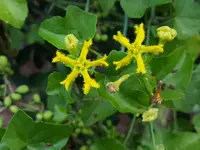
Lindheimer's globeberry (Ibervillea lindheimeri) is a perennial vine from arid and semi-arid regions of Texas and northern Mexico. It grows from a swollen underground tuber that stores water. Slender climbing stems carry deeply lobed leaves and small yellowish flowers, followed by round orange to red fruits. In cultivation it is often grown as a caudiciform, where the tuber is partly exposed for its sculptural look. The plant is drought-tolerant but sensitive to cold and excess moisture, which makes it moderately challenging for beginners. It prefers bright light, fast-draining soil, and careful, infrequent watering. Understanding how to care for Lindheimer's globeberry usually improves its long-term survival in containers.

Main Plant Requirements

Care Difficulty

Moderate Care

Light Preference

Full Sun

Water Requirements

Low Water

Temperature Preference

Warm Climate

Hardiness Zone

8–11

Soil Texture

Sandy, Loamy, Rocky

Soil pH

Slightly acidic (6.5–7.0), Slightly alkaline (7.0–7.5)

Soil Drainage

Well-drained

Fertilization

Minimal (feed rarely)

Get Personalized Care Plan

Scan your plant to receive care tips personalized for your specific plant

Available on iOS and Android

How to Care for the Lindheimer's globeberry

This desert vine prefers strong sun but benefits from some protection at the hottest time of day.

  • Provide 6–8 hours of direct sun, ideally with morning sun and light afternoon shade in very hot, dry regions.
  • Plant in an open, unobstructed spot; light filtered through sparse shrubs is acceptable, but dense shade reduces flowering and weakens Lindheimer's globeberry.
  • In summer, monitor for leaf scorch in exposed sites; in cooler seasons, maximize sun by avoiding shade from buildings, trees, or tall plants.

This species stores water in a tuber and needs infrequent, deep watering and very sharp drainage.

  • Allow the top 5–8 cm of soil to dry completely before watering, then soak the root zone once and let excess drain away.
  • During active growth in warm months, water only when foliage begins to look slightly dull or limp; in winter dormancy, keep almost dry, just preventing complete soil desiccation.
  • Use fast-draining, gritty soil on a slope or raised area to avoid standing water, which can cause yellowing leaves, soft stems, and tuber rot in Ibervillea lindheimeri.

This plant is adapted to hot, dry climates and needs warm conditions for strong growth.

  • Ideal growing temperatures are 75–90°F (24–32°C); growth slows noticeably below about 65°F (18°C).
  • Mature tubers can survive brief drops near 25–28°F (-4 to -2°C) if soil is dry, but foliage is damaged by light frost and young plants are less hardy.
  • In very hot spells above 100°F (38°C), provide some afternoon shade and ensure soil is dry between waterings to prevent heat plus moisture stress and root problems.

This dryland vine manages well in low household humidity and rarely needs special adjustment.

  • Ideal relative humidity is 30–40%, similar to arid indoor air, and higher levels are unnecessary.
  • Plant tolerates very dry air; issues usually come from overwatering rather than low humidity.
  • Wrinkling or softening of the caudex signals root or water problems, not humidity, so focus on soil moisture instead of misting.

Soil preparation is critical because this species forms a drought-adapted caudex that rots in poorly drained media.

  • Use a very fast-draining, gritty mix such as 50–60% mineral material (pumice, coarse sand, small gravel) with 40–50% cactus potting mix.
  • Structure should be loose and airy so water drains through in seconds and the caudex never sits in soggy pockets.
  • Aim for slightly acidic to neutral pH around 6.0–7.0, avoiding strongly alkaline or compacted ground.
  • For Ibervillea lindheimeri, avoid clay-heavy, peat-heavy, or water-retentive mixes, and never add moisture crystals or fine, dense compost.

This species is well suited to container growing when the pot supports its caudex and vining growth habit.

  • Select a broad, shallow container that allows the caudex to sit high, reducing moisture around the base while giving roots lateral space.
  • Choose unglazed clay if overwatering is a risk, since it wicks moisture away faster than plastic and helps the mix dry evenly.
  • Anchor a sturdy support in the pot at planting so the twining vines climb securely without pulling or tipping the container.

This drought-adapted caudiciform needs only light feeding, so focus on not overdoing fertilizer for Lindheimer's globeberry.

  • Use a diluted balanced liquid fertilizer (around 10-10-10 or 20-20-20 at 1/4 strength) during active growth in spring–summer.
  • Apply every 4–6 weeks only when the plant is producing new vines and leaves, never on dry soil.
  • Skip fertilizer in fall–winter when the plant is dormant, to avoid weak, etiolated growth.
  • For container plants, a small amount of slow-release fertilizer mixed into a gritty, well-drained substrate can support long-term growth.

Pruning Ibervillea lindheimeri is minimal and mainly focuses on tidying the vine and maintaining access to the caudex.

  • Best time for pruning is late winter to early spring, just before new growth begins.
  • Remove dead, damaged, or overly tangled stems with clean, sharp scissors or small bypass pruners.
  • Lightly shorten excessively long vines to control spread and keep the plant manageable in containers or small spaces.
  • Avoid heavy cutting into the caudex; pruning should target soft, aboveground vine growth only.

Container-grown plants are usually repotted infrequently to avoid disturbing the sensitive caudex and roots.

  • Check for roots circling the pot, emerging from drainage holes, or stalled top growth as signals to repot.
  • Plan repotting or transplanting for late winter to early spring, before vigorous new growth starts.
  • Repot every 3–4 years into a slightly larger, wide, shallow pot using a very well-drained cactus or succulent mix.
  • Handle the caudex gently, keep roots intact, and water lightly after repotting to limit stress and reduce rot risk.

Propagation is typically done from seed, since dividing the caudex of this species is risky and often unsuccessful.

  • Sow fresh seeds in spring in a warm environment around 70–80°F for reliable germination.
  • Use a gritty, fast-draining mix and barely cover the seeds, keeping the medium slightly moist but never wet.
  • Provide bright, indirect light and consistent warmth; germination can be slow and irregular.
  • Transplant seedlings carefully once they develop several true leaves, disturbing young roots as little as possible.

This species is fairly cold tolerant when dormant but still benefits from basic winter protection in colder areas.

  • The caudex and roots handle brief dips near freezing but growth stops and vines die back.
  • In the ground, add a light mulch layer over the root zone in late fall, keeping it off the caudex itself.
  • For container plants, move pots indoors or into a cold frame when temperatures stay below 35°F.
  • Keep soil almost dry in winter to prevent rot, especially in cool, low-light conditions.

Care Tips

Tuber protection

Grow the plant in a deep, wide container and keep the swollen tuber slightly above the soil line so it stays dry and less prone to rot while still allowing fine feeder roots to develop below.

Seasonal dormancy rest

When vines yellow and die back in late season, cut them off cleanly, stop watering almost completely, and store the pot in a dry, bright, frost-free place to respect the natural dormancy cycle and protect the caudex.

Controlled vine support

Provide a low trellis or horizontal mesh and gently weave new shoots through it, which keeps the long vines organized and prevents breakage or tangling in wind or around other plants.

Targeted pest monitoring

Inspect the undersides of leaves and young tendrils every 1–2 weeks for spider mites and mealybugs, and rinse vines with a firm but gentle stream of water at the first sign of pests before considering insecticidal soap.

Root confinement strategy

Use a relatively narrow but deep pot to slightly restrict root run, which encourages a more compact, sculptural caudex and simplifies caring for Lindheimer's globeberry over many years.

Common Pests and Diseases

Spider mites

This pest thrives in hot, dry indoor or greenhouse conditions and can form fine webbing across the caudex and stems. Symptoms include tiny pale stippling on leaves, slowed growth, and a dull, dusty appearance on the plant.

Solution

Rinse the plant thoroughly with a firm but gentle stream of water, focusing on leaf undersides and stem joints, then allow it to dry in bright, airy conditions. If mites persist, apply a neem oil or insecticidal soap spray every 5–7 days for several cycles and slightly increase humidity without keeping foliage constantly wet.

Mealybugs

These insects hide in crevices on the caudex, stems, and around leaf joints, producing white cottony clusters and sticky honeydew. Symptoms include distorted new growth, yellowing, and sooty mold developing on the honeydew deposits.

Solution

Remove visible insects with a cotton swab dipped in 70% isopropyl alcohol and wipe down accessible surfaces of the caudex and stems. For heavier infestations, follow with several rounds of insecticidal soap or neem oil, applied weekly, and isolate the plant from others until there is no new activity.

Scale insects

These insects attach as hard, brown or tan bumps on the caudex and older stems, often blending into the rough surface. Symptoms include gradual decline in vigor, sticky residue, and weak, sparse growth despite adequate light conditions.

Solution

Gently scrape or lift off individual scales with a fingernail or soft tool and wipe the area with alcohol to remove remaining residues. Follow with targeted applications of neem oil or horticultural oil to all woody and caudex surfaces, repeating every 10–14 days until new growth appears clean, which is important for Ibervillea lindheimeri care instructions in collections.

Fusarium stem wilt

This disease can occur in hot, poorly ventilated setups and affects the vining stems, which may wilt, yellow, and collapse even when the soil is not wet. Symptoms include brown streaking inside stems and sometimes sunken lesions at the base of shoots emerging from the caudex.

Solution

Promptly prune and discard all affected stems, cutting back into clean, healthy tissue and sterilizing tools between cuts. Improve airflow, avoid overhead watering, allow the mix to dry well between waterings, and repot into a fresh, sharply draining medium if multiple stems show symptoms, discarding any obviously discolored roots or caudex tissue.

Interesting Facts

Large underground caudex

This species forms a sizeable underground tuber-like caudex that stores water and reserves, allowing the vine to survive long periods of drought in its native arid habitats of Texas and northeastern Mexico.

Seasonal vine behavior

The plant produces slender, climbing vines with tendrils during the warm, wet season, then often dies back to the caudex in dry or cold periods, a growth strategy that conserves resources in harsh environments.

Specialist bee pollinators

In parts of its range, the small yellowish flowers are visited by specialized squash bees and other native bees that are attracted to cucurbit relatives, helping ensure reliable pollination in sparse desert vegetation.

Botan icon

Did you know?

Although now mostly discussed as a xeric oddity for collectors, this species has a long history of human interaction in south-central Texas and northern Mexico, where its distinctive round fruits and hidden storage organ made it a recognizable wild plant in traditional local plant knowledge and folklore.

FAQs about Lindheimer's globeberry

This species grows as a twining vine from a swollen underground tuber. It climbs over nearby shrubs, fences, or supports using tendrils, rather than spreading aggressively along the ground or forming dense mats.

Grow Healthy Plants with Botan Care

Keep your plants happy and healthy with plant identification, disease detection, and easy care guidance.

Botan plant care app — identify plants on mobile

Explore More Plants