small-leaf pussytoes Care (Antennaria parvifolia)

Also known as: Nuttall's pussytoes, little-leaf pussytoes
small-leaf pussytoes

About small-leaf pussytoes

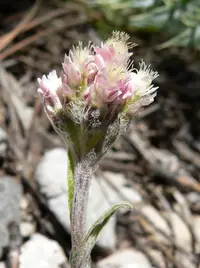
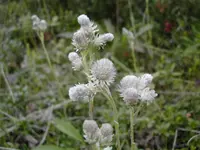
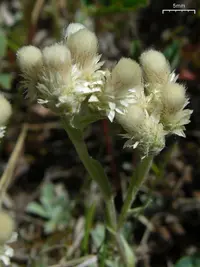
Small-leaf pussytoes (Antennaria parvifolia) is a low, mat-forming perennial often used as a groundcover in dry, sunny sites. It forms dense silvery-green rosettes with soft, narrow leaves and short stems topped with small, woolly white flower clusters that resemble tiny cat paws.

This species is native to dry grasslands, open pine woods, and rocky slopes in western North America, where it tolerates poor soils and limited moisture. Its drought tolerance, compact size, and slow, controlled spread make it relatively easy to care for small-leaf pussytoes in rock gardens, sunny borders, or as a lawn alternative, provided the site is well-drained.

Main Plant Requirements

Care Difficulty

Easy Care

Light Preference

Full Sun

Water Requirements

Low Water

Temperature Preference

Cold Hardy

Hardiness Zone

3–9

Soil Texture

Sandy, Loamy, Rocky

Soil pH

Slightly acidic (6.5–7.0), Neutral (7.0)

Soil Drainage

Well-drained

Fertilization

Minimal (feed rarely)

Get Personalized Care Plan

Scan your plant to receive care tips personalized for your specific plant

Available on iOS and Android

How to Care for the small-leaf pussytoes

This alpine perennial thrives in open, bright conditions that mimic high-elevation meadows.

  • Provide 6–8 hours of full sun daily; light afternoon shade is helpful in very hot, dry climates to reduce leaf scorch.
  • Plant small-leaf pussytoes where nearby shrubs or rocks will not cast dense shade, since prolonged low light causes leggy, sparse rosettes.
  • In summer, prioritize morning sun with some filtered light after 2–3 p.m.; in cooler seasons it tolerates full sun all day.

This species prefers dry, fast-draining conditions and is highly drought-tolerant once established.

  • Water only when the top 3–5 cm of soil are completely dry; in the ground this often means long intervals between waterings, especially in arid regions.
  • Use gritty, sharply draining soil to prevent standing water, since Antennaria parvifolia is prone to root rot in compacted or poorly drained sites.
  • Reduce or stop supplemental water in cool, rainy seasons; resume light, deep watering if foliage wilts, curls, or loses vigor during extended dry heat.

This hardy groundcover tolerates a wide temperature range typical of cold, dry climates.

  • Active growth is best around 55–75°F (13–24°C), with compact foliage and steady root development in spring and early summer.
  • Established plants withstand winter cold down to about -30°F (-34°C), so normal frosts and snow cover are not a problem in most temperate regions.
  • In hot spells above 85–90°F (29–32°C), growth slows; combine good air flow with light afternoon shade and very well-drained soil to limit heat stress.

Humidity is rarely a concern for Antennaria parvifolia, which thrives in dry air.

  • Performs best at 20–40% humidity, similar to arid or heated indoor air.
  • Tolerates very dry conditions; leaves stay compact and silvery without extra moisture.
  • Watch for limp, unusually lush green growth or rot at the base in overly humid, poorly ventilated spots.
  • If air is extremely still and damp, increase airflow with a fan rather than adding humidity.

Antennaria parvifolia prefers lean, mineral, sharply drained soil that mimics dry, rocky habitats.

  • Use a gritty mix such as 50% coarse sand or small gravel, 30–40% loam, and only 10–20% compost.
  • Ensure rapid drainage; water should run through in seconds and not leave the surface glossy or muddy.
  • Aim for slightly acidic to neutral pH, roughly 6.0–7.2, avoiding strongly acidic or alkaline extremes.
  • Avoid dense clay, peat-heavy, or constantly moist mixes; improve any heavy soil with abundant grit or crushed stone to boost aeration.

This species is suitable for containers, especially shallow, well-drained troughs or rock-garden pots.

  • Choose a wide, shallow pot so the mat-forming roots can spread without trapping water deep in the container.
  • Use unglazed clay or stone pots, which allow faster moisture loss and reduce the risk of crown rot after rain or watering.
  • Elevate the container on feet or blocks so drainage holes stay clear and runoff leaves the pot quickly after storms.

Antennaria parvifolia is a low-feeding native that usually grows well with minimal fertilizer in lean, well-drained soil.

  • Use a light top-dressing of compost in early spring if growth appears weak or foliage pale.
  • In containers, apply a balanced, slow-release fertilizer (around 10-10-10) at half strength once in spring.
  • Avoid midsummer and late-fall feeding to prevent soft, frost-tender growth.
  • Do not fertilize in winter dormancy; excess nutrients can cause leggy, weak plants.

Antennaria parvifolia needs only light pruning to maintain a neat, low mat and encourage fresh foliage.

  • In late spring or after flowering, shear off spent flower stalks with clean scissors or hand shears.
  • Remove dead, winter-burned, or damaged rosettes to reduce disease risk and improve airflow.
  • Thin crowded patches by trimming or lifting small sections, helping maintain a dense but not smothered carpet.
  • Avoid cutting into the woody crown; focus on soft, leafy growth to preserve vigor.

This species is usually grown in the ground, so transplanting established clumps is more common than repotting.

  • Transplant in early spring or early fall when temperatures are mild and soil moisture is steady.
  • Look for signs like crowded mats, bare centers, or slow spread as cues to divide and move sections.
  • Lift clumps gently, tease apart small rosettes with minimal root disturbance, and replant at the same depth.
  • Water lightly after planting, then allow soil to drain well to limit root stress and prevent rot.

Antennaria parvifolia is commonly propagated by division, stem offsets, or seed to expand groundcover patches.

  • Divide mature clumps in early spring or early fall, separating rosettes with roots attached.
  • Replant divisions into gritty, well-drained soil, spacing 15–20 cm apart, and water lightly until established.
  • Root creeping stolons or offsets by pinning them to soil until they form independent roots, then detach.
  • Sow seeds on the soil surface in late fall or early spring; they need light and cool conditions to germinate.

This species is very cold hardy and usually needs little special winter care in typical temperate climates.

  • Small-leaf pussytoes tolerates freezing temperatures and snow once well established in well-drained soil.
  • In colder or exposed sites, add a light, dry mulch around but not over the rosettes to buffer freeze–thaw cycles.
  • Container plants benefit from moving to a sheltered, unheated spot and keeping the potting mix just barely moist.

Care Tips

Encourage Dense Mats

Lightly pinch back the tips of spreading stems in early spring to encourage tighter, denser mats that outcompete weeds and better tolerate foot traffic on paths or between stepping stones.

Gravel Mulch Strategy

Use a 1–2 cm layer of coarse gravel or small pea stone around plants instead of organic mulch to keep leaf rosettes dry at the base, reduce crown rot risk, and mimic the plant’s natural rocky habitat.

Weed-Safe Establishment

For the first 1–2 seasons, hand-weed carefully around rosettes rather than using pre-emergent herbicides, which can interfere with stolon rooting and slow colony formation when growing small-leaf pussytoes.

Divide Aging Patches

Every 3–4 years, lift and divide older, thinning mats in early spring, replanting only the healthiest outer rosettes to maintain vigor and prevent woody, dieback-prone centers.

Support Pollinator Value

Avoid insecticides during bud and flowering stages so that the small white flower clusters can serve their role for native pollinators while you are caring for small-leaf pussytoes in xeric or rock garden plantings.

Common Pests and Diseases

Aphids

This pest feeds on tender new growth and undersides of leaves, sucking sap and sometimes causing leaf curling or slight distortion. Symptoms include sticky honeydew on nearby foliage or surfaces, which can attract sooty mold fungi.

Solution

Rinse foliage with a firm stream of water to dislodge colonies, focusing on stems and leaf undersides. For persistent infestations, apply insecticidal soap or a ready-to-use neem oil spray in the early morning, repeating weekly until populations decline, and avoid excess nitrogen fertilization that encourages soft, aphid-prone growth.

Leaf spots

This disease is usually fungal and appears as small tan, brown, or dark spots on leaves that may coalesce in humid, crowded conditions. Symptoms include gradual thinning of the foliage mat in affected patches.

Solution

Remove and discard affected leaves to reduce inoculum, and improve airflow by thinning overcrowded clumps or reducing overhead watering. In consistently wet climates, a preventive application of a labeled ornamental fungicide during prolonged rainy periods can help protect healthy foliage while maintaining the plant on a gritty, well-drained site.

Powdery mildew

This disease presents as a white to gray powdery film on leaves and stems, most often in warm days with cool, humid nights. Symptoms include reduced vigor and a slightly dull, off-color appearance of the foliage rosettes.

Solution

Increase air circulation around the mat by spacing plants adequately and avoiding overhead watering in the evening. Remove heavily affected foliage and, if needed, apply a sulfur or potassium bicarbonate-based fungicide labeled for ornamentals at the first sign of infection, following label directions and keeping foliage as dry as possible between treatments to support Antennaria parvifolia plant care.

Interesting Facts

Mat-Forming Leaf Rosettes

This species forms tight, ground-hugging rosettes of small, gray-green leaves connected by short stolons, creating dense mats that help stabilize sandy or gravelly soils in dry mountain and prairie habitats.

Female-Biased Colonies

Populations often consist mostly or entirely of female plants that reproduce vegetatively, so large patches on a hillside can be genetically identical clones spreading slowly over time.

Specialized Wind Dispersal

The seed heads carry a tuft of silky white hairs (a pappus) that acts like a tiny parachute, allowing seeds to travel efficiently on strong upland winds common in its native western North American range.

Botan icon

Did you know?

The common name pussytoes refers to the soft, white, felted flower heads of this species, which resemble the pads of a cat’s paw and provide insulation for reproductive structures in exposed, high-light, and often frosty sites.

FAQs about small-leaf pussytoes

This species spreads slowly by short stolons, forming low, tidy mats rather than invasive patches. It can gently fill gaps in rock gardens or dry borders but is usually easy to contain with simple edging or hand removal.

Grow Healthy Plants with Botan Care

Keep your plants happy and healthy with plant identification, disease detection, and easy care guidance.

Botan plant care app — identify plants on mobile

Explore More Plants