Gritty surface mulch
Apply a 1–2 cm top dressing of coarse granite grit or small gravel around the root crown to keep stems dry at the base, reduce soil splash, and discourage rot in wet periods.

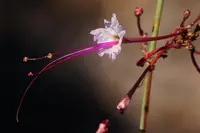
Southwestern ringstem (Anulocaulis leiosolenus) is a small, drought-adapted perennial from the Nyctaginaceae or four o’clock family. It often grows with a low, branching habit and fleshy, jointed stems.
This species is native to arid regions of the southwestern United States and northern Mexico, where it thrives in rocky, well-drained desert soils. Leaves are usually small and sparse, reflecting its adaptation to heat and low rainfall.
Its main traits are high drought tolerance, preference for full sun, and sensitivity to excess moisture and poor drainage. These features make it relatively easy to manage in dry conditions but less forgiving in humid or overwatered settings, so understanding how to care for southwestern ringstem is important.

Care Difficulty
Easy Care

Light Preference
Full Sun

Water Requirements
Low Water

Temperature Preference
Warm Climate

Hardiness Zone
7–10

Soil Texture
Sandy, Loamy, Rocky

Soil pH
Neutral (7.0), Slightly alkaline (7.0–7.5)

Soil Drainage
Well-drained

Fertilization
Minimal (feed rarely)
Scan your plant to receive care tips personalized for your specific plant
Available on iOS and Android
This desert perennial thrives in strong light but benefits from some protection at the hottest times of day.
This species is drought-adapted and prefers infrequent, deep watering rather than frequent light applications.
This desert native handles heat well but is sensitive to prolonged hard frost.
This desert species tolerates very dry air and usually does not need humidity adjustment indoors.
Anulocaulis leiosolenus needs fast-draining, mineral-rich soil that mimics desert conditions.
This species can be grown in containers if given a shallow, very free-draining setup.
This desert native needs minimal feeding, so focus on lean, well-drained soil when caring for southwestern ringstem.
Pruning Anulocaulis leiosolenus is usually minimal and mostly hygienic rather than shaping-focused.
This species is usually grown in-ground, so transplanting is more relevant than frequent repotting.
Propagation of Anulocaulis leiosolenus is most reliable from seed rather than vegetative methods.
This desert perennial is fairly cold hardy in dry climates and usually needs only light winter attention.

Plant Health Check
Not sure what's wrong with your plant? Check your plant's health inside the app.
This species produces distinctive dark, sticky bands around its jointed stems that can trap small insects and windblown debris, a feature that helps distinguish it from related desert wildflowers.
Its pale tubular flowers typically open in the evening or at night and are visited by nocturnal moths, an adaptation that fits the cooler, low-humidity conditions of its native desert habitat.
Populations are often found on gypsum-rich or calcareous desert soils in the American Southwest and northern Mexico, showing a strong preference for sparsely vegetated, harsh substrates where few other forbs thrive.

Genetic and morphological studies place this species in the four o'clock family (Nyctaginaceae), and its unusual combination of jointed, banded stems and nocturnal flowering has made it a useful reference taxon for understanding evolutionary adaptations to arid North American environments.
This species is a long-lived perennial adapted to arid desert habitats. It resprouts from its rootstock each year, even if top growth dies back during drought or cold, provided roots have not rotted or frozen deeply.
Keep your plants happy and healthy with plant identification, disease detection, and easy care guidance.