Eastern Chamomile Care (Anthemis ruthenica)

Eastern Chamomile

About Eastern Chamomile

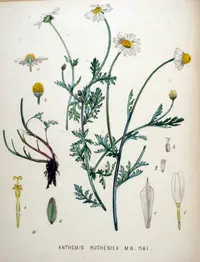
Eastern chamomile (Anthemis ruthenica) is a small, short-lived perennial or annual in the daisy family, grown mainly for its cheerful, daisy-like yellow and white blooms. Plants usually form loose, branching clumps with finely divided, aromatic foliage and a somewhat wild, meadow-like look.

It is native to Eastern Europe and parts of western Asia, where it grows in open, dry grasslands and disturbed, sunny sites. This background makes it generally undemanding, provided it has good light and soil that drains freely.

Gardeners who want to care for Eastern Chamomile usually find it easiest in full sun with moderate moisture and lean, not overly rich soil, which supports compact growth and abundant flowering.

Main Plant Requirements

Care Difficulty

Easy Care

Light Preference

Full Sun

Water Requirements

Low Water

Temperature Preference

Cold Hardy

Hardiness Zone

3–8

Soil Texture

Sandy, Loamy, Rocky

Soil pH

Slightly acidic (6.5–7.0), Neutral (7.0)

Soil Drainage

Well-drained

Fertilization

Minimal (feed rarely)

Get Personalized Care Plan

Scan your plant to receive care tips personalized for your specific plant

Available on iOS and Android

How to Care for the Eastern Chamomile

This sun-loving perennial needs strong light to flower well.

  • Provide 6–8 hours of direct sun daily; morning sun with light afternoon shade is ideal in hot summers for Eastern Chamomile.
  • In cooler climates it tolerates full sun all day, but in very intense afternoon sun plants may wilt or foliage may scorch, especially in dry, shallow soils.
  • In partial shade (3–4 hours sun) flowering drops; lanky, leaning stems indicate insufficient light and the need for a brighter spot.

This species prefers slightly dry, free-draining conditions rather than constant moisture.

  • Water only when the top 3–5 cm of soil are dry; in average garden soil this often means longer intervals between waterings rather than frequent light drinks.
  • Use well-drained, sandy or loamy soil so water runs through quickly; puddling around the crown signals poor drainage and risk of root rot in Anthemis ruthenica.
  • In hot, dry spells, leaves that droop during the day and recover by evening suggest mild drought stress; yellowing, soft stems indicate chronic overwatering.

This hardy perennial tolerates a wide temperature range but flowers best in moderate conditions.

  • Optimal growth occurs around 60–75°F (16–24°C); cool nights support sturdy, compact plants and good bud formation.
  • Established plants often survive down to about 0°F (−18°C) with mulch, but young plants benefit from protection from hard freezes and drying winter winds.
  • In summer, it copes with short periods up to 90–95°F (32–35°C) if soil is not waterlogged; prolonged extreme heat can reduce flowering and scorch foliage.

This species tolerates a wide range of household and outdoor humidity and rarely needs special humidity management.

Anthemis ruthenica prefers lean, well-drained, slightly alkaline soil that does not stay wet after watering or rain.

  • Use a sandy or gritty loam with plenty of mineral content and only modest organic matter to prevent overly rich growth.
  • Aim for pH 7.0–8.0; mix a small amount of garden lime if the soil is notably acidic.
  • Improve drainage and aeration by blending 30–50% coarse sand or fine grit plus a small portion of perlite into standard potting soil.
  • Avoid heavy clay, peat-heavy mixes, or any soil that compacts or forms puddles, since persistent wetness promotes root rot.

This species can grow well in containers when the pot is set up to drain and dry quickly between waterings.

  • Choose a wide, shallow pot to match its spreading root system and limit water retention in the lower profile.
  • Use unglazed terracotta to encourage faster evaporation and prevent the mix staying wet after cool or cloudy periods.
  • Lift the container on pot feet or bricks so drainage holes stay clear and runoff water does not pool under the base.

This sun-loving perennial needs only light feeding in average garden soil, so fertilizer use should stay modest.

  • Apply a thin layer of compost or a balanced slow-release fertilizer (around 10-10-10) in early spring as growth starts.
  • Feed container-grown Eastern Chamomile every 4–6 weeks in spring–summer with half-strength balanced liquid fertilizer.
  • Avoid high-nitrogen products that push soft leafy growth at the expense of flowers.
  • Stop feeding in late summer so plants harden off before cold weather and remain unfertilized in winter.

Anthemis ruthenica responds well to thoughtful pruning that maintains a compact, free-flowering mound.

  • Use clean hand pruners or scissors to remove dead, diseased, or storm-damaged stems whenever noticed.
  • In late spring and mid-summer, lightly shear back spent flower stems to encourage repeat blooming and denser growth.
  • Thin out crowded or weak shoots at the base to improve air flow and reduce fungal problems.
  • In late autumn, cut back old, untidy growth to a low mound, leaving some basal foliage in colder climates.

This species is more often grown in garden beds than in pots, so focus on careful transplanting rather than frequent repotting.

  • Transplant in early spring or early autumn so roots can establish in mild weather and consistent soil moisture.
  • Choose a sunny, well-drained site; amend heavy clay with grit or compost to prevent waterlogging and root stress.
  • Move plants with a wide, deep root ball, keeping as much soil attached as possible and watering thoroughly afterward.
  • Container plants need shifting only when roots circle the pot or growth stalls, then move up just 1 pot size.

Anthemis ruthenica is commonly propagated by seed and division, which helps refresh older clumps and increase stock.

  • Sow seeds in early spring under bright light in a well-drained, sandy mix; keep slightly moist at 60–70°F.
  • Barely cover seeds, as light aids germination, and provide good air circulation to limit damping-off disease.
  • Divide mature clumps in early spring or early autumn, replanting vigorous outer sections into prepared soil.
  • Water new divisions consistently for the first few weeks while roots re-establish, then reduce to normal levels.

This perennial is fairly cold hardy in many temperate gardens and usually needs only minimal winter attention.

  • Tolerates light to moderate frost when planted in well-drained soil that does not stay saturated.
  • After hard frost, cut back blackened stems, leaving a low mound of growth to shield the crown.
  • Apply a light mulch layer (2–5 cm) over the root zone in colder regions, keeping mulch off the crown.
  • In very cold climates, grow in containers and overwinter plants in a cool, bright, frost-free space.

Care Tips

Encourage Bushy Form

Pinch back soft shoot tips when plants are 10–15 cm tall to promote branching, increase flower production, and keep clumps compact rather than floppy.

Timed Cutback Cycle

Shear plants by one-third right after the main flush of blooms fades, then water and lightly feed to trigger a dense second wave of flowering later in the season.

Staggered Succession Sowing

Sow small batches every 2–3 weeks in late spring and early summer so that as older clumps tire, younger plants take over and extend the overall display period.

Dry-Site Root Establishment

When transplanting into dry or windy sites, plant slightly deeper than in the pot, water in thoroughly once, then mulch lightly with mineral grit to help roots anchor quickly and resist heaving or desiccation.

Targeted Self-Seeding Control

Allow only the healthiest, best-placed plants to set seed and deadhead the rest, so natural reseeding maintains a controlled drift rather than turning into a weedy spread while still supporting those growing Eastern Chamomile long term.

Common Pests and Diseases

Aphids

This pest feeds on tender stems and flower buds, causing distortion, sticky honeydew, and reduced flowering.

Solution

Spray plants with a firm jet of water to knock aphids off, then treat remaining colonies with insecticidal soap or a neem oil spray, repeating every 5–7 days until populations collapse. Encourage natural predators such as lady beetles and avoid high nitrogen fertilization that promotes soft, aphid-prone growth when planning Anthemis ruthenica care instructions.

Leaf miners

These insects create pale, winding tunnels inside the leaves, which can cause cosmetic damage and reduced vigor on heavily affected foliage.

Solution

Remove and discard mined leaves as soon as damage is seen to reduce larvae inside the plant tissue. For persistent problems, use a systemic insecticide labeled for ornamental leaf miners, applying according to label directions and avoiding use during peak pollinator activity whenever possible.

Powdery mildew

This disease appears as white to gray powdery coating on upper leaf surfaces, often in warm, dry conditions with poor air movement.

Solution

Improve spacing and airflow around plants, avoid overhead watering late in the day, and remove heavily infected leaves. If needed, apply a sulfur or potassium bicarbonate fungicide at the first sign of infection and repeat as directed on the label.

Botrytis blight

This disease causes brown, water-soaked lesions on flower heads and foliage, followed by a gray fuzzy mold, especially in cool, damp weather.

Solution

Promptly remove and discard faded flowers and affected plant parts, and water at soil level rather than on the foliage. In prolonged wet conditions, a preventative fungicide labeled for botrytis on ornamentals can be applied, combined with better air circulation and avoidance of overcrowding.

Interesting Facts

Habitat on steppe edges

This species is naturally found in dry steppe and steppe-forest margins from Eastern Europe into western Asia, where it grows on open, often rocky or sandy soils with low organic matter.

Night-closing flower heads

The flower heads close at night and in rainy or very overcast weather, a behavior called nyctinasty that protects pollen and reproductive structures from moisture and cold.

Long, divided foliage

Its leaves are finely divided into many narrow segments, which increases air flow around the leaf surface and helps the plant tolerate hot, dry conditions typical of its native range.

Botan icon

Did you know?

Anthemis ruthenica was historically used as a model species in early floristic surveys of Eastern European steppe regions, helping botanists define and map characteristic steppe plant communities across large parts of Ukraine and southern Russia.

FAQs about Eastern Chamomile

Brown leaves usually come from drought stress, excess fertilizer, or hot, dry wind. Check soil moisture, leach out accumulated salts with a deep watering, remove crispy foliage, and apply a light mulch without covering the stems.

Grow Healthy Plants with Botan Care

Keep your plants happy and healthy with plant identification, disease detection, and easy care guidance.


Botan plant care app — identify plants on mobile

Explore More Plants