Purple Bells Care (Rhodochiton atrosanguineus)

Purple Bells

About Purple Bells

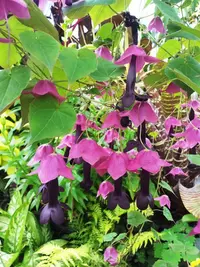
Purple bells, Rhodochiton atrosanguineus, is a tender climbing perennial usually grown as an annual in cooler climates. It is valued for its dangling bell-shaped flowers with deep purple tubes and contrasting outer calyxes. The plant twines by slender stems and suits trellises, arches, or hanging baskets, forming a light, elegant screen rather than a dense vine. It originates from Mexico, so it prefers warmth, bright light, and protection from frost. Flowering is generous when it receives consistent moisture, free-draining soil, and regular light feeding. With enough light and stable indoor temperatures, it is possible to care for Purple Bells as a long-lived container plant.

Main Plant Requirements

Care Difficulty

Moderate Care

Light Preference

Partial Sun

Water Requirements

Regular Water

Temperature Preference

Tropical / Frost Sensitive

Hardiness Zone

10–11

Soil Texture

Loamy, Sandy, Organic-rich

Soil pH

Acidic (5.5–6.5), Slightly acidic (6.5–7.0)

Soil Drainage

Moist but well-drained

Fertilization

Moderate (every 2–4 weeks)

Get Personalized Care Plan

Scan your plant to receive care tips personalized for your specific plant

Available on iOS and Android

How to Care for the Purple Bells

This vine prefers bright, gentle light that supports steady growth and flowering.

  • Provide 4–6 hours of morning sun with light afternoon shade; east or southeast exposure suits Purple Bells well outdoors.
  • Tolerates light partial shade, but in deep shade stems stretch, foliage thins, and flowering drops sharply.
  • In hot summers, protect from harsh sun from 12–4 pm to prevent leaf scorch; in late autumn, move containers to the brightest, frost-free spot available.

This plant prefers evenly moist but not saturated soil throughout the growing season.

  • Water when the top 2–3 cm of soil feels dry, then soak thoroughly so excess drains away; avoid shallow splashing.
  • In warm, active growth, expect more frequent watering, while in cooler weather or shorter days, allow slightly deeper drying between waterings.
  • Yellowing, soft leaves and a sour soil smell suggest overwatering, while crisp leaf edges, wilting, and very light pots indicate underwatering in Rhodochiton atrosanguineus.

This climber thrives in mild, frost-free conditions with stable warmth during the growing season.

  • Aim for 65–75°F (18–24°C) for best growth and flowering; brief dips are tolerated if soil is not waterlogged.
  • Protect from cold below 40°F (4°C); frost around 32°F (0°C) can damage foliage and may kill the plant, especially in containers.
  • In hot spells above 85°F (29°C), provide light shade and extra air movement to limit heat stress and reduce the risk of leaf scorch.

This vine prefers moderate humidity and benefits from slightly moist air in warm conditions.

  • Aim for 40–60% humidity, especially during active growth and flowering.
  • It tolerates short periods of drier indoor air, but prolonged humidity below 35% can cause leaf edges to crisp and buds to drop.
  • If air is very dry, place the container on a pebble tray with water or group Purple Bells near other plants to raise local humidity.

This climber performs best in light, airy, moisture-retentive but fast-draining soil.

  • Use a loamy, organic-rich mix, such as 2 parts peat-free potting mix, 1 part compost, and 1 part perlite or coarse sand for structure.
  • Rhodochiton atrosanguineus prefers slightly acidic to neutral soil, around pH 6.0–7.0, to support nutrient uptake and root health.
  • Ensure water drains freely; avoid heavy clay or compacted substrates that stay wet and reduce oxygen around roots.
  • Improve aeration by adding fine bark chips or extra perlite in containers, especially in rainy climates or if using plastic pots.

This species is very suitable for containers, especially when given support to climb or trail.

  • Choose a tall or hanging container that allows trailing stems to cascade without dragging on the ground, reducing breakage and slug damage.
  • Select a stable pot or add weight at the base to counterbalance vigorous top growth on trellises or obelisks in windy spots.
  • Use a slightly wider, not overly deep, container to encourage fibrous root spread while reducing the risk of waterlogging at the bottom.

This twining vine responds well to modest, consistent feeding during its active growing season.

  • Use a balanced liquid fertilizer (for example 10-10-10 or 20-20-20) at 1/2 strength every 2–3 weeks from spring to late summer.
  • Alternatively, apply a thin layer of compost or a mild slow-release fertilizer at the start of the season for container-grown Purple Bells.
  • Always water before and after feeding to limit root burn, and avoid feeding stressed or very dry plants.
  • Stop or reduce fertilization to 1/4 strength once a month in fall and avoid feeding in winter dormancy.

Pruning helps Rhodochiton atrosanguineus stay compact, manageable, and flowering well on supports or in baskets.

  • In early spring, remove dead, damaged, or weak stems with clean, sharp scissors or hand pruners.
  • Thin crowded, tangled vines to improve airflow and light, which supports healthier foliage and blooms.
  • Tip back overly long shoots during the season to encourage branching and a fuller shape.
  • After flowering peaks, lightly trim spent flowering stems to tidy the plant and stimulate new growth.

This vine grows best when given enough root space and benefits from occasional repotting or careful transplanting.

  • Check containers for roots circling the drainage holes, soil drying out very fast, or reduced vigor as signs it needs more space.
  • Plan to move young plants into a slightly larger pot each spring, or transplant outdoor specimens after the last frost.
  • Use a free-draining mix and handle the root ball gently, loosening circling roots without tearing them heavily.
  • Water thoroughly after repotting or transplanting, then keep in bright, sheltered conditions for 5–7 days to reduce transplant shock.

This species is most often propagated from seed, with stem cuttings also possible under controlled conditions.

  • Sow fresh seed indoors in late winter to early spring on the surface of moist, fine seed compost and barely cover.
  • Maintain 65–75°F, bright indirect light, and consistently moist (not waterlogged) medium for reliable germination.
  • When seedlings have 2–3 true leaves, prick out into small pots, taking care not to damage the fine roots.
  • For cuttings, take softwood tip cuttings in late spring, treat with rooting hormone, and root in a humid, warm propagator.

This vine is frost-sensitive and needs protection in regions with cold winters.

  • In climates below about 40°F, grow in containers and move plants indoors before the first frost.
  • Overwinter in a cool, bright room, keeping soil just slightly moist to prevent root rot or complete drying.
  • In mild areas, apply a light mulch around the root zone to buffer temperature swings.
  • Remove any frost-damaged growth in late winter or early spring once the risk of hard frost has passed.

Care Tips

Provide strong support

Install a sturdy trellis, obelisk, or mesh panel early in the season and gently tie new vines with soft ties every 10–15 cm to prevent wind damage and tangling.

Pinch for branching

Pinch out the tips of young shoots once they reach 15–20 cm to encourage more lateral stems, which produces a fuller plant with more flowering sites.

Rotate containers regularly

Turn pots 90° every 7–10 days so light reaches all sides evenly, which helps prevent lopsided growth and reduces strain on the climbing stems.

Refresh vines annually

In cool climates, take late-summer stem cuttings and root them under bright, sheltered conditions to replace older, tired plants the following spring when growing Purple Bells.

Monitor for spider mites

Inspect the undersides of leaves weekly during hot, dry weather and, at the first sign of stippling or fine webbing, rinse foliage thoroughly with a firm but gentle spray of water and improve air movement around the plant.

Common Pests and Diseases

Aphids

This pest often colonizes soft new growth, sucking sap and causing curled, sticky leaves and distorted flower shoots.

Solution

Rinse vines thoroughly with a strong but gentle stream of water, then spot-wipe clusters with a damp cloth or cotton swab. If populations persist, use insecticidal soap or a ready-to-use neem oil spray every 5–7 days, and support control by encouraging natural predators outdoors such as lady beetles when growing Purple Bells on a patio or trellis.

Spider mites

These insects thrive in warm, dry air and cause fine webbing, speckled leaves, and general leaf dullness or bronzing.

Solution

Increase humidity around the plant, then hose or shower the foliage to remove mites and webbing. Follow up with repeated applications of insecticidal soap or horticultural oil, ensuring thorough coverage of leaf undersides, and avoid letting the soil stay bone-dry for long periods, which favors outbreaks.

Whiteflies

This pest gathers on the undersides of leaves, flying up in a cloud when disturbed and leaving sticky honeydew that can lead to sooty mold.

Solution

Shake vines gently to confirm activity, then use yellow sticky traps to reduce adult numbers. Combine this with regular leaf washing and, if needed, targeted applications of insecticidal soap to the undersides of leaves every few days until new adults stop appearing.

Botrytis blight

This disease appears in cool, damp conditions as gray, fuzzy mold on spent flowers, stems, and damaged leaves, leading to soft, decaying tissue.

Solution

Remove and discard all affected plant parts, including old flowers, and avoid overhead watering that keeps foliage wet. Improve air circulation around the vines, space plants adequately, and in severe or recurring cases use a labeled fungicide, applying it during dry weather and following package directions carefully.

Powdery mildew

This disease shows up as white, powdery patches on leaves and young stems, which can cause yellowing and premature leaf drop if severe.

Solution

Prune to open up dense growth and remove heavily infected leaves, disposing of them in the trash. Keep foliage dry, water at soil level, and apply a sulfur-based or potassium bicarbonate fungicide labeled for ornamental vines if the disease spreads, repeating as directed until new growth stays clean.

Interesting Facts

Unique bell structure

This species forms a two-part flower, with a persistent, papery pink to purple calyx surrounding a dangling, much darker tubular corolla, giving the appearance of a bell with a long clapper. The calyx often remains attractive for weeks, even after the darker corolla has fallen away.

Short-lived perennial habit

In its native habitat in Mexico, this vine behaves as a tender perennial that can live multiple years, but in cooler climates it is usually grown as an annual because it cannot tolerate frost. Under protected, frost-free conditions, individual plants can flower over an extended season.

Climbing by leaf stalks

Instead of using tendrils or twining stems, this plant climbs using its flexible leaf petioles, which can hook around fine supports such as strings or thin wires. This allows the vine to anchor itself securely to light trellises without producing specialized tendrils.

Botan icon

Did you know?

This species was first described in the 19th century from material cultivated in European gardens, and its striking flowers quickly made it a collector’s plant among Victorian-era horticulturists, where it was often grown in conservatories and orangeries to showcase exotic vines.

FAQs about Purple Bells

This species climbs using slender twining stems that wrap around supports such as trellises, wires, or neighboring plants. It does not form ground-hugging mats, so it is better treated as a vertical climber than a spreader.

Grow Healthy Plants with Botan Care

Keep your plants happy and healthy with plant identification, disease detection, and easy care guidance.

Botan plant care app — identify plants on mobile

Explore More Plants