Deep taproot space
Use a pot or bed with at least 25–30 cm of loose depth so the strong taproot can extend fully, which improves drought resilience and overall vigor when growing African dream root.

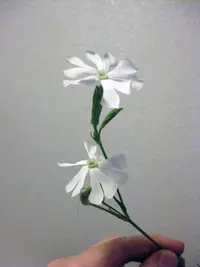
African dream root, Silene undulata, is a small, herbaceous perennial native to grasslands and rocky slopes of South Africa. It forms a low clump of narrow leaves with upright flowering stems.
The plant produces white, fringed flowers that open mostly at night and have a slightly inflated calyx, giving it a distinctive look among small ornamental perennials. Growth is generally modest, so it suits containers or small garden spaces.
In cultivation it prefers sunny, open conditions, well-drained soil, and moderate moisture, which makes it relatively easy to manage if kept dry between waterings. Understanding how to care for African dream root mainly involves avoiding waterlogged conditions and providing enough light and airflow.

Care Difficulty
Moderate Care

Light Preference
Partial Sun

Water Requirements
Moderate Water

Temperature Preference
Warm Climate

Hardiness Zone
8–10

Soil Texture
Sandy, Loamy

Soil pH
Acidic (5.5–6.5), Slightly acidic (6.5–7.0)

Soil Drainage
Well-drained

Fertilization
Minimal (feed rarely)
Scan your plant to receive care tips personalized for your specific plant
Available on iOS and Android
Silene undulata prefers bright, open conditions that mimic its native grassland habitat.
Silene undulata prefers evenly moist but not saturated soil, with brief drying between waterings.
This species grows best in mild conditions without extreme heat or hard frost.
Silene undulata grows well in typical indoor humidity and rarely needs special adjustments.
Silene undulata prefers light, well-draining, moderately fertile soil that never stays waterlogged.
This species adapts well to container growing when drainage and root space are managed carefully.
Silene undulata grows best in modestly fertile, well-drained soil and usually needs only light feeding.
Silene undulata benefits from light, targeted pruning to maintain flowering and a tidy form.
This species is more often grown in the ground, but container plants or nursery starts of Silene undulata may need occasional transplanting.
Silene undulata is most commonly propagated by seed, with division also possible in established clumps.
Silene undulata is moderately cold hardy in many temperate climates and usually needs only simple winter care outdoors.

Plant Health Check
Not sure what's wrong with your plant? Check your plant's health inside the app.
This species is primarily pollinated by night-flying moths that are attracted to its pale, reflective flowers and sweet evening scent, a syndrome known as hawkmoth pollination.
The flower has a distinctive inflated, veined calyx (the tubular outer part of the flower) that protects reproductive organs and helps guide specific pollinators to the nectar.
The plant is naturally restricted to parts of the Eastern Cape region of South Africa, where it grows in grassland and open scrub rather than dense forest.

The seeds of this species possess a durable coat that allows them to persist in the soil seed bank and germinate after disturbance, helping populations recover in changing grassland habitats.
Poor flowering usually comes from insufficient maturity, low light, or nutrient imbalance. Young plants often need a full season before flowering. Moderate feeding with a balanced fertilizer and a cool, dryish rest period encourages buds.
Keep your plants happy and healthy with plant identification, disease detection, and easy care guidance.